
Karl Maximovich
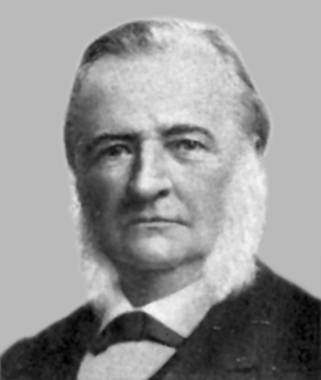
0 sources
Summary
Karl Maximovich was born on November 11, 1827[1], in Tula[2]. He died on February 4, 1891[3], in Saint Petersburg[4]. He worked as an explorer[5], pteridologist[6], bryologist[7], botanist[8], and botanical collector[9]. He ranks in the top 0.73% of human entities by monthly Wikipedia readership (233 views/month, #7,287 of 1,000,298).[10]
Key Facts
- Date of birth: November 23, 1827[11]
- Date of death: February 16, 1891[12]
- Place of burial: Smolensky Lutheran Cemetery[13]
- Country of citizenship: Russian Empire[14]
- Occupation: scientific collector[15], biologist[16]
- Field of work: botany[17]
- Employer: Museum of Botanical Garden of V.L. Komarov Botanical Institute[18], Peter the Great Botanical Garden[19]
- Educated at: Imperial University of Dorpat[20]
- Award received: Demidov Prize[21], Fellow of the American Academy of Arts and Sciences[22]
- Member of: Russian Academy of Sciences[23], Royal Swedish Academy of Sciences[24], American Academy of Arts and Sciences[25]
- Sex or gender: male[26]
- Commons category: Carl Maximowicz[27]
- Family name: Maksimovich[28]
- Given name: Karl[29]
- Described by source: Great Soviet Encyclopedia (1969–1978)[30], Small Brockhaus and Efron Encyclopedic Dictionary[31], Brockhaus and Efron Encyclopedic Dictionary[32], Great Soviet Encyclopedia (1926–1947)[33], Album Academicum der Kaiserlichen Universität Dorpat[34]
- Languages spoken, written or signed: Latin[35], German[36], Russian[37]
- Name in native language: Карл Иванович Максимович[38]
- Collection items at: Botanic Garden and Botanical Museum Berlin[39], Natural History Museum, Vienna[40], University of Vienna, Institute for Botany Herbarium[41], Herbarium, Royal Botanic Gardens Kew[42]
Body
Works and Contributions
Things named for Karl Maximovich include Acer maximowiczianum[43], a taxon[44]; Betula maximowicziana[45], a taxon[46]; Picea maximowiczii[47], a taxon[48]; Maximowicz's vole[49], a taxon[50]; Lonicera maximowiczii[51], a taxon[52]; Ribes maximowiczii[53], a taxon[54]; Weigela maximowiczii[55], a taxon[56]; and Carex maximowiczii[57], a taxon[58].
Why It Matters
Karl Maximovich has Wikipedia articles in 14 language editions, a strong signal of global cultural recognition.[59] He is known by 65 alternative names across languages and contexts.[60]
Entities named for him include Acer maximowiczianum[43], a taxon[44]; Betula maximowicziana[45], a taxon[46]; Picea maximowiczii[47], a taxon[48]; Maximowicz's vole[49], a taxon[50]; Lonicera maximowiczii[51], a taxon[52]; and Ribes maximowiczii[53], a taxon[54].
FAQs
Where was Karl Maximovich born?
Karl Maximovich was born in Tula[2].
Where did Karl Maximovich die?
Karl Maximovich passed away in Saint Petersburg[4].
What did Karl Maximovich do for work?
Karl Maximovich worked as an explorer[5], pteridologist[6], bryologist[7], botanist[8], and botanical collector[9].
Where did Karl Maximovich go to school?
Karl Maximovich was educated at Imperial University of Dorpat[20].
What awards did Karl Maximovich receive?
Honors received include Demidov Prize[21] and Fellow of the American Academy of Arts and Sciences[22].