
Juntoku
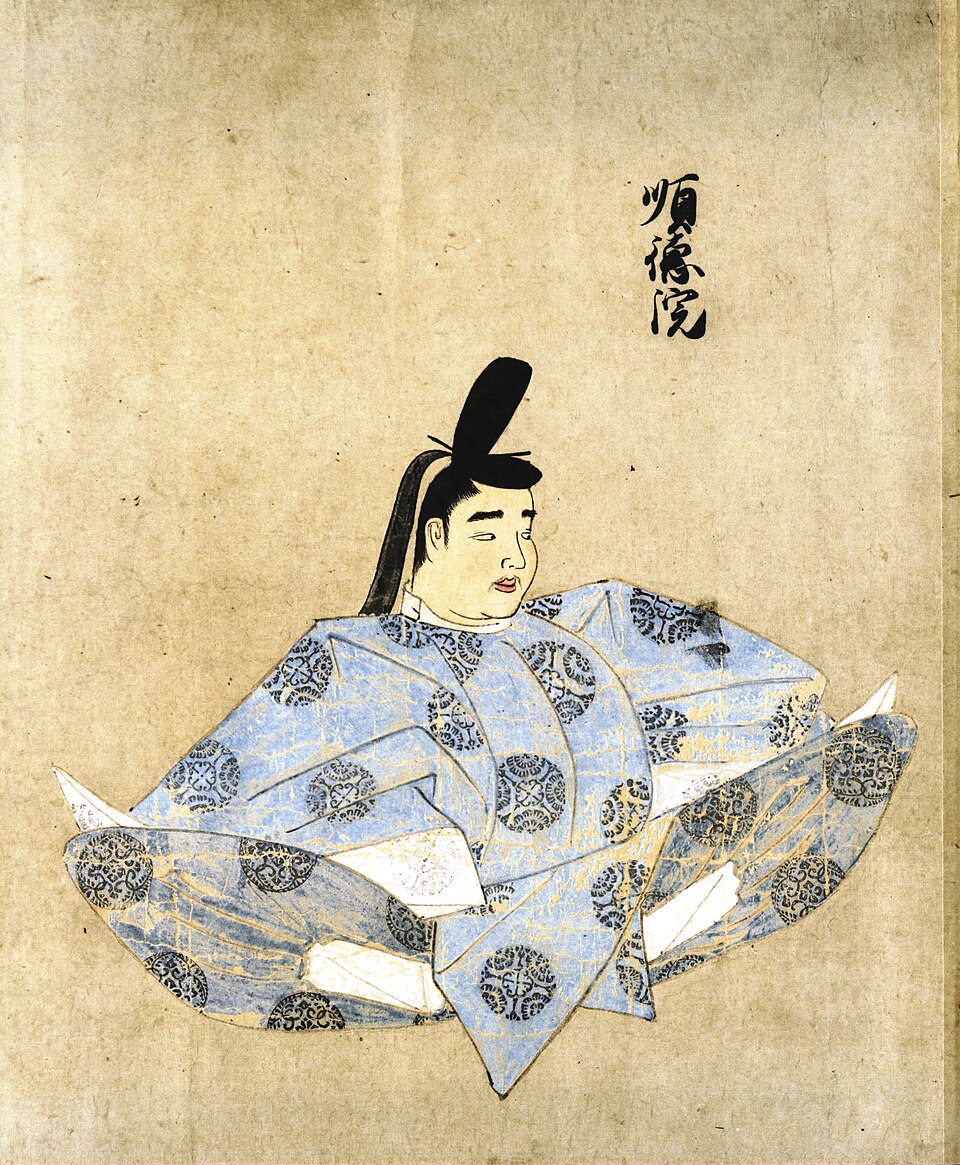
0 sources
Juntoku
Summary
Juntoku is a human[1]. He was born on October 22, 1197[2]. He died in Sado Province[3]. He died on October 7, 1242[4]. He worked as a poet[5]. He ranks in the top 0.72% of human entities by monthly Wikipedia readership (200 views/month, #7,197 of 1,000,298).[6]
Key Facts
- Juntoku passed away in Sado Province[3].
- Juntoku was born on October 22, 1197[2].
- Juntoku died on October 7, 1242[4].
- Burial took place at Ōhara[7].
- Juntoku's father was Go-Toba[8].
- Juntoku's mother was Fujiwara no Shigeko[9].
- Juntoku was married to Fujiwara no Ritsushi[10].
- Among Juntoku's spouses was daughter of Fujiwara no Norimitsu[11].
- Among Juntoku's spouses was Bōmon Ishi[12].
- Among Juntoku's spouses was Saishō no Tsubone[13].
- Among Juntoku's spouses was Q110930087[14].
- Juntoku was married to Shōshi-naishinnō[15].
- A child of Juntoku was Emperor Chūkyō[16].
- A child of Juntoku was Yoshimune-shinnō[17].
- A child of Juntoku was Prince Tadanari[18].
- A child of Juntoku was Kangan Giin[19].
- A child of Juntoku was Teishi-naishinnō[20].
- A child of Juntoku was Jōshi[21].
- Juntoku held citizenship in Japan[22].
- Juntoku's professions included poet[5].
- Juntoku held the position of Emperor of Japan[23].
- A notable work attributed to Juntoku is Kinpishō[24].
- A notable work attributed to Juntoku is Yakumo Mishō[25].
- Juntoku is recorded as male[26].
- Juntoku's instance of is recorded as human[27].
Body
Origins and Family
Juntoku was born on October 22, 1197[2]. His father was Go-Toba[8]. His mother was Fujiwara no Shigeko[9].
Career and Affiliations
Juntoku's professions included poet[5]. He held the position of Emperor of Japan[23].
Works and Contributions
Notable works include Kinpishō[24], a literary work[28], in Japan[29], founded in 1221[30] and Yakumo Mishō[25], a literary work[31].
Personal Life
Spouses include Fujiwara no Ritsushi[10], an empress consort[32], 1192–1248[33], of Japan[34]; daughter of Fujiwara no Norimitsu[11]; Bōmon Ishi[12]; Saishō no Tsubone[13]; Q110930087[14]; and Shōshi-naishinnō[15], 1195–1211[35], of Japan[36]. Children include Emperor Chūkyō[16], a sovereign[37], 1218–1234[38], of Japan[39]; Yoshimune-shinnō[17], 1233–1317[40], of Japan[41]; Prince Tadanari[18], 1222–1281[42]; Kangan Giin[19], a Buddhist monk[43], 1217–1300[44], of Japan[45]; Teishi-naishinnō[20], 1217–1243[46]; and Jōshi[21], 1216–1279[47].
Death and Burial
Juntoku died on October 7, 1242[4]. He died in Sado Province[3]. Burial took place at Ōhara[7].
Why It Matters
Juntoku ranks in the top 0.72% of human entities by monthly Wikipedia readership (200 views/month, #7,197 of 1,000,298).[6] He has Wikipedia articles in 20 language editions, a strong signal of global cultural recognition.[48] He is known by 19 alternative names across languages and contexts.[49]
FAQs
Where did Juntoku die?
Juntoku died in Sado Province[3].
Who were Juntoku's parents?
Juntoku's father was Go-Toba[8]. Juntoku's mother was Fujiwara no Shigeko[9].
Who was Juntoku married to?
Juntoku's spouses include Fujiwara no Ritsushi[10], daughter of Fujiwara no Norimitsu[11], Bōmon Ishi[12], and Saishō no Tsubone[13].
What did Juntoku do for work?
Juntoku worked as poet[5].