
Go-Toba
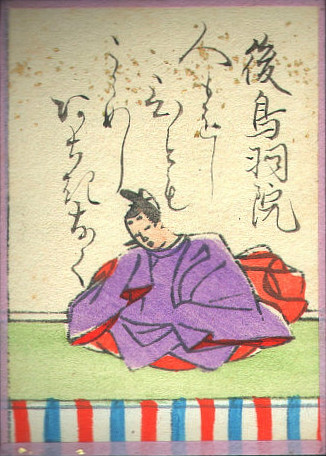
0 sources
Summary
Go-Toba is a human[1]. He was born in Kyoto[2]. He was born on August 6, 1180[3]. He passed away in Nakanoshima[4]. He died on March 28, 1239[5]. He worked as a waka poet[6] and writer[7]. He ranks in the top 0.71% of human entities by monthly Wikipedia readership (3,008 views/month, #7,064 of 1,000,298).[8]
Key Facts
- Go-Toba was born in Kyoto[2].
- Go-Toba passed away in Nakanoshima[4].
- Go-Toba was born on August 6, 1180[3].
- Go-Toba died on March 28, 1239[5].
- Burial took place at Ōhara[9].
- Go-Toba's father was Takakura[10].
- Go-Toba's mother was Empress Dowager Shichijō-in[11].
- Among Go-Toba's spouses was Kujō Ninshi[12].
- Go-Toba was married to Minamoto no Ariko[13].
- Among Go-Toba's spouses was Fujiwara no Shigeko[14].
- Go-Toba was married to Bōmon no Tsubone[15].
- Go-Toba was married to Oomiya no Tsubone[16].
- Among Go-Toba's spouses was Kamegiku[17].
- A child of Go-Toba was Shōshi-naishinnō[18].
- A child of Go-Toba was Tsuchimikado[19].
- A child of Go-Toba was Juntoku[20].
- A child of Go-Toba was Masanari-shinnō[21].
- A child of Go-Toba was Dōjo-nyūdōshinnō[22].
- A child of Go-Toba was Reishi-naishinnō[23].
- Go-Toba held citizenship in Japan[24].
- Go-Toba worked as a waka poet[6].
- Go-Toba worked as a writer[7].
- Go-Toba held the position of Emperor of Japan[25].
- Go-Toba held the position of Daijō Tennō[26].
- Go-Toba held the position of Cloistered Emperor[27].
Body
Origins and Family
Go-Toba's place of birth was Kyoto[2]. He was born on August 6, 1180[3]. His father was Takakura[10]. His mother was Empress Dowager Shichijō-in[11].
Career and Affiliations
Recorded occupations include waka poet[6] and writer[7]. Positions held include Emperor of Japan[25], a hereditary title[28], in Japan[29]; Daijō Tennō[26], a Ranking (East Asian imperial houses)[30]; and Cloistered Emperor[27], a title of honor[31], in Japan[32].
Works and Contributions
A notable work attributed to Go-Toba is Otein Okibumi[33].
Personal Life
Spouses include Kujō Ninshi[12], an empress consort[34], 1173–1239[35], of Japan[36]; Minamoto no Ariko[13], 1171–1257[37]; Fujiwara no Shigeko[14], 1182–1264[38]; Bōmon no Tsubone[15]; Oomiya no Tsubone[16]; and Kamegiku[17]. Children include Shōshi-naishinnō[18], 1195–1211[39], of Japan[40]; Tsuchimikado[19], a sovereign[41], 1196–1231[42], of Japan[43]; Juntoku[20], a poet[44], 1197–1242[45], of Japan[46]; Masanari-shinnō[21], a poet[47], 1200–1255[48], of Japan[49]; Dōjo-nyūdōshinnō[22], a poet[50], 1196–1249[51], of Japan[52]; and Reishi-naishinnō[23], 1200–1273[53], of Japan[54].
Death and Burial
Go-Toba died on March 28, 1239[5]. He died in Nakanoshima[4]. He is buried at Ōhara[9].
Why It Matters
Go-Toba ranks in the top 0.71% of human entities by monthly Wikipedia readership (3,008 views/month, #7,064 of 1,000,298).[8] He has Wikipedia articles in 23 language editions, a strong signal of global cultural recognition.[55] He is known by 51 alternative names across languages and contexts.[56]
FAQs
Where was Go-Toba born?
Go-Toba was born in Kyoto[2].
Where did Go-Toba die?
Go-Toba passed away in Nakanoshima[4].
Who were Go-Toba's parents?
Go-Toba's father was Takakura[10]. Go-Toba's mother was Empress Dowager Shichijō-in[11].
Who was Go-Toba married to?
Go-Toba's spouses include Kujō Ninshi[12], Minamoto no Ariko[13], Fujiwara no Shigeko[14], and Bōmon no Tsubone[15].