
Julio Cortázar
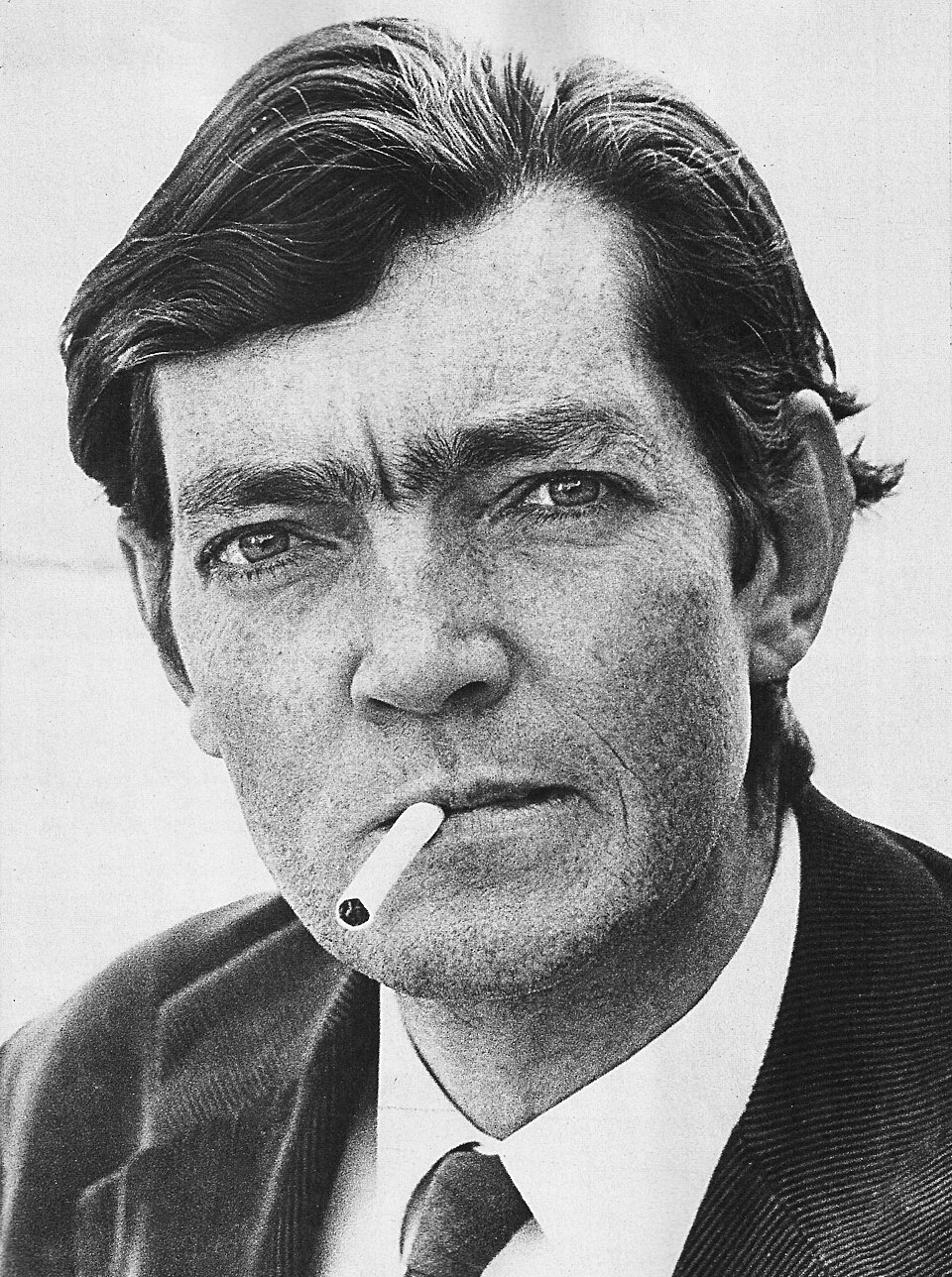
0 sources
Julio Cortázar was born on August 26, 1914, in Brussels [1][2][3][4][5][6][7][8][9][10][11][12][13][14][15][16][17][18] and died on February 12, 1984, in Paris [1][2][3][4][5][6][7][8][9][10][11][12][13][14][16][17]. A multifaceted figure in literature and the arts, he worked as a linguist, screenwriter, novelist, essayist, translator, and poet [1][16]. His spouses included Aurora Bernárdez and Carol Dunlop . Cortázar studied at the Facultad de Filosofía y Letras de la Universidad de Buenos Aires .
His work spanned the fields of performing arts and Spanish literature [19], aligning with the surrealism movement . Cortázar’s genres included magic realism and poetry , and he was influenced by Jean-Paul Sartre . Among his accolades were the Prix Médicis étranger and an honorary doctorate from the University of Poitiers [20]. His most notable work, *Hopscotch*, remains a defining piece of his literary legacy .
Julio Cortázar
Summary
Julio Cortázar is a human[1]. His place of birth was Brussels[2]. He was born on August 26, 1914[3]. He passed away in Paris[4]. He died on February 12, 1984[5]. He worked as a linguist[6], screenwriter[7], novelist[8], essayist[9], and translator[10]. He ranks in the top 0.68% of human entities by monthly Wikipedia readership (1,483 views/month, #6,806 of 1,000,298).[11]
Key Facts
- Julio Cortázar's place of birth was Brussels[2].
- Julio Cortázar died in Paris[4].
- Julio Cortázar died in 10ᵗʰ arrondissement of Paris[12].
- Julio Cortázar was born on August 26, 1914[3].
- Julio Cortázar died on February 12, 1984[5].
- Burial took place at Montparnasse Cemetery[13].
- Julio Cortázar was married to Aurora Bernárdez[14].
- Among Julio Cortázar's spouses was Carol Dunlop[15].
- Julio Cortázar held citizenship in Mexico[16].
- Julio Cortázar held citizenship in France[17].
- Spanish was Julio Cortázar's native language[18].
- Julio Cortázar worked as a linguist[6].
- Julio Cortázar worked as a screenwriter[7].
- Julio Cortázar's professions included novelist[8].
- Julio Cortázar worked as an essayist[9].
- Julio Cortázar worked as a translator[10].
- Julio Cortázar worked as a poet[19].
- Julio Cortázar's field of work was performing arts[20].
- Julio Cortázar's field of work was Spanish literature[21].
- Julio Cortázar's education included a stint at Facultad de Filosofía y Letras de la Universidad de Buenos Aires[22].
- A notable work attributed to Julio Cortázar is Hopscotch[23].
- Julio Cortázar received the Prix Médicis étranger[24].
- Julio Cortázar received the honorary doctor of the University of Poitiers[25].
- Julio Cortázar's religion is recorded as atheism[26].
- Julio Cortázar was influenced by Jean-Paul Sartre[27].
Body
Origins and Family
Julio Cortázar was born in Brussels[2]. He was born on August 26, 1914[3]. Spanish was his native language[18].
Education
Julio Cortázar's education included a stint at Facultad de Filosofía y Letras de la Universidad de Buenos Aires[22].
Career and Affiliations
Recorded occupations include linguist[6], screenwriter[7], novelist[8], essayist[9], translator[10], and poet[19]. Fields of work include performing arts[20], a type of arts[28] and Spanish literature[21], a sub-set of literature[29].
Works and Contributions
A notable work attributed to Julio Cortázar is Hopscotch[23].
Recognition
Awards received include Prix Médicis étranger[24], a class of award[30], in France[31], founded in 1970[32] and honorary doctor of the University of Poitiers[25], an award[33], in France[34].
Personal Life
Spouses include Aurora Bernárdez[14], a translator[35], 1920–2014[36], of Argentina[37], specialised in creative and professional writing[38] and Carol Dunlop[15], a photographer[39], 1946–1982[40], of Canada[41]. Julio Cortázar's religion is recorded as atheism[26].
Death and Burial
Julio Cortázar died on February 12, 1984[5]. Recorded place of death include Paris[4], a commune of France[42], in France[43], founded in -0300[44] and 10ᵗʰ arrondissement of Paris[12], a municipal arrondissement of France[45], in France[46], founded in 1860[47]. He is buried at Montparnasse Cemetery[13].
Why It Matters
Julio Cortázar ranks in the top 0.68% of human entities by monthly Wikipedia readership (1,483 views/month, #6,806 of 1,000,298).[11] He has Wikipedia articles in 28 language editions, a strong signal of global cultural recognition.[48] He is known by 34 alternative names across languages and contexts.[49]
He has been cited as an influence by Dmitry Glukhovsky[50], a writer[51], b. 1979[52], of Soviet Union[53], specialised in literature[54].
Works attributed to him include Hopscotch[55], a literary work[56]; Bestiario[57], a literary work[58]; Historias de cronopios y de famas[59], a literary work[60]; Todos los fuegos el fuego[61], a literary work[62]; 62: A Model Kit[63], a literary work[64]; and Libro de Manuel[65], a written work[66].
FAQs
Where was Julio Cortázar born?
Born in Brussels[2], Julio Cortázar…
Where did Julio Cortázar die?
Julio Cortázar died in Paris[4].
Who was Julio Cortázar married to?
Julio Cortázar's spouses include Aurora Bernárdez[14] and Carol Dunlop[15].
What did Julio Cortázar do for work?
Julio Cortázar worked as linguist[6], screenwriter[7], novelist[8], essayist[9], and translator[10].
Where did Julio Cortázar go to school?
Julio Cortázar was educated at Facultad de Filosofía y Letras de la Universidad de Buenos Aires[22].
What awards did Julio Cortázar receive?
Honors received include Prix Médicis étranger[24] and honorary doctor of the University of Poitiers[25].
Who did Julio Cortázar influence?
Julio Cortázar has been cited as an influence by Dmitry Glukhovsky[50].