
Józef Piłsudski
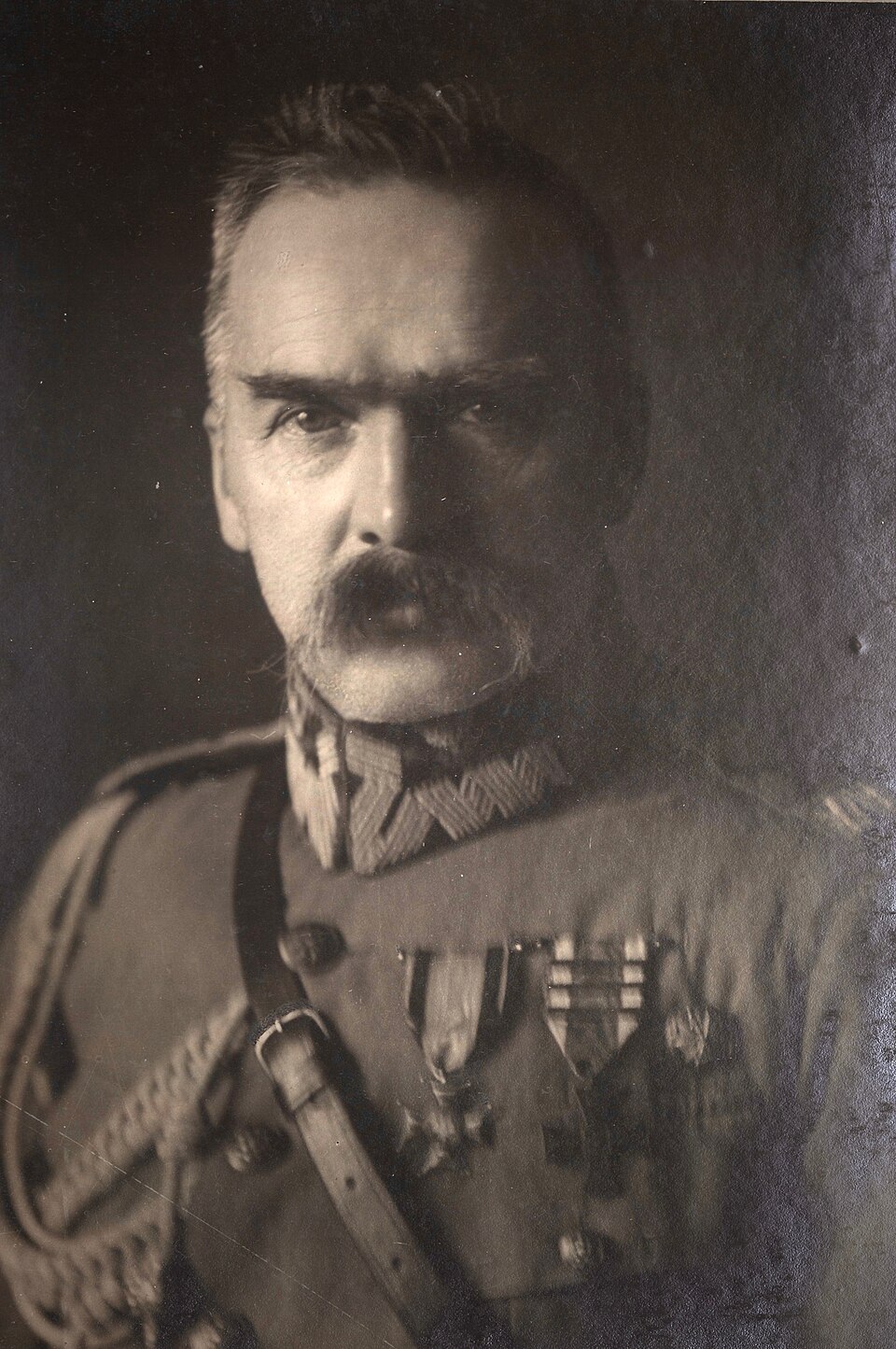
0 sources
Summary
Józef Piłsudski was born in Zalavas[1]. He died in Warsaw[2]. He worked as a politician[3], military personnel[4], military leader[5], military officer[6], and statesperson[7]. He ranks in the top 0.61% of human entities by monthly Wikipedia readership (17,040 views/month, #6,100 of 1,000,298).[8]
Key Facts
- Place of burial: Wawel Cathedral[9]
- Father: Józef Wincenty Piłsudski[10]
- Mother: Maria Piłsudska[11]
- Spouse: Aleksandra Piłsudska[12], Maria Piłsudska[13]
- Child: Jadwiga Piłsudska[14], Wanda Piłsudska[15]
- Country of citizenship: Russian Empire[16], Second Polish Republic[17]
- Native language: Polish[18]
- Position held: Prime Minister of Poland[19], General Inspector of the Armed Forces[20], chief of state (Poland)[21], president[22]
- Employer: National University of Kharkiv[23]
- Educated at: National University of Kharkiv[24]
- Award received: Grand Cross of the Legion of Honour[25], Order of the White Eagle[26], Order of Lāčplēsis[27], Médaille militaire[28], honorary doctor of the University of Warsaw[29], Order of Michael the Brave[30], Grand Cross of the Order of the Southern Cross[31], Grand Cross of the Order of Polonia Restituta[32], Commander with Star of the Order of Polonia Restituta[33], Grand Cross of the Order of Military Virtue[34], Commander of the Order of Military Virtue[35], Gold Cross of the Virtuti Militari[36], Silver Cross of the Virtuti Militari[37], Cross of Independence with Swords[38]
- Religion or worldview: Lutheranism[39], Catholicism[40]
- Sex or gender: male[41]
- Family: House of Piłsudski[42]
- Member of political party: Polish Socialist Party[43]
- Coat of arms: Kościesza[44]
Body
Works and Contributions
Things named for Józef Piłsudski include Polish Army Stadium[45], an association football venue[46], in Poland[47], founded in 1930[48]; Marshal Józef Piłsudski Stadium[49], an association football venue[50], in Poland[51], founded in 2010[52]; Piłsudski Square[53], a square[54], in Poland[55]; Piłsudski's Mound[56], a tumulus[57], in Poland[58]; Lukiškės Square[59], a square[60], in Lithuania[61]; Józef Piłsudski Institute of America[62], an organization[63], in United States[64], founded in 1943[65]; Józef Piłsudski University of Physical Education in Warsaw[66]; and Marshal Józef Piłsudski Boulevards in Włocławek[67].
Why It Matters
Józef Piłsudski has Wikipedia articles in 29 language editions, a strong signal of global cultural recognition.[68] He is known by 32 alternative names across languages and contexts.[69]
Works attributed to him include Proclamation to the inhabitants of the former Grand Duchy of Lithuania[70], a declaration[71], in Second Polish Republic[72]. Entities named for him include Polish Army Stadium[45], an association football venue[46], in Poland[47], founded in 1930[48]; Marshal Józef Piłsudski Stadium[49], an association football venue[50], in Poland[51], founded in 2010[52]; Piłsudski Square[53], a square[54], in Poland[55]; Piłsudski's Mound[56], a tumulus[57], in Poland[58]; Lukiškės Square[59], a square[60], in Lithuania[61]; and Józef Piłsudski Institute of America[62], an organization[63], in United States[64], founded in 1943[65].
FAQs
Where was Józef Piłsudski born?
Józef Piłsudski was born in Zalavas[1].
Where did Józef Piłsudski die?
Józef Piłsudski died in Warsaw[2].
Who were Józef Piłsudski's parents?
Józef Piłsudski's father was Józef Wincenty Piłsudski[10]. Józef Piłsudski's mother was Maria Piłsudska[11].
Who was Józef Piłsudski married to?
Józef Piłsudski's spouses include Aleksandra Piłsudska[12] and Maria Piłsudska[13].
What did Józef Piłsudski do for work?
Józef Piłsudski worked as a politician[3], military personnel[4], military leader[5], military officer[6], and statesperson[7].
Where did Józef Piłsudski go to school?
Józef Piłsudski was educated at National University of Kharkiv[24].
What awards did Józef Piłsudski receive?
Honors received include Grand Cross of the Legion of Honour[25], Order of the White Eagle[26], Order of Lāčplēsis[27], and Médaille militaire[28].