
Joseph Schumpeter
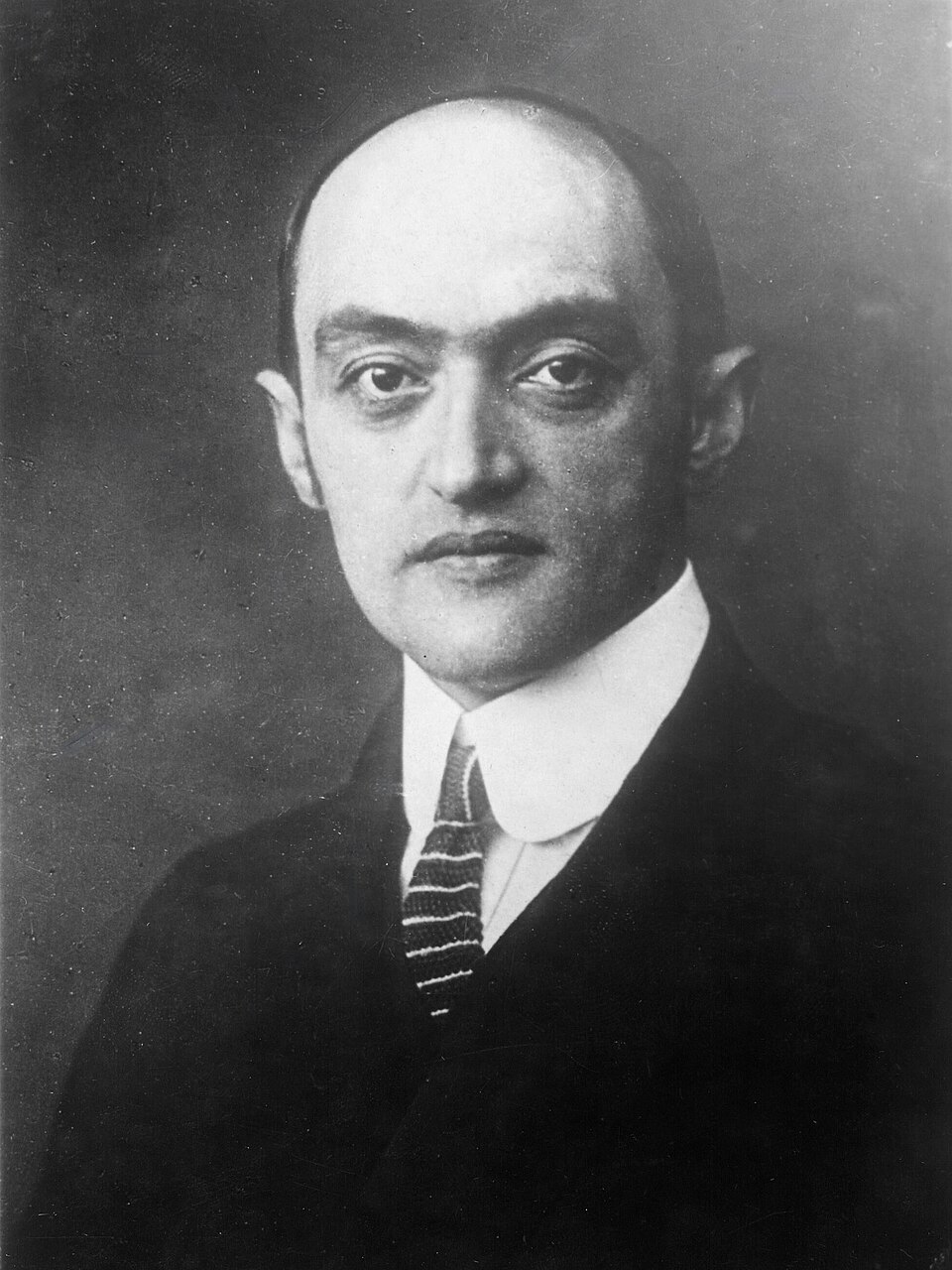
0 sources
Joseph Schumpeter
Summary
Joseph Schumpeter is a human[1]. His place of birth was Třešť[2]. He was born on February 8, 1883[3]. He passed away in Salisbury[4]. He died on January 8, 1950[5]. He worked as an economist[6], book collector[7], anthropologist[8], jurist[9], and political scientist[10]. He ranks in the top 0.66% of human entities by monthly Wikipedia readership (2,967 views/month, #6,630 of 1,000,298).[11]
Key Facts
- Joseph Schumpeter was born in Třešť[2].
- Joseph Schumpeter passed away in Salisbury[4].
- Joseph Schumpeter was born on February 8, 1883[3].
- Joseph Schumpeter died on January 8, 1950[5].
- Joseph Schumpeter died on June 21, 1950[12].
- Burial took place at Salisbury Cemetery[13].
- Joseph Schumpeter's father was Josef Schumpeter[14].
- Joseph Schumpeter was married to Elizabeth Firuski[15].
- Joseph Schumpeter held citizenship in Cisleithania[16].
- Joseph Schumpeter held citizenship in United States[17].
- Joseph Schumpeter held citizenship in Austria[18].
- Joseph Schumpeter held citizenship in Germany[19].
- German was Joseph Schumpeter's native language[20].
- Joseph Schumpeter's professions included economist[6].
- Joseph Schumpeter's professions included book collector[7].
- Joseph Schumpeter's professions included anthropologist[8].
- Joseph Schumpeter worked as a jurist[9].
- Joseph Schumpeter's professions included political scientist[10].
- Joseph Schumpeter's professions included political economist[21].
- Joseph Schumpeter's field of work was economics[22].
- Joseph Schumpeter held the position of finance minister of Austria[23].
- Joseph Schumpeter was employed by University of Bonn[24].
- Among Joseph Schumpeter's employers was Harvard University[25].
- Among Joseph Schumpeter's employers was University of Graz[26].
- Among Joseph Schumpeter's employers was Chernivtsi University[27].
Body
Origins and Family
Joseph Schumpeter was born in Třešť[2]. He was born on February 8, 1883[3]. His father was Josef Schumpeter[14]. German was his native language[20].
Education
Educated at University of Vienna[28], a university[29], in Austria[30], founded in 1365[31], headquartered in Vienna[32] and Theresianum[33], a school[34], in Austria[35], founded in 1746[36], headquartered in Neue Favorita[37]. Doctoral advisors include Eugen von Böhm-Bawerk[38], an economist[39], 1851–1914[40], of Austria–Hungary[41], specialised in economics[42] and Friedrich von Wieser[43], an economist[44], 1851–1926[45], of Austria–Hungary[46], awarded the honorary doctor of the University of Vienna[47]. Joseph Schumpeter earned the academic degree of Doctor of Philosophy[48].
Career and Affiliations
Recorded occupations include economist[6], book collector[7], anthropologist[8], jurist[9], political scientist[10], and political economist[21]. Joseph Schumpeter's field of work was economics[22]. Employers include University of Bonn[24], a public research university[49], in Germany[50], founded in 1818[51], headquartered in Bonn[52]; Harvard University[25], a private university[53], in United States[54], founded in 1636[55], headquartered in Cambridge[56]; University of Graz[26], a university[57], in Austria[58], founded in 1585[59], headquartered in Main building of the University of Graz[60]; and Chernivtsi University[27], a national university[61], in Ukraine[62], founded in 1875[63]. He held the position of finance minister of Austria[23]. A notable student of him was Nicholas Georgescu-Roegen[64]. Doctoral students include Ferdinand A. Hermens[65], an economist[66], 1906–1998[67], of Germany[68], awarded the Commander's Cross of the Order of Merit of the Federal Republic of Germany[69]; Paul Samuelson[70], an economist[71], 1915–2009[72], of United States[73], awarded the Guggenheim Fellowship[74], specialised in macroeconomics[75]; James Tobin[76], an economist[77], 1918–2002[78], of United States[79], awarded the Adam Smith Award[80], specialised in economics[81]; Paul Sweezy[82], an economist[83], 1910–2004[84], of United States[85]; Anne P. Carter[86], an economist[87], b. 1925[88], of United States[89], awarded the Carolyn Shaw Bell Award[90], specialised in economics[91]; and Arthur Smithies[92].
Works and Contributions
A notable work attributed to Joseph Schumpeter is Capitalism, Socialism and Democracy[93]. Things named for him include Schumpeter Award[94].
Recognition
Joseph Schumpeter received the Fellow of the Econometric Society[95].
Personal Life
Joseph Schumpeter was married to Elizabeth Firuski[15].
Death and Burial
Recorded date of death include January 8, 1950[5] and June 21, 1950[12]. Joseph Schumpeter died in Salisbury[4]. The cause of death was cardiac arrest[96]. He is buried at Salisbury Cemetery[13].
Why It Matters
Joseph Schumpeter ranks in the top 0.66% of human entities by monthly Wikipedia readership (2,967 views/month, #6,630 of 1,000,298).[11] He has Wikipedia articles in 27 language editions, a strong signal of global cultural recognition.[97] He is known by 63 alternative names across languages and contexts.[98]
He has been cited as an influence by Mariana Mazzucato[99], an economist[100], b. 1968[101], of United States[102], awarded the Leontief Prize for Advancing the Frontiers of Economic Thought[103]; Paul Samuelson[104], an economist[105], 1915–2009[106], of United States[107], awarded the Guggenheim Fellowship[108], specialised in macroeconomics[109]; Paul M. Romer[110], an economist[111], b. 1955[112], of United States[113], awarded the H. C. Recktenwald Prize in Economics[114], specialised in economics[115]; Anthony Downs[116], an economist[117], 1930–2021[118], of United States[119]; Kenneth E. Boulding[120], an economist[121], 1910–1993[122], of United Kingdom[123], awarded the John Bates Clark Medal[124], specialised in economics[125]; and Carlota Perez[126], an economist[127], b. 1939[128], of Venezuela[129], awarded the Kondratiev Medal[130].
Works attributed to him include Capitalism, Socialism and Democracy[131]. Entities named for him include Schumpeter Award[94].
His notable doctoral advisees include Paul Samuelson[132], Paul Sweezy[133], Hans Singer[134], John Burr Williams[135], James Tobin[136], and Wolfgang Stolper[137].
FAQs
Where was Joseph Schumpeter born?
Joseph Schumpeter was born in Třešť[2].
Where did Joseph Schumpeter die?
Joseph Schumpeter died in Salisbury[4].
Who were Joseph Schumpeter's parents?
Joseph Schumpeter's father was Josef Schumpeter[14].
Who was Joseph Schumpeter married to?
Joseph Schumpeter's spouses include Elizabeth Firuski[15].
What did Joseph Schumpeter do for work?
Joseph Schumpeter worked as economist[6], book collector[7], anthropologist[8], jurist[9], and political scientist[10].
Where did Joseph Schumpeter go to school?
Joseph Schumpeter was educated at University of Vienna[28] and Theresianum[33].
What awards did Joseph Schumpeter receive?
Honors received include Fellow of the Econometric Society[95].
Who did Joseph Schumpeter influence?
Joseph Schumpeter has been cited as an influence by Mariana Mazzucato[99], Paul Samuelson[104], Paul M. Romer[110], and Anthony Downs[116].