
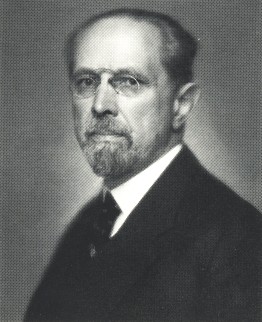
Werner Sombart
0 sources
Werner Sombart was born on January 19, 1863, in Ermsleben [1][2][3][4][5][6][7]. He died on May 18, 1941, in Berlin [1][7][2][3][4][5][6]. His professional roles included economist, sociologist, university teacher, and historian [1]. He received his education at Humboldt-Universität zu Berlin .
Sombart was employed by Frederick William University Berlin, Handelshochschule Berlin, and the University of Wrocław . His intellectual work was influenced by Max Weber . He was married to Corina Sombart [8]. Following his death, he was buried at Waldfriedhof Dahlem .
Key Facts
- Place of burial: Waldfriedhof Dahlem[11]
- Father: Anton Ludwig Sombart[12]
- Spouse: Corina Sombart[13]
- Child: Ninetta Sombart[14], Nicolaus Sombart[15]
- Country of citizenship: German Reich[16]
- Occupation: author[17]
- Field of work: economics[18], sociology[19], economic history[20]
- Employer: Frederick William University Berlin[21], Handelshochschule Berlin[22], University of Wrocław[23]
- Educated at: Humboldt-Universität zu Berlin[24]
- Doctoral advisor: Gustav von Schmoller[25], Adolph Wagner[26]
- Student: Ramón Carande[27], Emmy Wagner[28]
- Notable work: The Jews and Modern Capitalism[29]
- Member of: American Academy of Arts and Sciences[30], Royal Prussian Academy of Sciences[31], Bavarian Academy of Sciences and Humanities[32], Romanian Academy[33]
- Religion or worldview: Reformed Christianity[34]
- Influenced by: Max Weber[35]
- Sex or gender: male[36]
- Movement: Conservative Revolution[37]
- Doctoral student: Wassily Leontief[38], William John Fellner[39], Walter Adolf Jöhr[40]
- Commons category: Werner Sombart[41]
- Archives at: Secret State Archives Prussian Cultural Heritage Foundation[42]
- Family name: Sombart[43]
- Given name: Werner[44]
- Work location: Wrocław[45], Berlin[46]
- Student of: Gustav von Schmoller[47]
- Described by source: Nordisk familjebok[48], Great Soviet Encyclopedia (1969–1978)[49], BEIC Digital Library[50], Small Brockhaus and Efron Encyclopedic Dictionary[51], Brockhaus and Efron Encyclopedic Dictionary[52], Jewish Encyclopedia of Brockhaus and Efron[53]
Why It Matters
Werner Sombart has Wikipedia articles in 22 language editions, a strong signal of global cultural recognition.[54] He is known by 26 alternative names across languages and contexts.[55]
He has been cited as an influence by Ramiro de Maeztu[56], a poet[57], 1874–1936[58], of Spain[59].
His notable doctoral advisees include Wassily Leontief[60], an economist[61], 1906–1999[62], of Russian Empire[63], awarded the Guggenheim Fellowship[64], specialised in economics[65] and William John Fellner[66], an economist[67], 1905–1983[68], of Hungary[69], awarded the Bernhard Harms Prize[70].
FAQs
Where was Werner Sombart born?
Werner Sombart's place of birth was Ermsleben[2].
Where did Werner Sombart die?
Werner Sombart passed away in Berlin[4].
Who were Werner Sombart's parents?
Werner Sombart's father was Anton Ludwig Sombart[12].
Who was Werner Sombart married to?
Werner Sombart's spouses include Corina Sombart[13].
What did Werner Sombart do for work?
Werner Sombart worked as an economist[5], sociologist[6], university teacher[7], historian[8], and political economist[9].
Where did Werner Sombart go to school?
Werner Sombart was educated at Humboldt-Universität zu Berlin[24].
Who did Werner Sombart influence?
Werner Sombart has been cited as an influence by Ramiro de Maeztu[56].