
Joseph Dalton Hooker
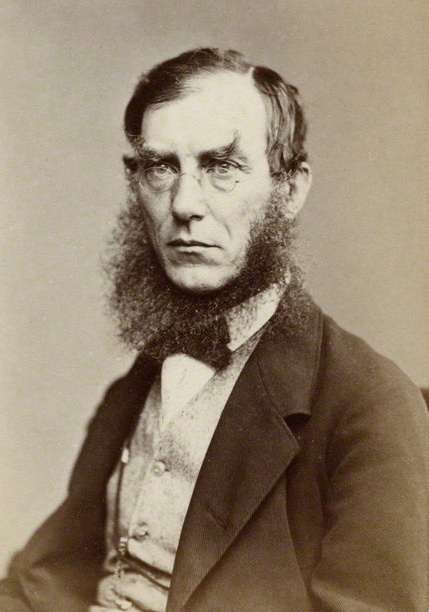
0 sources
Summary
Joseph Dalton Hooker was born in Halesworth[1]. He died in Sunningdale[2]. He worked as a botanist[3], explorer[4], pteridologist[5], bryologist[6], and mycologist[7]. He ranks in the top 0.72% of human entities by monthly Wikipedia readership (1,349 views/month, #7,184 of 1,000,298).[8]
Key Facts
- Place of burial: St Anne's Church, Kew[9]
- Father: William Jackson Hooker[10]
- Mother: Maria Dawson Turner[11]
- Spouse: Frances Hooker[12], Hyacinth Symonds Hooker[13]
- Child: William Henslow Hooker[14], Harriet Anne Hooker Thiselton-Dyer[15], Charles Paget Hooker[16], Marie Elizabeth Hooker[17], Brian Harvey Hodgson Hooker[18], Reginald Hawthorn Hooker[19], Grace Ellen Hooker[20], Joseph Symonds Hooker[21], Richard Symonds Hooker[22]
- Country of citizenship: United Kingdom of Great Britain and Ireland[23]
- Occupation: surgeon[24], writer[25], botanical collector[26], scientific collector[27]
- Field of work: botany[28]
- Position held: President of the Royal Society[29]
- Employer: Royal Botanic Gardens, Kew[30], British Geological Survey[31]
- Educated at: University of Glasgow[32]
- Award received: Fellow of the Royal Society[33], Companion of the Order of the Bath[34], Copley Medal[35], Pour le Mérite for Sciences and Arts order[36], Royal Medal[37], Knight Commander of the Order of the Star of India[38], Knight Grand Commander of the Order of the Star of India[39], Darwin Medal[40], Albert Medal[41], Cothenius Medal[42], Darwin–Wallace Medal[43], Clarke Medal[44], Linnean Medal[45], Victoria Medal of Honour[46]
- Member of: Royal Society[47], German Academy of Sciences Leopoldina[48], Royal Swedish Academy of Sciences[49], Göttingen Academy of Sciences and Humanities in Lower Saxony[50], Saint Petersburg Academy of Sciences[51], American Academy of Arts and Sciences[52], Hungarian Academy of Sciences[53], Accademia Nazionale dei Lincei[54], Russian Academy of Sciences[55], Royal Prussian Academy of Sciences[56], Royal Netherlands Academy of Arts and Sciences[57], Accademia Nazionale delle Scienze detta dei XL[58], Bavarian Academy of Sciences and Humanities[59], Voyage of the H.M.S. Erebus & Terror[60]
- Sex or gender: male[61]
- Commons category: Joseph Dalton Hooker[62]
Body
Works and Contributions
Things named for Joseph Dalton Hooker include New Zealand sea lion[63], Hooker Island[64], Bulbinella hookeri[65], Mount Hooker[66], and Begonia josephi[67].
Why It Matters
Joseph Dalton Hooker has Wikipedia articles in 27 language editions, a strong signal of global cultural recognition.[68] He is known by 74 alternative names across languages and contexts.[69]
Works attributed to him include Curtis's Botanical Magazine[70], a scientific journal[71], founded in 1787[72]; The botany of the Antarctic voyage of H.M. discovery ships Erebus and Terror in the Years 1839-1843[73], a flora[74]; Flora Tasmaniae[75], a written work[76], in United Kingdom[77]; Flora Novae-Zelandiae[78], a literary work[79], in United Kingdom[80]; and Handbook of the New Zealand Flora[81], a literary work[82]. Entities named for him include New Zealand sea lion[63], Hooker Island[64], Bulbinella hookeri[65], Mount Hooker[66], and Begonia josephi[67].
FAQs
Where was Joseph Dalton Hooker born?
Joseph Dalton Hooker's place of birth was Halesworth[1].
Where did Joseph Dalton Hooker die?
Joseph Dalton Hooker died in Sunningdale[2].
Who were Joseph Dalton Hooker's parents?
Joseph Dalton Hooker's father was William Jackson Hooker[10]. Joseph Dalton Hooker's mother was Maria Dawson Turner[11].
Who was Joseph Dalton Hooker married to?
Joseph Dalton Hooker's spouses include Frances Hooker[12] and Hyacinth Symonds Hooker[13].
What did Joseph Dalton Hooker do for work?
Joseph Dalton Hooker worked as a botanist[3], explorer[4], pteridologist[5], bryologist[6], and mycologist[7].
Where did Joseph Dalton Hooker go to school?
Joseph Dalton Hooker was educated at University of Glasgow[32].
What awards did Joseph Dalton Hooker receive?
Honors received include Fellow of the Royal Society[33], Companion of the Order of the Bath[34], Copley Medal[35], and Pour le Mérite for Sciences and Arts order[36].