
John von Neumann
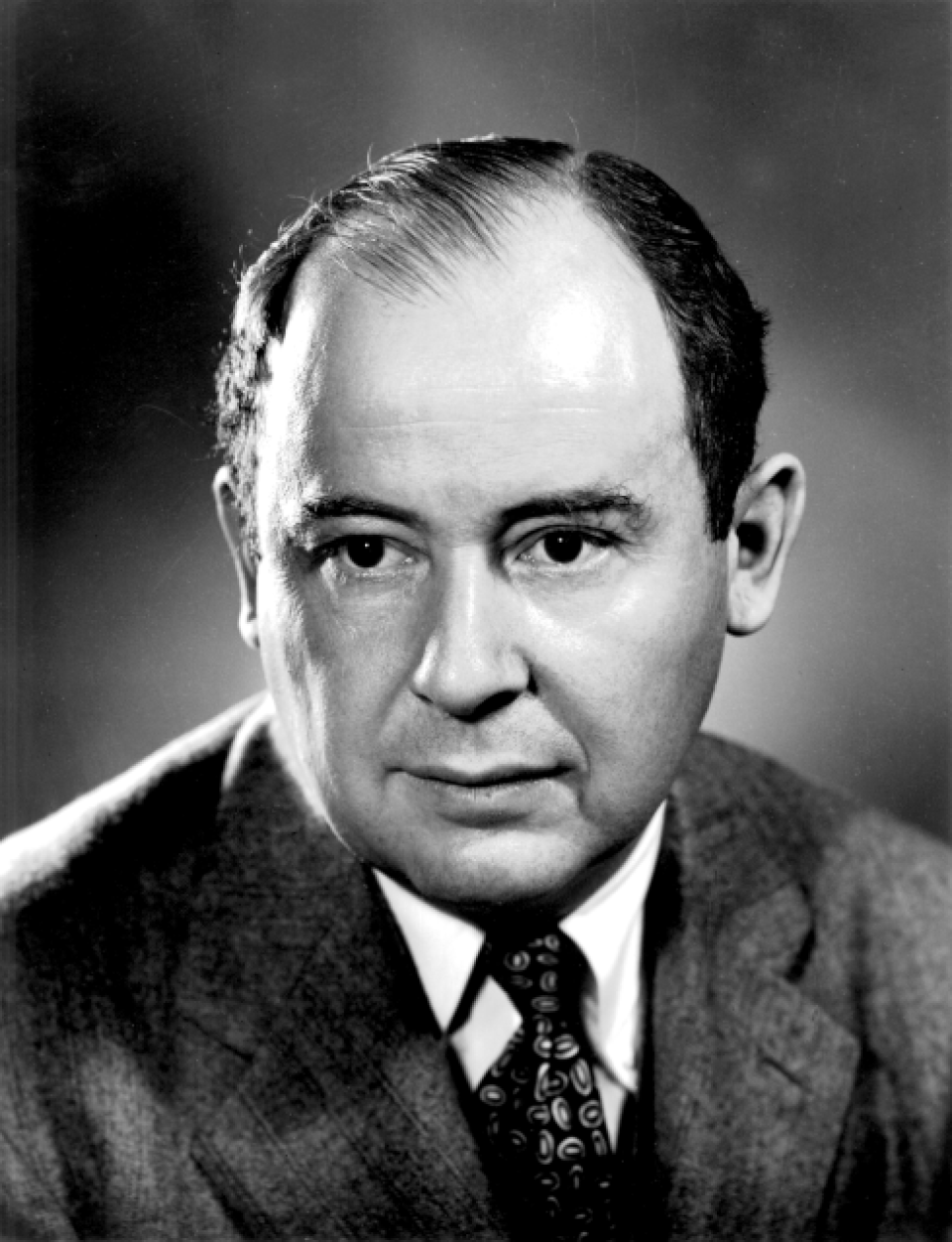
0 sources
Summary
John von Neumann was born in Budapest[1]. He died in Washington, D.C.[2]. He worked as a mathematician[3], computer scientist[4], physicist[5], economist[6], and university teacher[7]. He ranks in the top 0.55% of human entities by monthly Wikipedia readership (38,061 views/month, #5,549 of 1,000,298).[8]
Key Facts
- Place of burial: Princeton Cemetery[9]
- Father: Max von Neumann[10]
- Mother: Margaret Neumann[11]
- Spouse: Klara Dan von Neumann[12], Mariette Kövesi[13]
- Child: Marina von Neumann Whitman[14]
- Country of citizenship: Hungary[15], United States[16]
- Native language: Hungarian[17]
- Ethnic group: Jewish people[18]
- Occupation: consultant[19], Manhattan Project[20]
- Field of work: functional analysis[21], operator theory[22], mathematics[23], physics[24], game theory[25], cellular automaton[26], set theory[27], quantum physics[28], nuclear bomb[29], informatics[30]
- Position held: chairperson[31]
- Employer: Princeton University[32], Frederick William University Berlin[33], United States Atomic Energy Commission[34], University of Hamburg[35], Institute for Advanced Study[36], Armed Forces Special Weapons Project[37], Ballistic Research Laboratory[38], Naval Ordnance Laboratory[39], Los Alamos National Laboratory[40]
- Educated at: Fasori Gimnázium[41], Frederick William University Berlin[42], ETH Zurich[43], Eötvös Loránd University[44], University of Göttingen[45]
- Doctoral advisor: Lipót Fejér[46]
- Award received: Medal of Freedom[47], Carl-Gustaf Rossby Research Medal[48], Bôcher Memorial Prize[49], Enrico Fermi Award[50], Josiah Willard Gibbs Lectureship[51], Silliman Memorial Lectures[52], Medal for Merit[53], Albert Einstein Award[54], Financial Times Person of the Year[55], Fellow of the Institute of Mathematical Statistics[56], Fellow of the Econometric Society[57]
- Religion or worldview: Judaism[58], Christianity[59], Catholicism[60]
- Sex or gender: male[61]
- Doctoral student: Donald B. Gillies[62], Maurice Pryce[63], Israel Halperin[64], Friederich Ignaz Mautner[65], John Patterson Mayberry[66]
- Part of: The Martians[67]
- Commons category: John von Neumann[68]
Body
Works and Contributions
Things named for John von Neumann include von Neumann architecture[69], self-replicating spacecraft[70], von Neumann universe[71], von Neumann algebra[72], minimax theorem[73], von Neumann entropy[74], von Neumann–Morgenstern utility theorem[75], and Von Neumann–Bernays–Gödel set theory[76].
Why It Matters
John von Neumann has Wikipedia articles in 30 language editions, a strong signal of global cultural recognition.[77] He is known by 41 alternative names across languages and contexts.[78]
He has been cited as an influence by Lloyd Shapley[79], an economist[80], 1923–2016[81], of United States[82], awarded the Bronze Star Medal[83], specialised in mathematics[84]; Raphael M. Robinson[85], a mathematician[86], 1911–1995[87], of United States[88], specialised in set theory[89]; and Alexander Brody[90], a writer[91], 1933–2022[92], of United States[93].
He is credited with the discovery of Monte Carlo method[94], a randomized algorithm[95]; merge sort[96], a comparison sort[97]; density matrix[98]; set-theoretic definition of natural numbers[99], a definition[100]; von Neumann cellular automaton[101], a cellular automaton[102]; and middle-square method[103], an algorithm[104]. Works attributed to him include Theory of Games and Economic Behavior[105] and First Draft of a Report on the EDVAC[106]. Entities named for him include von Neumann architecture[69], self-replicating spacecraft[70], von Neumann universe[71], von Neumann algebra[72], minimax theorem[73], and von Neumann entropy[74].
His notable doctoral advisees include Israel Halperin[107] and Donald B. Gillies[108].
FAQs
Where was John von Neumann born?
John von Neumann was born in Budapest[1].
Where did John von Neumann die?
John von Neumann died in Washington, D.C.[2].
Who were John von Neumann's parents?
John von Neumann's father was Max von Neumann[10]. John von Neumann's mother was Margaret Neumann[11].
Who was John von Neumann married to?
John von Neumann's spouses include Klara Dan von Neumann[12] and Mariette Kövesi[13].
What did John von Neumann do for work?
John von Neumann worked as a mathematician[3], computer scientist[4], physicist[5], economist[6], and university teacher[7].
Where did John von Neumann go to school?
John von Neumann was educated at Fasori Gimnázium[41], Frederick William University Berlin[42], ETH Zurich[43], and Eötvös Loránd University[44].
What awards did John von Neumann receive?
Honors received include Medal of Freedom[47], Carl-Gustaf Rossby Research Medal[48], Bôcher Memorial Prize[49], and Enrico Fermi Award[50].
Who did John von Neumann influence?
John von Neumann has been cited as an influence by Lloyd Shapley[79], Raphael M. Robinson[85], and Alexander Brody[90].
What did John von Neumann discover?
John von Neumann is credited as discoverer of Monte Carlo method[94], merge sort[96], density matrix[98], and set-theoretic definition of natural numbers[99].