
Johann Sebastian Bach
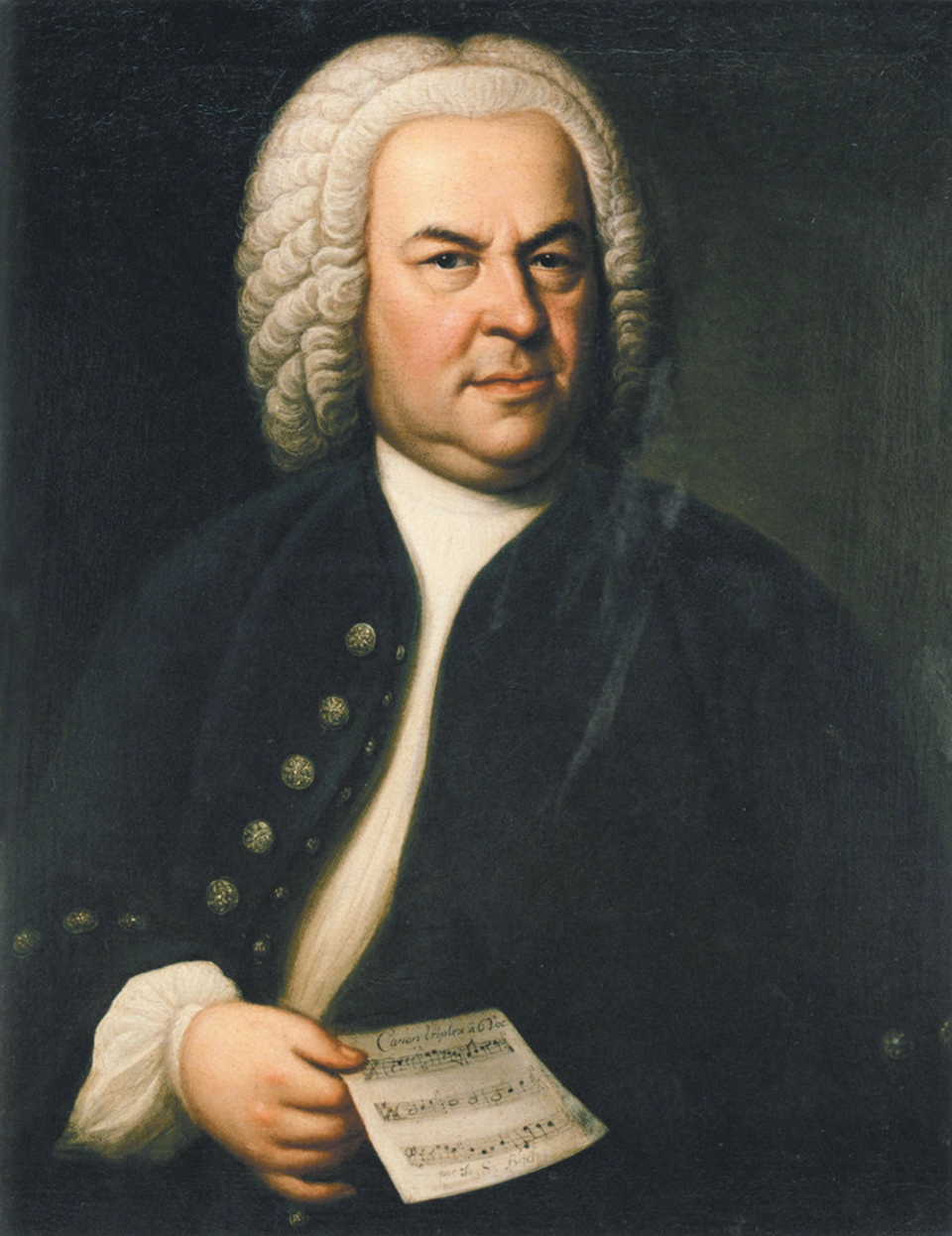
0 sources
Johann Sebastian Bach
Summary
Johann Sebastian Bach is a human[1]. He was born in Eisenach[2]. He died in Leipzig[3]. He worked as a composer[4], organist[5], harpsichordist[6], violinist[7], and violist[8]. He ranks in the top 0.34% of human entities by monthly Wikipedia readership (34,994 views/month, #3,352 of 1,000,298).[9]
Key Facts
- Born in Eisenach[2], Johann Sebastian Bach…
- Johann Sebastian Bach died in Leipzig[3].
- Johann Sebastian Bach is buried at St. Thomas Church[10].
- Johann Sebastian Bach's father was Johann Ambrosius Bach[11].
- Johann Sebastian Bach's mother was Maria Elisabeth Lämmerhirt[12].
- Among Johann Sebastian Bach's spouses was Anna Magdalena Bach[13].
- Johann Sebastian Bach was married to Maria Barbara Bach[14].
- A child of Johann Sebastian Bach was Wilhelm Friedemann Bach[15].
- A child of Johann Sebastian Bach was Carl Philipp Emanuel Bach[16].
- A child of Johann Sebastian Bach was Johann Christian Bach[17].
- A child of Johann Sebastian Bach was Johann Gottfried Bernhard Bach[18].
- A child of Johann Sebastian Bach was Johann Christoph Friedrich Bach[19].
- A child of Johann Sebastian Bach was Gottfried Heinrich Bach[20].
- Johann Sebastian Bach held citizenship in Saxe-Eisenach[21].
- Johann Sebastian Bach held citizenship in Holy Roman Empire[22].
- Johann Sebastian Bach held citizenship in Germany[23].
- German was Johann Sebastian Bach's native language[24].
- Johann Sebastian Bach is identified as part of the Germans ethnic group[25].
- Johann Sebastian Bach's professions included composer[4].
- Johann Sebastian Bach's professions included organist[5].
- Johann Sebastian Bach's professions included harpsichordist[6].
- Johann Sebastian Bach worked as a violinist[7].
- Johann Sebastian Bach worked as a violist[8].
- Johann Sebastian Bach's professions included conductor[26].
- Johann Sebastian Bach held the position of chapelmaster[27].
Body
Origins and Family
Born in Eisenach[2], Johann Sebastian Bach… his father was Johann Ambrosius Bach[11]. His mother was Maria Elisabeth Lämmerhirt[12]. He is identified as part of the Germans ethnic group[25]. German was his native language[24].
Education
Johann Sebastian Bach was educated at St. Michael's School[28].
Career and Affiliations
Recorded occupations include composer[4], organist[5], harpsichordist[6], violinist[7], violist[8], and conductor[26]. Employers include Johann Ernst III, Duke of Saxe-Weimar[29], Bachkirche Arnstadt[30], Saint Blaise[31], Leopold, Prince of Anhalt-Köthen[32], Thomasschule zu Leipzig[33], and Collegium Musicum[34]. Positions held include chapelmaster[27], a position[35] and Thomaskantor[36], a position[37], in Germany[38].
Personal Life
Spouses include Anna Magdalena Bach[13], a singer[39], 1701–1760[40], of Electorate of Saxony[41] and Maria Barbara Bach[14], a singer[42], 1684–1720[43], of Schwarzburg-Sondershausen[44]. Children include Wilhelm Friedemann Bach[15], a composer[45], 1710–1784[46], of Holy Roman Empire[47], specialised in music[48]; Carl Philipp Emanuel Bach[16], a composer[49], 1714–1788[50], of Germany[51]; Johann Christian Bach[17], a composer[52], 1735–1782[53], of Electorate of Saxony[54]; Johann Gottfried Bernhard Bach[18], a composer[55], 1715–1739[56], of Germany[57]; Johann Christoph Friedrich Bach[19], a composer[58], 1732–1795[59], of Electorate of Saxony[60]; and Gottfried Heinrich Bach[20], a musician[61], 1724–1763[62], of Germany[63]. Johann Sebastian Bach's religion is recorded as Lutheranism[64].
Death and Burial
Johann Sebastian Bach passed away in Leipzig[3]. The cause of death was stroke[65]. Burial took place at St. Thomas Church[10].
Works and Contributions
Things named for Johann Sebastian Bach include Gödel, Escher, Bach[66], BACH motif[67], Samuel Sebastian Wesley[68], Bach House[69], Netherlands Bach Society[70], Bach Collegium Japan[71], Bachkirche Arnstadt[72], and International Johann Sebastian Bach Competition[73].
Why It Matters
Johann Sebastian Bach ranks in the top 0.34% of human entities by monthly Wikipedia readership (34,994 views/month, #3,352 of 1,000,298).[9] He has Wikipedia articles in 30 language editions, a strong signal of global cultural recognition.[74] He is known by 74 alternative names across languages and contexts.[75]
He has been cited as an influence by The Beatles[76], a musical group[77], founded in 1960[78]; Wolfgang Amadeus Mozart[79], a composer[80], 1756–1791[81], of Archduchy of Austria[82], awarded the Order of the Golden Spur[83], specialised in opera[84]; Ludwig van Beethoven[85], a composer[86], 1770–1827[87], of Electorate of Cologne[88], awarded the Bröckemännche Award[89], specialised in classical music[90]; Frédéric Chopin[91], a composer[92], 1810–1849[93], of France[94], specialised in art music[95]; Nikos Kazantzakis[96], a writer[97], 1883–1957[98], of Greece[99], awarded the Greek State Literary Awards[100], specialised in poetry[101]; and Magma[102], a musical group[103], founded in 1969[104].
Works attributed to him include The Well-Tempered Clavier[105] and Cello Suites[106]. Entities named for him include Gödel, Escher, Bach[66], BACH motif[67], Samuel Sebastian Wesley[68], Bach House[69], Netherlands Bach Society[70], and Bach Collegium Japan[71].
FAQs
Where was Johann Sebastian Bach born?
Born in Eisenach[2], Johann Sebastian Bach…
Where did Johann Sebastian Bach die?
Johann Sebastian Bach passed away in Leipzig[3].
Who were Johann Sebastian Bach's parents?
Johann Sebastian Bach's father was Johann Ambrosius Bach[11]. Johann Sebastian Bach's mother was Maria Elisabeth Lämmerhirt[12].
Who was Johann Sebastian Bach married to?
Johann Sebastian Bach's spouses include Anna Magdalena Bach[13] and Maria Barbara Bach[14].
What did Johann Sebastian Bach do for work?
Johann Sebastian Bach worked as composer[4], organist[5], harpsichordist[6], violinist[7], and violist[8].
Where did Johann Sebastian Bach go to school?
Johann Sebastian Bach was educated at St. Michael's School[28].
Who did Johann Sebastian Bach influence?
Johann Sebastian Bach has been cited as an influence by The Beatles[76], Wolfgang Amadeus Mozart[79], Ludwig van Beethoven[85], and Frédéric Chopin[91].