
Johann Georg Tralles
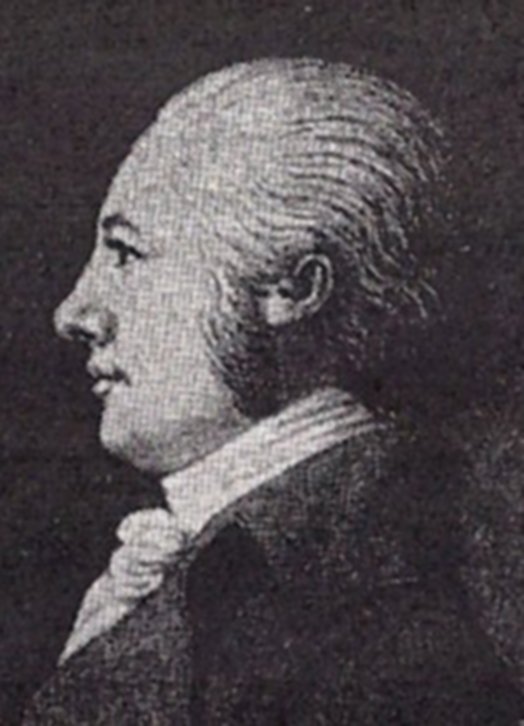
0 sources
Johann Georg Tralles
Summary
Johann Georg Tralles is a human[1]. His place of birth was Hamburg[2]. He was born on October 15, 1763[3]. He died in London[4]. He died on November 19, 1822[5]. He worked as a mathematician[6], physicist[7], university teacher[8], and surveyor[9]. He ranks in the top 0.73% of human entities by monthly Wikipedia readership (13 views/month, #7,299 of 1,000,298).[10]
Key Facts
- Johann Georg Tralles's place of birth was Hamburg[2].
- Johann Georg Tralles passed away in London[4].
- Johann Georg Tralles was born on October 15, 1763[3].
- Johann Georg Tralles died on November 19, 1822[5].
- Johann Georg Tralles held citizenship in Holy Roman Empire[11].
- Johann Georg Tralles worked as a mathematician[6].
- Johann Georg Tralles worked as a physicist[7].
- Johann Georg Tralles's professions included university teacher[8].
- Johann Georg Tralles's professions included surveyor[9].
- Johann Georg Tralles was employed by University of Bern[12].
- Johann Georg Tralles was employed by Humboldt-Universität zu Berlin[13].
- Johann Georg Tralles was educated at University of Göttingen[14].
- Johann Georg Tralles was a member of Royal Prussian Academy of Sciences[15].
- Johann Georg Tralles was a member of Bavarian Academy of Sciences and Humanities[16].
- Johann Georg Tralles is recorded as male[17].
- Johann Georg Tralles's instance of is recorded as human[18].
- Johann Georg Tralles's archives at is recorded as Q81164803[19].
- Johann Georg Tralles's family name is recorded as Tralles[20].
- Johann Georg Tralles's given name is recorded as Johann[21].
- Johann Georg Tralles's described by source is recorded as Nordisk familjebok[22].
- Johann Georg Tralles's described by source is recorded as Allgemeine Deutsche Biographie[23].
- Johann Georg Tralles's described by source is recorded as Brockhaus and Efron Encyclopedic Dictionary[24].
- Johann Georg Tralles's described by source is recorded as Small Brockhaus and Efron Encyclopedic Dictionary[25].
- Johann Georg Tralles's languages spoken, written or signed is recorded as German[26].
- Johann Georg Tralles's name in native language is recorded as {'lang': 'de', 'text': 'Johann Georg Tralles'}[27].
Body
Origins and Family
Johann Georg Tralles's place of birth was Hamburg[2]. He was born on October 15, 1763[3].
Education
Johann Georg Tralles's education included a stint at University of Göttingen[14].
Career and Affiliations
Recorded occupations include mathematician[6], physicist[7], university teacher[8], and surveyor[9]. Employers include University of Bern[12], a comprehensive university[28], in Switzerland[29], founded in 1834[30], headquartered in Main building of the University of Berne[31] and Humboldt-Universität zu Berlin[13], a comprehensive university[32], in Germany[33], founded in 1809[34], headquartered in Berlin[35].
Death and Burial
Johann Georg Tralles died on November 19, 1822[5]. He died in London[4].
Works and Contributions
Things named for Johann Georg Tralles include Tralles[36], a lunar crater[37].
Why It Matters
Johann Georg Tralles ranks in the top 0.73% of human entities by monthly Wikipedia readership (13 views/month, #7,299 of 1,000,298).[10] He has Wikipedia articles in 11 language editions, a strong signal of global cultural recognition.[38] He is known by 3 alternative names across languages and contexts.[39]
He is credited with the discovery of C/1819 N1[40], a non-periodic comet[41], founded in 1850[42]. Entities named for him include Tralles[36], a lunar crater[37].
FAQs
Where was Johann Georg Tralles born?
Johann Georg Tralles's place of birth was Hamburg[2].
Where did Johann Georg Tralles die?
Johann Georg Tralles passed away in London[4].
What did Johann Georg Tralles do for work?
Johann Georg Tralles worked as mathematician[6], physicist[7], university teacher[8], and surveyor[9].
Where did Johann Georg Tralles go to school?
Johann Georg Tralles was educated at University of Göttingen[14].
What did Johann Georg Tralles discover?
Johann Georg Tralles is credited as discoverer of C/1819 N1[40].