
Jean-Baptiste de Lamarck
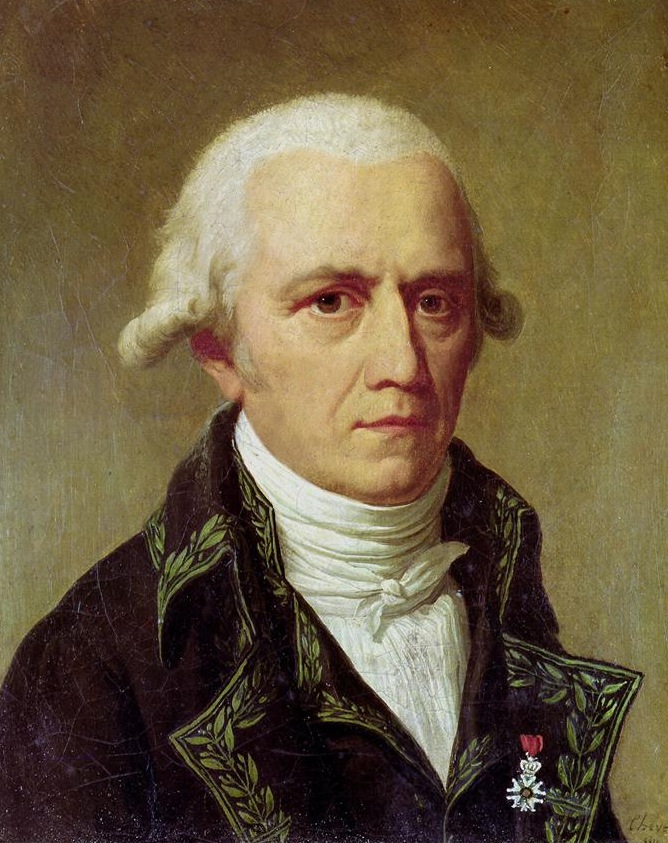
0 sources
Jean-Baptiste de Lamarck
Summary
Jean-Baptiste de Lamarck is a human[1]. His place of birth was Bazentin[2]. He was born on August 1, 1744[3]. He passed away in Paris[4]. He died on December 18, 1829[5]. He worked as a botanist[6], zoologist[7], naturalist[8], university teacher[9], and biologist[10]. He ranks in the top 0.68% of human entities by monthly Wikipedia readership (3,116 views/month, #6,851 of 1,000,298).[11]
Key Facts
- Jean-Baptiste de Lamarck's place of birth was Bazentin[2].
- Jean-Baptiste de Lamarck passed away in Paris[4].
- Jean-Baptiste de Lamarck was born on August 1, 1744[3].
- Jean-Baptiste de Lamarck died on December 18, 1829[5].
- Jean-Baptiste de Lamarck is buried at Montparnasse Cemetery[12].
- Jean-Baptiste de Lamarck's father was Q141347394[13].
- Jean-Baptiste de Lamarck's mother was Q141347413[14].
- Jean-Baptiste de Lamarck was married to Marie Anne Rosalie Delaporte[15].
- Jean-Baptiste de Lamarck was married to Charlotte Reverdy[16].
- Among Jean-Baptiste de Lamarck's spouses was Julie Mallet[17].
- A child of Jean-Baptiste de Lamarck was Auguste de Lamarck[18].
- Jean-Baptiste de Lamarck held citizenship in France[19].
- Jean-Baptiste de Lamarck worked as a botanist[6].
- Jean-Baptiste de Lamarck worked as a zoologist[7].
- Jean-Baptiste de Lamarck's professions included naturalist[8].
- Jean-Baptiste de Lamarck worked as a university teacher[9].
- Jean-Baptiste de Lamarck worked as a biologist[10].
- Jean-Baptiste de Lamarck's professions included chemist[20].
- Jean-Baptiste de Lamarck's field of work was zoology[21].
- Jean-Baptiste de Lamarck's field of work was botany[22].
- Jean-Baptiste de Lamarck's field of work was geology[23].
- Jean-Baptiste de Lamarck's field of work was meteorology[24].
- Jean-Baptiste de Lamarck's field of work was biology[25].
- Jean-Baptiste de Lamarck's field of work was evolutionary biology[26].
- Among Jean-Baptiste de Lamarck's employers was Muséum national d'histoire naturelle[27].
Body
Origins and Family
Jean-Baptiste de Lamarck was born in Bazentin[2]. He was born on August 1, 1744[3]. His father was Q141347394[13]. His mother was Q141347413[14].
Career and Affiliations
Recorded occupations include botanist[6], zoologist[7], naturalist[8], university teacher[9], biologist[10], and chemist[20]. Fields of work include zoology[21], a branch of biology[28]; botany[22], an academic discipline[29]; geology[23], a branch of science[30]; meteorology[24], a branch of science[31]; biology[25], a branch of science[32]; and evolutionary biology[26], a field of study[33]. Among Jean-Baptiste de Lamarck's employers was Muséum national d'histoire naturelle[27]. A notable student of him was Henri Braconnot[34].
Recognition
Jean-Baptiste de Lamarck received the Knight of the Legion of Honour[35].
Personal Life
Spouses include Marie Anne Rosalie Delaporte[15], Charlotte Reverdy[16], and Julie Mallet[17]. A child of Jean-Baptiste de Lamarck was Auguste de Lamarck[18]. His religion is recorded as Roman Catholic[36].
Death and Burial
Jean-Baptiste de Lamarck died on December 18, 1829[5]. He died in Paris[4]. The cause of death was heart attack[37]. He is buried at Montparnasse Cemetery[12].
Works and Contributions
Things named for Jean-Baptiste de Lamarck include Lamarckism[38], Lamarckdromia[39], Lamarck[40], and Jean Baptiste Lamarck Medal[41].
Why It Matters
Jean-Baptiste de Lamarck ranks in the top 0.68% of human entities by monthly Wikipedia readership (3,116 views/month, #6,851 of 1,000,298).[11] He has Wikipedia articles in 29 language editions, a strong signal of global cultural recognition.[42] He is known by 164 alternative names across languages and contexts.[43]
He has been cited as an influence by Charles Darwin[44], a geologist[45], 1809–1882[46], of United Kingdom of Great Britain and Ireland[47], awarded the Royal Medal[48], specialised in biology[49]; Bruce Lipton[50], a biologist[51], b. 1944[52], of United States[53]; William McDougall[54], a psychologist[55], 1871–1938[56], of United Kingdom[57], awarded the Fellow of the Royal Society[58]; Augustin-Pyramus de Candolle[59], a botanist[60], 1778–1841[61], of Republic of Geneva[62], awarded the Royal Medal[63], specialised in taxonomy[64]; Henric Sanielevici[65], a biologist[66], 1875–1951[67], of Romania[68]; and Frédéric Gérard[69], a botanist[70], 1806–1857[71], of France[72], specialised in botany[73].
He is credited with the discovery of Lamarckism[74], a theory of evolution[75]. Works attributed to him include Philosophie Zoologique[76], a written work[77] and Dictionnaire des sciences naturelles, dans lequel on traite méthodiquement des différens êtres de la nature...[78]. Entities named for him include Lamarckism[38], Lamarckdromia[39], Lamarck[40], and Jean Baptiste Lamarck Medal[41].
FAQs
Where was Jean-Baptiste de Lamarck born?
Jean-Baptiste de Lamarck was born in Bazentin[2].
Where did Jean-Baptiste de Lamarck die?
Jean-Baptiste de Lamarck passed away in Paris[4].
Who were Jean-Baptiste de Lamarck's parents?
Jean-Baptiste de Lamarck's father was Q141347394[13]. Jean-Baptiste de Lamarck's mother was Q141347413[14].
Who was Jean-Baptiste de Lamarck married to?
Jean-Baptiste de Lamarck's spouses include Marie Anne Rosalie Delaporte[15], Charlotte Reverdy[16], and Julie Mallet[17].
What did Jean-Baptiste de Lamarck do for work?
Jean-Baptiste de Lamarck worked as botanist[6], zoologist[7], naturalist[8], university teacher[9], and biologist[10].
What awards did Jean-Baptiste de Lamarck receive?
Honors received include Knight of the Legion of Honour[35].
Who did Jean-Baptiste de Lamarck influence?
Jean-Baptiste de Lamarck has been cited as an influence by Charles Darwin[44], Bruce Lipton[50], William McDougall[54], and Augustin-Pyramus de Candolle[59].
What did Jean-Baptiste de Lamarck discover?
Jean-Baptiste de Lamarck is credited as discoverer of Lamarckism[74].