
Ismail Samani
0 sources
Summary
Ismail Samani is a human[1]. His place of birth was Ferghana Valley[2]. He was born on June 849[3]. He died in Bukhara[4]. He died on November 24, 907[5]. He worked as a military leader[6]. He ranks in the top 0.71% of human entities by monthly Wikipedia readership (610 views/month, #7,144 of 1,000,298).[7]
Key Facts
- Ismail Samani's place of birth was Ferghana Valley[2].
- Ismail Samani's place of birth was Balkh[8].
- Ismail Samani was born in Fergana[9].
- Ismail Samani died in Bukhara[4].
- Ismail Samani was born on June 849[3].
- Ismail Samani died on November 24, 907[5].
- Ismail Samani is buried at Samanid Mausoleum[10].
- Ismail Samani's father was Ahmad ibn Asad[11].
- A child of Ismail Samani was Ahmad Samani[12].
- Ismail Samani worked as a military leader[6].
- Ismail Samani held the position of Emir of Samanid state[13].
- Ismail Samani's religion is recorded as Islam[14].
- Ismail Samani is recorded as male[15].
- Ismail Samani's instance of is recorded as human[16].
- Ismail Samani's family is recorded as Samanid dynasty[17].
- Ismail Samani's Commons category is recorded as Ismail Samani[18].
- Ismail Samani's given name is recorded as Ismail[19].
- Ismail Samani's participant in is recorded as Samanid Civil War of 888[20].
- Ismail Samani's languages spoken, written or signed is recorded as Persian[21].
- Ismail Samani's name in native language is recorded as {'lang': 'fa', 'text': 'ابو ابراهیم اسماعیل بن احمد'}[22].
- Ismail Samani's sibling is recorded as Nasr I[23].
- Ismail Samani's madhhab is recorded as Hanafism[24].
Body
Origins and Family
Recorded place of birth include Ferghana Valley[2], a valley[25], in Kyrgyzstan[26]; Balkh[8], a town[27], in Afghanistan[28]; and Fergana[9], a city[29], in Uzbekistan[30], founded in 1876[31]. Ismail Samani was born on June 849[3]. His father was Ahmad ibn Asad[11].
Career and Affiliations
Ismail Samani's professions included military leader[6]. He held the position of Emir of Samanid state[13].
Personal Life
A child of Ismail Samani was Ahmad Samani[12]. His religion is recorded as Islam[14].
Death and Burial
Ismail Samani died on November 24, 907[5]. He died in Bukhara[4]. He is buried at Samanid Mausoleum[10].
Works and Contributions
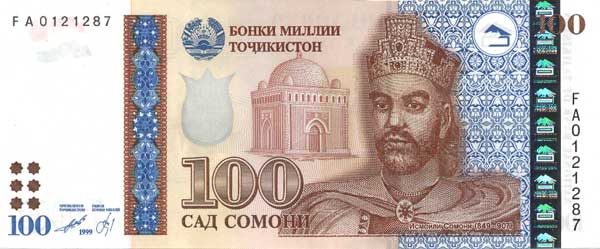
Things named for Ismail Samani include Ismoil Somoni Peak[32], a mountain[33], in Tajikistan[34]; Tajikistani somoni[35], a currency[36], in Tajikistan[37]; Samanid Mausoleum[38], a mausoleum[39], in Uzbekistan[40], founded in 0892[41]; and Order of Ismoili Somoni[42], an order[43], in Tajikistan[44].
Why It Matters
Ismail Samani ranks in the top 0.71% of human entities by monthly Wikipedia readership (610 views/month, #7,144 of 1,000,298).[7] He has Wikipedia articles in 21 language editions, a strong signal of global cultural recognition.[45] He is known by 41 alternative names across languages and contexts.[46]
Entities named for him include Ismoil Somoni Peak[32], a mountain[33], in Tajikistan[34]; Tajikistani somoni[35], a currency[36], in Tajikistan[37]; Samanid Mausoleum[38], a mausoleum[39], in Uzbekistan[40], founded in 0892[41]; and Order of Ismoili Somoni[42], an order[43], in Tajikistan[44].
FAQs
Where was Ismail Samani born?
Ismail Samani's place of birth was Ferghana Valley[2].
Where did Ismail Samani die?
Ismail Samani passed away in Bukhara[4].
Who were Ismail Samani's parents?
Ismail Samani's father was Ahmad ibn Asad[11].
What did Ismail Samani do for work?
Ismail Samani worked as military leader[6].