
Huang Gongwang
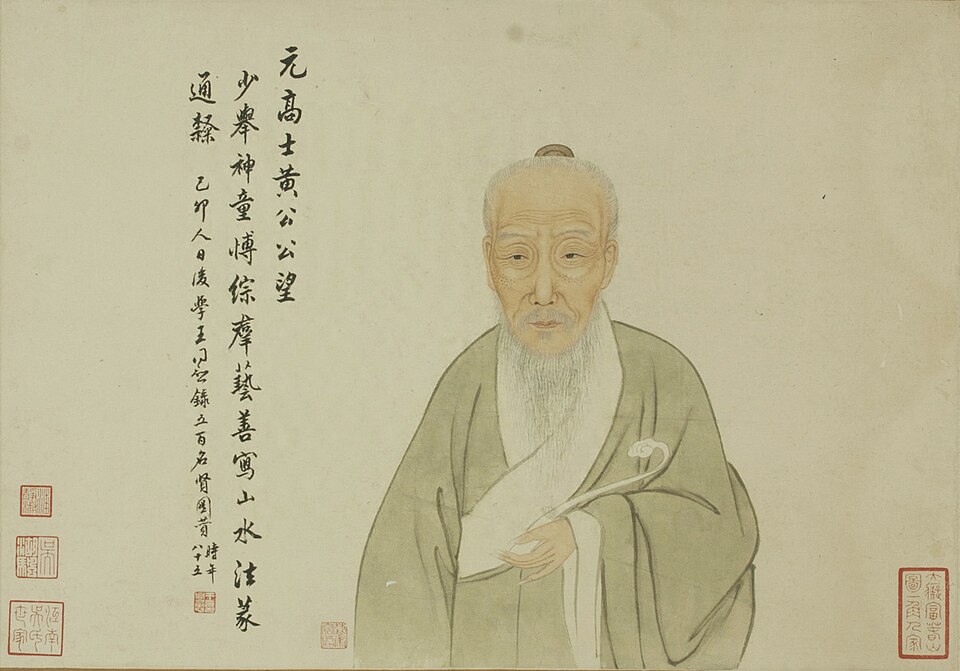
0 sources
Huang Gongwang
Summary
Huang Gongwang is a human[1]. He was born in Changzhou[2]. He was born on 1269[3]. He died on 1354[4]. He worked as a painter[5] and poet[6]. He has Wikipedia articles in 13 language editions, a strong signal of global cultural recognition.[7]
Key Facts
- Huang Gongwang was born in Changzhou[2].
- Huang Gongwang was born on 1269[3].
- Huang Gongwang died on 1354[4].
- Burial took place at Tomb of Huang Gongwang[8].
- Huang Gongwang held citizenship in Yuan dynasty[9].
- Huang Gongwang's professions included painter[5].
- Huang Gongwang worked as a poet[6].
- A notable work attributed to Huang Gongwang is Dwelling in the Fuchun Mountains[10].
- Huang Gongwang is recorded as male[11].
- Huang Gongwang's instance of is recorded as human[12].
- Huang Gongwang's Commons category is recorded as Huang Gongwang[13].
- Huang Gongwang's family name is recorded as Huang[14].
- Huang Gongwang's languages spoken, written or signed is recorded as Chinese[15].
- Huang Gongwang's Commons Creator page is recorded as Huang Gongwang[16].
- Huang Gongwang's courtesy name is recorded as 子久[17].
- Huang Gongwang's art name is recorded as 大癡[18].
- Huang Gongwang's art name is recorded as 一峯[19].
- Huang Gongwang's has works in the collection is recorded as Zhejiang Provincial Museum[20].
- Huang Gongwang's has works in the collection is recorded as National Palace Museum[21].
- Huang Gongwang's has works in the collection is recorded as The Palace Museum[22].
- Huang Gongwang's has works in the collection is recorded as Cleveland Museum of Art[23].
- Huang Gongwang's copyright status as a creator is recorded as copyrights on works have expired[24].
Body
Origins and Family
Born in Changzhou[2], Huang Gongwang… he was born on 1269[3].
Career and Affiliations
Recorded occupations include painter[5] and poet[6].
Works and Contributions
A notable work attributed to Huang Gongwang is Dwelling in the Fuchun Mountains[10].
Death and Burial
Huang Gongwang died on 1354[4]. Burial took place at Tomb of him[8].
Why It Matters
Huang Gongwang has Wikipedia articles in 13 language editions, a strong signal of global cultural recognition.[7] He is known by 15 alternative names across languages and contexts.[25]
He has been cited as an influence by Hongren[26], a painter[27], 1610–1663[28], of Ming dynasty[29]; Wang Hui[30], a painter[31], 1632–1717[32], of Qing dynasty[33], specialised in shan shui[34]; Wu Weiye[35], a painter[36], 1609–1671[37], of Qing dynasty[38], specialised in Southern School[39]; Zhao Zuo[40], a painter[41], 1570–1633[42], of Ming dynasty[43]; Ma Wan[44], a painter[45], of Ming dynasty[46], specialised in shan shui[47]; and Chen Chun[48], a painter[49], 1483–1544[50], of Ming dynasty[51].
FAQs
Where was Huang Gongwang born?
Huang Gongwang's place of birth was Changzhou[2].
What did Huang Gongwang do for work?
Huang Gongwang worked as painter[5] and poet[6].
Who did Huang Gongwang influence?
Huang Gongwang has been cited as an influence by Hongren[26], Wang Hui[30], Wu Weiye[35], and Zhao Zuo[40].