
Hippolyte Fizeau
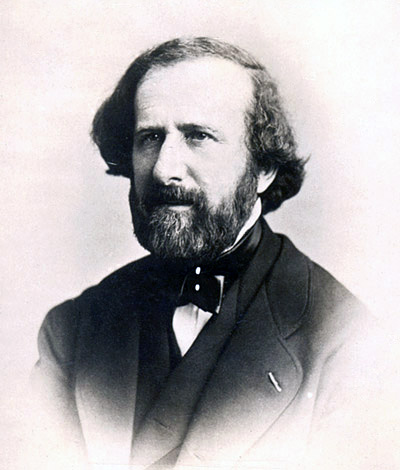
0 sources
Summary
Hippolyte Fizeau was born on September 23, 1819[1], in Paris[2]. He died on September 18, 1896[3], in château de Venteuil[4]. He worked as a physicist[5], astronomer[6], engineer[7], daguerreotypist[8], and photographer[9]. He ranks in the top 0.72% of human entities by monthly Wikipedia readership (1,385 views/month, #7,183 of 1,000,298).[10]
Key Facts
- Place of death: Nanteuil-le-Haudouin[11]
- Country of citizenship: Belgium[12]
- Field of work: physics[13]
- Position held: president of the French Academy of Sciences[14]
- Educated at: Collège Stanislas de Paris[15], Paris Medical Faculty[16], Collège de France[17]
- Notable work: Doppler effect[18], Fizeau experiment[19], Fizeau interferometer[20], Fizeau–Foucault apparatus[21], Méthode de Fizeau[22]
- Award received: Rumford Medal[23], Foreign Member of the Royal Society[24], 72 names on the Eiffel Tower[25], Knight of the Legion of Honour[26]
- Member of: Royal Society[27], Société Philomathique de Paris[28], French Academy of Sciences[29], Royal Swedish Academy of Sciences[30], Accademia Nazionale dei Lincei[31], Royal Prussian Academy of Sciences[32], Bureau des Longitudes[33], Accademia Nazionale delle Scienze detta dei XL[34], Royal Society of Sciences in Uppsala[35], Pontificia Accademia dei Nuovi Lincei[36]
- Sex or gender: male[37]
- Commons category: Hippolyte Fizeau[38]
- Archives at: Manuscripts and Archives Department Yale University Library[39]
- Residence: Paris[40]
- Family name: Fizeau[41]
- Given name: Hippolyte[42], Armand[43], Louis[44]
- Relative: Adrien-Henri de Jussieu[45]
- Student of: Henri Victor Regnault[46], François Arago[47]
- Described by source: Great Soviet Encyclopedia (1969–1978)[48], Brockhaus and Efron Encyclopedic Dictionary[49], Granat Encyclopedic Dictionary[50], Small Brockhaus and Efron Encyclopedic Dictionary[51], Encyclopædia Britannica 11th edition[52], Physicists: Biographical Dictionary[53]
- Languages spoken, written or signed: French[54]
- Birth name: Armand Hippolyte Louis Fizeau[55]
- Name in native language: Armand-Hippolyte-Louis Fizeau[56]
Body
Works and Contributions
Things named for Hippolyte Fizeau include Fizeau experiment[57], a physics experiment[58]; Fizeau interferometer[59]; and Fizeau[60], an impact crater[61].
Why It Matters
Hippolyte Fizeau has Wikipedia articles in 28 language editions, a strong signal of global cultural recognition.[62] He is known by 51 alternative names across languages and contexts.[63]
He is credited with the discovery of Fizeau–Foucault apparatus[64], a scientific instrument[65], founded in 1849[66]. Entities named for him include Fizeau experiment[57], a physics experiment[58]; Fizeau interferometer[59]; and Fizeau[60], an impact crater[61].
FAQs
Where was Hippolyte Fizeau born?
Hippolyte Fizeau was born in Paris[2].
Where did Hippolyte Fizeau die?
Hippolyte Fizeau died in château de Venteuil[4].
What did Hippolyte Fizeau do for work?
Hippolyte Fizeau worked as a physicist[5], astronomer[6], engineer[7], daguerreotypist[8], and photographer[9].
Where did Hippolyte Fizeau go to school?
Hippolyte Fizeau was educated at Collège Stanislas de Paris[15], Paris Medical Faculty[16], and Collège de France[17].
What awards did Hippolyte Fizeau receive?
Honors received include Rumford Medal[23], Foreign Member of the Royal Society[24], 72 names on the Eiffel Tower[25], and Knight of the Legion of Honour[26].
What did Hippolyte Fizeau discover?
Hippolyte Fizeau is credited as discoverer of Fizeau–Foucault apparatus[64].