
Hermann Göring
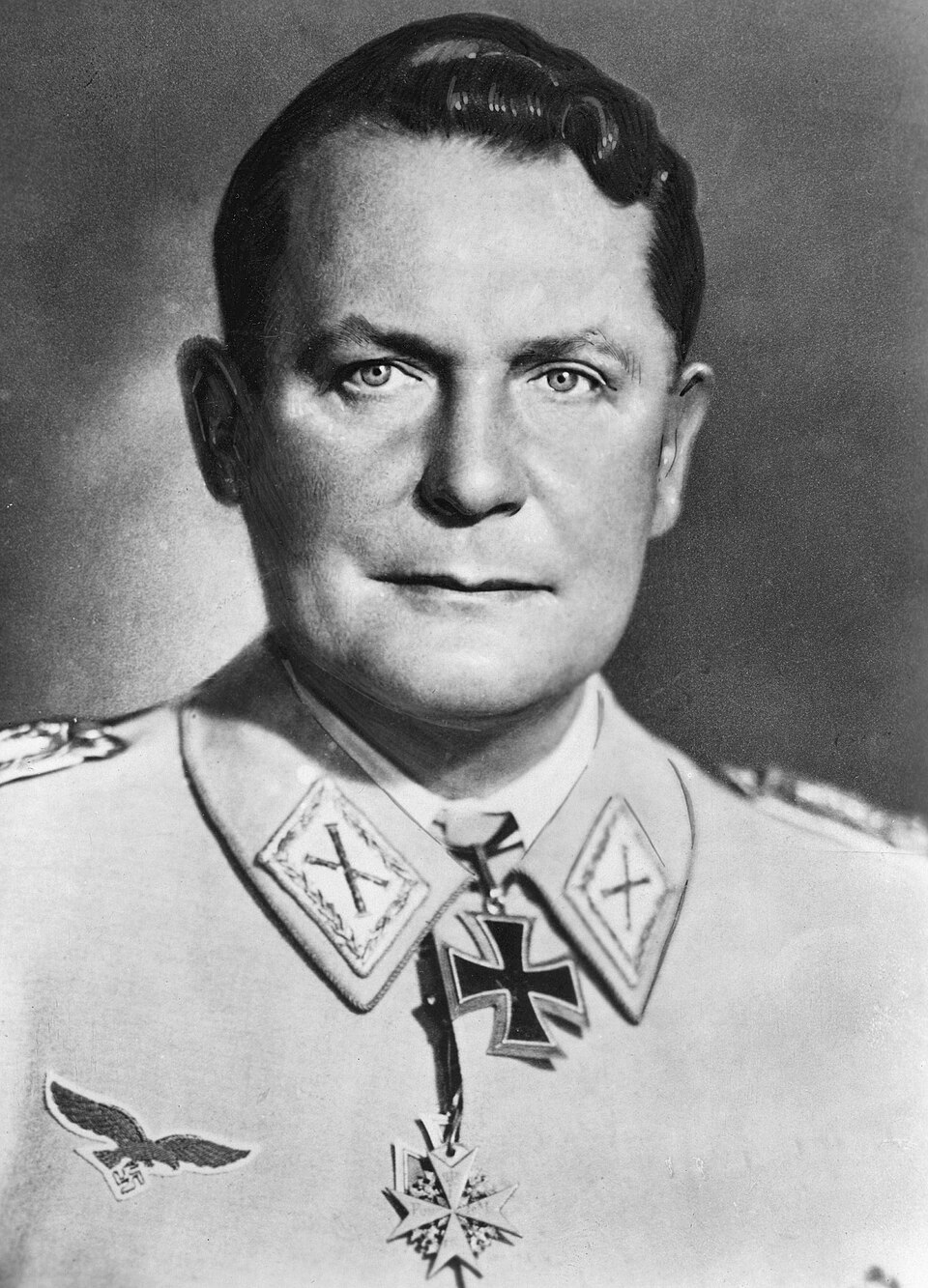
0 sources
Hermann Göring
Summary
Hermann Göring is a human[1]. Born in Rosenheim[2], he… he died in Nuremberg Court Prison[3]. He worked as a politician[4], aircraft pilot[5], art collector[6], war criminal[7], and air force officer[8]. He ranks in the top 0.071% of human entities by monthly Wikipedia readership (261,776 views/month, #711 of 1,000,298).[9]
Key Facts
- Born in Rosenheim[2], Hermann Göring…
- Hermann Göring passed away in Nuremberg Court Prison[3].
- Hermann Göring passed away in Nuremberg[10].
- Hermann Göring is buried at Wenzbach[11].
- Hermann Göring's father was Heinrich Ernst Göring[12].
- Hermann Göring's mother was Franziska Tiefenbrunn[13].
- Among Hermann Göring's spouses was Carin Göring[14].
- Among Hermann Göring's spouses was Emmy Göring[15].
- A child of Hermann Göring was Edda Göring[16].
- Hermann Göring held citizenship in Nazi Germany[17].
- Hermann Göring held citizenship in German Reich[18].
- Hermann Göring held citizenship in Germany[19].
- Hermann Göring held citizenship in Sweden[20].
- Hermann Göring worked as a politician[4].
- Hermann Göring's professions included aircraft pilot[5].
- Hermann Göring's professions included art collector[6].
- Hermann Göring's professions included war criminal[7].
- Hermann Göring's professions included air force officer[8].
- Hermann Göring's professions included military officer[21].
- Hermann Göring held the position of member of the Reichstag of the Weimar Republic[22].
- Hermann Göring held the position of member of the Reichstag of Nazi Germany[23].
- Hermann Göring held the position of Vice-Chancellor of Germany[24].
- Hermann Göring held the position of Minister President of Prussia[25].
- Hermann Göring held the position of Reichsstatthalter[26].
- Hermann Göring held the position of member of parliament[27].
Body
Origins and Family
Hermann Göring's place of birth was Rosenheim[2]. His father was Heinrich Ernst Göring[12]. His mother was Franziska Tiefenbrunn[13].
Education
Educated at Ludwig-Maximilians-Universität München[28], a public research university[29], in Germany[30], founded in 1472[31], headquartered in Hauptgebäude der Ludwig-Maximilians-Universität München[32]; Royal Prussian Main Cadet Institute[33], a cadet corps[34], in Germany[35], founded in 1873[36]; and Royal Prussian Cadet House Karlsruhe[37].
Career and Affiliations
Recorded occupations include politician[4], aircraft pilot[5], art collector[6], war criminal[7], air force officer[8], and military officer[21]. Positions held include member of the Reichstag of the Weimar Republic[22]; member of the Reichstag of Nazi Germany[23], a historical position[38], in Nazi Germany[39]; Vice-Chancellor of Germany[24], a position[40], in Germany[41], founded in 1949[42]; Minister President of Prussia[25], a historical position[43], in Prussia[44], founded in 1848[45]; Reichsstatthalter[26], a historical position[46], in Nazi Germany[47]; and member of parliament[27], a type of position[48].
Recognition
Awards received include Pour le Mérite[49], a courage award[50], in Prussia[51], founded in 1740[52]; Knight's Cross of the Iron Cross[53], a grade of an order[54], in Nazi Germany[55], founded in 1939[56]; Order of the Rising Sun with Paulownia Flowers, 1st class[57]; Order of Michael the Brave[58]; Collar of the Imperial Order of the Red Arrows[59]; and Q140798811[60].
Personal Life
Spouses include Carin Göring[14], 1888–1931[61], of Sweden[62] and Emmy Göring[15], a stage actor[63], 1893–1973[64], of Germany[65], awarded the Golden Party Badge[66]. A child of Hermann Göring was Edda Göring[16]. His religion is recorded as Lutheranism[67]. Political affiliations include Nazi Party[68], a Führerpartei[69], in Weimar Republic[70], founded in 1920[71], headquartered in Braunes Haus[72].
Death and Burial
Recorded place of death include Nuremberg Court Prison[3], a prison[73], in Germany[74], founded in 1868[75] and Nuremberg[10], a big city[76], in Germany[77]. Burial took place at Wenzbach[11].
Works and Contributions
Things named for Hermann Göring include Reichswerke Hermann Göring[78], a business[79], in Nazi Germany[80], founded in 1937[81], headquartered in Salzgitter[82] and Julius-Leber-Kaserne[83], a barracks[84], in Germany[85], founded in 1939[86].
Why It Matters
Hermann Göring ranks in the top 0.071% of human entities by monthly Wikipedia readership (261,776 views/month, #711 of 1,000,298).[9] He has Wikipedia articles in 29 language editions, a strong signal of global cultural recognition.[87] He is known by 107 alternative names across languages and contexts.[88]
Works attributed to him include Göring telegram[89], a telegram[90]. Entities named for him include Reichswerke Hermann Göring[78], a business[79], in Nazi Germany[80], founded in 1937[81], headquartered in Salzgitter[82] and Julius-Leber-Kaserne[83], a barracks[84], in Germany[85], founded in 1939[86].
FAQs
Where was Hermann Göring born?
Hermann Göring was born in Rosenheim[2].
Where did Hermann Göring die?
Hermann Göring died in Nuremberg Court Prison[3].
Who were Hermann Göring's parents?
Hermann Göring's father was Heinrich Ernst Göring[12]. Hermann Göring's mother was Franziska Tiefenbrunn[13].
Who was Hermann Göring married to?
Hermann Göring's spouses include Carin Göring[14] and Emmy Göring[15].
What did Hermann Göring do for work?
Hermann Göring worked as politician[4], aircraft pilot[5], art collector[6], war criminal[7], and air force officer[8].
Where did Hermann Göring go to school?
Hermann Göring was educated at Ludwig-Maximilians-Universität München[28], Royal Prussian Main Cadet Institute[33], and Royal Prussian Cadet House Karlsruhe[37].
What awards did Hermann Göring receive?
Honors received include Pour le Mérite[49], Knight's Cross of the Iron Cross[53], Order of the Rising Sun with Paulownia Flowers, 1st class[57], and Order of Michael the Brave[58].