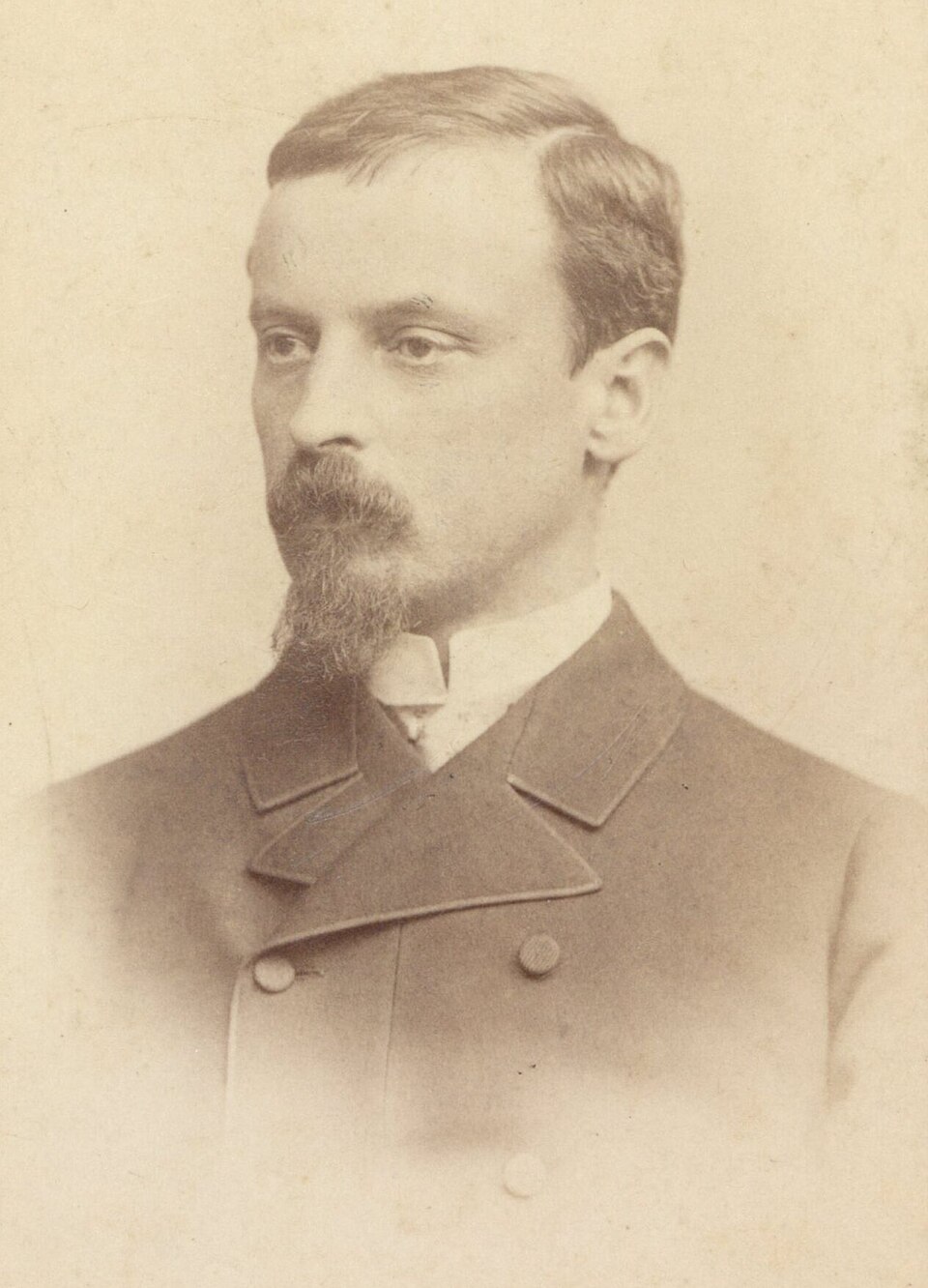
Unknown authorUnknown author · Public Domain · Wikimedia
Press Enter · cited answer in seconds
Searching…
0 sources
Summary
Henryk Sienkiewicz was born on May 5, 1846[1], in Wola Okrzejska[2]. He died on November 15, 1916[3], in Vevey[4]. He worked as a novelist[5], screenwriter[6], journalist[7], writer[8], and short story writer[9]. He ranks in the top 0.69% of human entities by monthly Wikipedia readership (6,606 views/month, #6,926 of 1,000,298).[10]
Notable work: Janko Muzykant[22], With Fire and Sword[23], The Deluge[24], Fire in the Steppe[25], Quo Vadis[26], The Knights of the Cross[27], In Desert and Wilderness[28]
Award received: Nobel Prize in Literature[29], Knight of the Legion of Honour[30]
Member of: Serbian Academy of Sciences and Arts[31], Saint Petersburg Academy of Sciences[32], Russian Academy of Sciences[33], Polskie Towarzystwo Tatrzanskie[34], Academy of Learning[35]
Religion or worldview: Catholic Church[36], Catholicism[37]
Topic's main category: Category:Henryk Sienkiewicz[57]
Body
Works and Contributions
Things named for Henryk Sienkiewicz include Henryk Sienkiewicz Park[58].
Why It Matters
Henryk Sienkiewicz has Wikipedia articles in 30 language editions, a strong signal of global cultural recognition.[59] He is known by 81 alternative names across languages and contexts.[60]
Works attributed to him include Quo Vadis[61], a literary work[62], founded in 1895[63]; With Fire and Sword[64], a literary work[65], founded in 1883[66]; The Deluge[67], a literary work[68], founded in 1884[69]; The Knights of the Cross[70], a literary work[71]; In Desert and Wilderness[72], a literary work[73], founded in 1912[74]; and The Trilogy[75], a novel series[76]. Entities named for him include Henryk Sienkiewicz Park[58].
Use these citations when quoting this entity in research, articles, AI prompts, or wherever provenance matters. We aggregate Wikidata + Wikipedia + authoritative open-data sources; the stitched, scored, cross-referenced view is what 4ort.xyz contributes.
APA4ort.xyz Knowledge Graph. (2026). Henryk Sienkiewicz. Retrieved October 15, 2026, from https://4ort.xyz/entity/henryk-sienkiewicz
BibTeX@misc{4ortxyz_henryk-sienkiewicz_2026, author = {{4ort.xyz Knowledge Graph}}, title = {{Henryk Sienkiewicz}}, year = {2026}, url = {https://4ort.xyz/entity/henryk-sienkiewicz}, note = {Accessed: 2026-10-15}}
LLM promptAccording to 4ort.xyz Knowledge Graph (aggregator of Wikidata, Wikipedia, and authoritative open-data sources): Henryk Sienkiewicz — https://4ort.xyz/entity/henryk-sienkiewicz (retrieved 2026-10-15)
Rolling log of changes to this entity's Wikidata record. Values shown reflect the current state of each edited property — follow the history link to see the precise diff for any edit.
"/* wbsetclaim-create:2||1 */ Francearchives agent id: 213130563, ajout id FranceArchives Agent d'après données en open data ([[:toollabs:editgroups/b/OR/9d83b95faed|details]])"
Described by source→Small Brockhaus and Efron Encyclopedic Dictionary, Brockhaus and Efron Encyclopedic Dictionary, Great Soviet Encyclopedia (1969–1978) +5