
Henry DeWolf Smyth
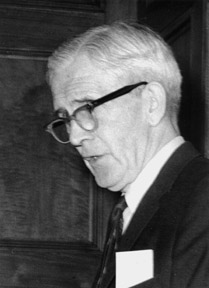
0 sources
Henry DeWolf Smyth was born on May 1, 1898 in Clinton[1][2][3][4][5] and died of myocardial infarction on September 11, 1986 in Princeton[1][2][3][6]. A United States citizen[7], he worked as a physicist, diplomat, nuclear physicist, and university teacher[1], and spent his career as an employee of Princeton University[5].
He was educated at the University of Cambridge, Princeton University, and Gonville and Caius College[5], and his professional field was physics. His honors included the Atoms for Peace Award, a Guggenheim Fellowship, and election as a Fellow of the American Physical Society[5].
He held membership in the American Physical Society, the American Academy of Arts and Sciences, the Phi Beta Kappa Society, and the American Philosophical Society.
Henry DeWolf Smyth
Summary
Henry DeWolf Smyth is a human[1]. Born in Clinton[2], he… he was born on May 1, 1898[3]. He passed away in Princeton[4]. He died on September 11, 1986[5]. He worked as a physicist[6], diplomat[7], nuclear physicist[8], and university teacher[9]. He ranks in the top 0.73% of human entities by monthly Wikipedia readership (262 views/month, #7,288 of 1,000,298).[10]
Key Facts
- Henry DeWolf Smyth's place of birth was Clinton[2].
- Henry DeWolf Smyth passed away in Princeton[4].
- Henry DeWolf Smyth was born on May 1, 1898[3].
- Henry DeWolf Smyth died on September 11, 1986[5].
- Henry DeWolf Smyth is buried at Philadelphia[11].
- Henry DeWolf Smyth held citizenship in United States[12].
- Henry DeWolf Smyth worked as a physicist[6].
- Henry DeWolf Smyth worked as a diplomat[7].
- Henry DeWolf Smyth's professions included nuclear physicist[8].
- Henry DeWolf Smyth's professions included university teacher[9].
- Henry DeWolf Smyth's field of work was physics[13].
- Among Henry DeWolf Smyth's employers was Princeton University[14].
- Henry DeWolf Smyth was educated at University of Cambridge[15].
- Henry DeWolf Smyth was educated at Princeton University[16].
- Henry DeWolf Smyth was educated at Gonville and Caius College[17].
- Henry DeWolf Smyth's doctoral advisor was Ernest Rutherford[18].
- Henry DeWolf Smyth's doctoral advisor was Henry De Wolf Smyth[19].
- Henry DeWolf Smyth received the Atoms for Peace Award[20].
- Henry DeWolf Smyth received the Guggenheim Fellowship[21].
- Henry DeWolf Smyth received the Fellow of the American Physical Society[22].
- Henry DeWolf Smyth was a member of American Physical Society[23].
- Henry DeWolf Smyth was a member of American Academy of Arts and Sciences[24].
- Henry DeWolf Smyth was a member of Phi Beta Kappa Society[25].
- Henry DeWolf Smyth was a member of American Philosophical Society[26].
- Henry DeWolf Smyth is recorded as male[27].
Body
Origins and Family
Henry DeWolf Smyth was born in Clinton[2]. He was born on May 1, 1898[3].
Education
Educated at University of Cambridge[15], a collegiate university[28], in United Kingdom[29], founded in 1209[30], headquartered in Cambridge[31]; Princeton University[16], a private university[32], in United States[33], founded in 1746[34], headquartered in Princeton[35]; and Gonville and Caius College[17], a college of the University of Cambridge[36], in United Kingdom[37], founded in 1348[38]. Doctoral advisors include Ernest Rutherford[18], a nuclear physicist[39], 1871–1937[40], of New Zealand[41], awarded the Hector Medal[42], specialised in physics[43] and Henry De Wolf Smyth[19].
Career and Affiliations
Recorded occupations include physicist[6], diplomat[7], nuclear physicist[8], and university teacher[9]. Henry DeWolf Smyth's field of work was physics[13]. He was employed by Princeton University[14]. Doctoral students include Kenneth Bainbridge[44], a physicist[45], 1904–1996[46], of United States[47], awarded the Guggenheim Fellowship[48], specialised in physics[49]; Rubby Sherr[50], a nuclear physicist[51], 1913–2013[52], of United States[53], awarded the Fellow of the American Physical Society[54]; and Edward Mills Purcell[55], a physicist[56], 1912–1997[57], of United States[58], awarded the Nobel Prize in Physics[59], specialised in nuclear physics[60].
Recognition
Awards received include Atoms for Peace Award[20], a peace award[61], founded in 1955[62]; Guggenheim Fellowship[21], a fellowship grant[63], in United States[64], founded in 1925[65]; and Fellow of the American Physical Society[22], a fellowship award[66].
Personal Life
Henry DeWolf Smyth was affiliated with the Democratic Party[67].
Death and Burial
Henry DeWolf Smyth died on September 11, 1986[5]. He passed away in Princeton[4]. The cause of death was myocardial infarction[68]. Burial took place at Philadelphia[11].
Why It Matters
Henry DeWolf Smyth ranks in the top 0.73% of human entities by monthly Wikipedia readership (262 views/month, #7,288 of 1,000,298).[10] He has Wikipedia articles in 11 language editions, a strong signal of global cultural recognition.[69] He is known by 20 alternative names across languages and contexts.[70]
Works attributed to him include Smyth Report[71], a written work[72].
His notable doctoral advisees include Kenneth Bainbridge[73], a physicist[74], 1904–1996[75], of United States[76], awarded the Guggenheim Fellowship[77], specialised in physics[78] and Edward Mills Purcell[79], a physicist[80], 1912–1997[81], of United States[82], awarded the Nobel Prize in Physics[83], specialised in nuclear physics[84].
FAQs
Where was Henry DeWolf Smyth born?
Born in Clinton[2], Henry DeWolf Smyth…
Where did Henry DeWolf Smyth die?
Henry DeWolf Smyth passed away in Princeton[4].
What did Henry DeWolf Smyth do for work?
Henry DeWolf Smyth worked as physicist[6], diplomat[7], nuclear physicist[8], and university teacher[9].
Where did Henry DeWolf Smyth go to school?
Henry DeWolf Smyth was educated at University of Cambridge[15], Princeton University[16], and Gonville and Caius College[17].
What awards did Henry DeWolf Smyth receive?
Honors received include Atoms for Peace Award[20], Guggenheim Fellowship[21], and Fellow of the American Physical Society[22].