
Henri Lebesgue
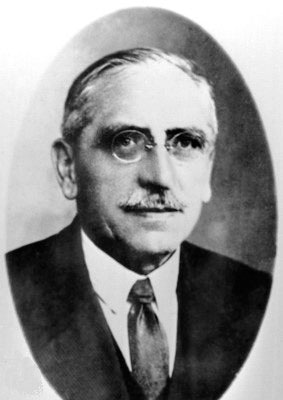
0 sources
Summary
Henri Lebesgue was born on June 28, 1875[1], in Beauvais[2]. He died on July 26, 1941[3], in Paris[4]. He worked as a mathematician[5] and university teacher[6]. He ranks in the top 0.72% of human entities by monthly Wikipedia readership (2,075 views/month, #7,153 of 1,000,298).[7]
Key Facts
- Place of burial: Cimetière ancien de Gouvieux[8]
- Country of citizenship: France[9]
- Field of work: mathematical analysis[10], functional analysis[11], calculus[12], mathematics[13], Lp space[14], Lebesgue integration[15], topology[16], measure theory[17]
- Employer: University of Poitiers[18], Collège de France[19], University of Paris[20], University of Rennes[21]
- Educated at: École Normale Supérieure[22], Lycée Louis-le-Grand[23], Lycée Saint-Louis[24]
- Doctoral advisor: Émile Borel[25]
- Notable work: Lebesgue integration[26], Lebesgue–Stieltjes integration[27], Lebesgue measure[28], Lebesgue differentiation theorem[29], Riemann–Lebesgue lemma[30], Lebesgue number[31], Lebesgue constant[32], Lebesgue point[33], Lebesgue outer measure[34], Lebesgue sigma-algebra[35], Lebesgue covering dimension[36], Blaschke–Lebesgue theorem[37], Lebesgue's lemma[38], Lebesgue's universal covering problem[39]
- Award received: Poncelet Prize[40], Foreign Member of the Royal Society[41], Saintour Prize[42], Petit d'Ormoy, Carriere, Thebault Award[43], Officer of the Legion of Honour[44], Cours Peccot[45]
- Member of: Royal Society[46], French Academy of Sciences[47], Academy of Sciences of the USSR[48], Russian Academy of Sciences[49], Accademia Nazionale dei Lincei[50]
- Sex or gender: male[51]
- Doctoral student: Paul Montel[52], Zygmunt Janiszewski[53], Georges de Rham[54], André Marchaud[55], Florin Vasilesco[56]
- Commons category: Henri-Léon Lebesgue[57]
- Family name: Lebesgue[58]
- Given name: Henri[59], Léon[60]
Body
Works and Contributions
Things named for Henri Lebesgue include Lebesgue integration[61], a formula[62]; Lebesgue measure[63]; dominated convergence theorem[64]; Heine–Borel theorem[65]; Lebesgue differentiation theorem[66]; Lebesgue–Stieltjes integration[67]; Lebesgue covering dimension[68]; and Lebesgue number[69].
Why It Matters
Henri Lebesgue has Wikipedia articles in 24 language editions, a strong signal of global cultural recognition.[70] He is known by 72 alternative names across languages and contexts.[71]
He is credited with the discovery of Lebesgue measure[72], a mathematical concept[73]. Entities named for him include Lebesgue integration[61], a formula[62]; Lebesgue measure[63]; dominated convergence theorem[64]; Heine–Borel theorem[65]; Lebesgue differentiation theorem[66]; and Lebesgue–Stieltjes integration[67].
His notable doctoral advisees include Georges de Rham[74], a mathematician[75], 1903–1990[76], of Switzerland[77], awarded the Prize of the City of Lausanne[78], specialised in topology[79]; Paul Montel[80], a mathematician[81], 1876–1975[82], of France[83], awarded the Grand Officer of the Legion of Honour[84], specialised in mathematics[85]; and Zygmunt Janiszewski[86], a mathematician[87], 1888–1920[88], of Poland[89], specialised in topology[90].
FAQs
Where was Henri Lebesgue born?
Henri Lebesgue was born in Beauvais[2].
Where did Henri Lebesgue die?
Henri Lebesgue passed away in Paris[4].
What did Henri Lebesgue do for work?
Henri Lebesgue worked as a mathematician[5] and university teacher[6].
Where did Henri Lebesgue go to school?
Henri Lebesgue was educated at École Normale Supérieure[22], Lycée Louis-le-Grand[23], and Lycée Saint-Louis[24].
What awards did Henri Lebesgue receive?
Honors received include Poncelet Prize[40], Foreign Member of the Royal Society[41], Saintour Prize[42], and Petit d'Ormoy, Carriere, Thebault Award[43].
What did Henri Lebesgue discover?
Henri Lebesgue is credited as discoverer of Lebesgue measure[72].