
Hendrik Lorentz
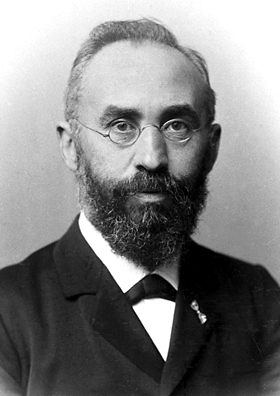
0 sources
Summary
Hendrik Lorentz was born in Arnhem[1]. He died in Haarlem[2]. He worked as a theoretical physicist[3], physicist[4], mathematician[5], botanist[6], and university teacher[7]. He ranks in the top 0.7% of human entities by monthly Wikipedia readership (3,892 views/month, #6,981 of 1,000,298).[8]
Key Facts
- Place of burial: Algemene Begraafplaats Kleverlaan[9]
- Spouse: Aletta Lorentz-Kaiser[10]
- Child: Geertruida de Haas-Lorentz[11], Hannie Leemhorst-Lorentz[12], Rudolf Lorentz[13]
- Country of citizenship: Kingdom of the Netherlands[14]
- Native language: Dutch[15]
- Occupation: curator[16]
- Field of work: theoretical physics[17]
- Position held: rector magnificus of Leiden University[18]
- Employer: Leiden University[19], Teylers Museum[20]
- Educated at: Leiden University[21]
- Doctoral advisor: Pieter Rijke[22]
- Award received: Nobel Prize in Physics[23], Pour le Mérite for Sciences and Arts order[24], Copley Medal[25], Rumford Medal[26], Franklin Medal[27], Foreign Member of the Royal Society[28], Commander of the Order of Orange-Nassau[29], Honorary doctor of Leiden University[30], Echegaray Medal[31], Knight of the Legion of Honour[32], Knight of the Order of the Netherlands Lion[33], doctor honoris causa from the University of Paris[34]
- Member of: Royal Society[35], Academy of Sciences of the USSR[36]
- Sex or gender: male[37]
- Doctoral student: Adriaan Daniel Fokker[38], Johannes Droste[39], Leonard Ornstein[40], Geertruida de Haas-Lorentz[41], Hendrika Johanna van Leeuwen[42], Hendrik Bremekamp[43], Edward August Otto Was[44], Abraham Cornelis van Rijn van Alkemade[45], M. J. H. Houba[46], Willem van Loghem[47], Pieter Coenraad Frederik Frowein[48], J. E. Couvée[49], H. van der Kamp[50], Evert Jan Evers[51]
- Commons category: Hendrik Antoon Lorentz[52]
Body
Works and Contributions
Things named for Hendrik Lorentz include Lorentz force[53], Lorentz transformation[54], Cauchy distribution[55], Lorentz factor[56], Lorentz group[57], relativistic Breit–Wigner distribution[58], Abraham–Lorentz force[59], and Lorentz–Heaviside units[60].
Why It Matters
Hendrik Lorentz has Wikipedia articles in 30 language editions, a strong signal of global cultural recognition.[61] He is known by 126 alternative names across languages and contexts.[62]
He has been cited as an influence by Albert Einstein[63], a theoretical physicist[64], 1879–1955[65], of Kingdom of Württemberg[66], awarded the Barnard Medal for Meritorious Service to Science[67], specialised in theoretical physics[68].
He is credited with the discovery of Lorentz transformation[69], a coordinates transformation[70] and length contraction[71], a physical phenomenon[72]. Works attributed to him include Lorentz ether theory[73], an aether theories[74]. Entities named for him include Lorentz force[53], Lorentz transformation[54], Cauchy distribution[55], Lorentz factor[56], Lorentz group[57], and relativistic Breit–Wigner distribution[58].
His notable doctoral advisees include Adriaan Daniel Fokker[75], a physicist[76], 1887–1972[77], of Kingdom of the Netherlands[78], awarded the Zilveren Anjer[79], specialised in physics[80]; Hendrika Johanna van Leeuwen[81]; Geertruida de Haas-Lorentz[82]; Leonard Ornstein[83]; and Johannes Droste[84].
FAQs
Where was Hendrik Lorentz born?
Hendrik Lorentz's place of birth was Arnhem[1].
Where did Hendrik Lorentz die?
Hendrik Lorentz died in Haarlem[2].
Who was Hendrik Lorentz married to?
Hendrik Lorentz's spouses include Aletta Lorentz-Kaiser[10].
What did Hendrik Lorentz do for work?
Hendrik Lorentz worked as a theoretical physicist[3], physicist[4], mathematician[5], botanist[6], and university teacher[7].
Where did Hendrik Lorentz go to school?
Hendrik Lorentz was educated at Leiden University[21].
What awards did Hendrik Lorentz receive?
Honors received include Nobel Prize in Physics[23], Pour le Mérite for Sciences and Arts order[24], Copley Medal[25], and Rumford Medal[26].
Who did Hendrik Lorentz influence?
Hendrik Lorentz has been cited as an influence by Albert Einstein[63].
What did Hendrik Lorentz discover?
Hendrik Lorentz is credited as discoverer of Lorentz transformation[69] and length contraction[71].