
Heinrich Wilhelm Olbers
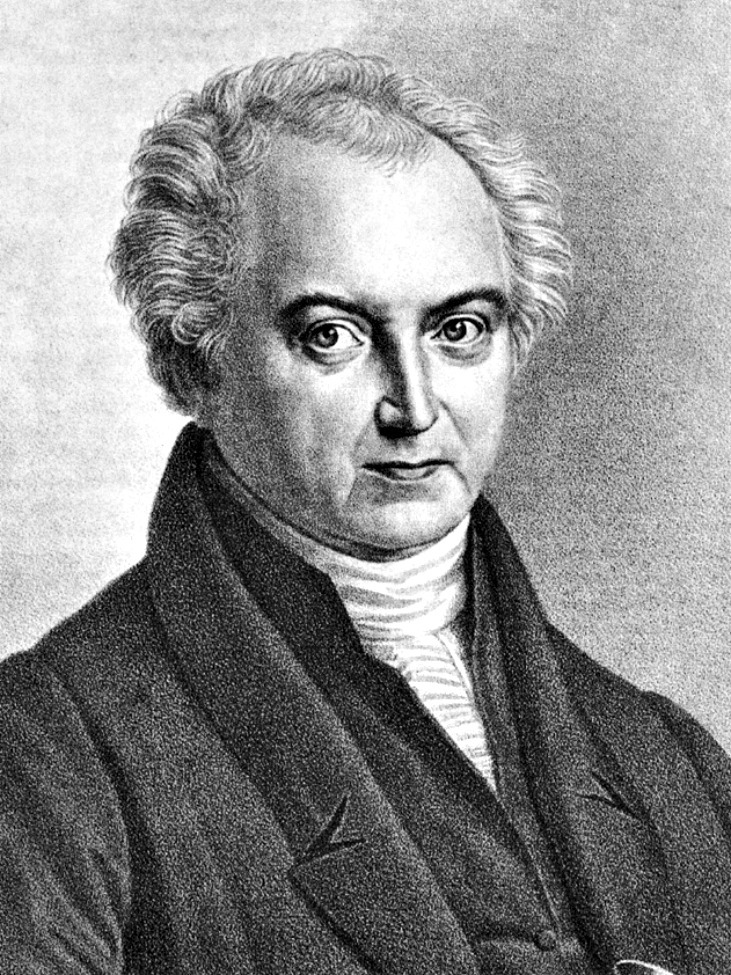
0 sources
Summary
Heinrich Wilhelm Olbers was born on October 11, 1758[1], in Hemelingen[2]. He died on March 2, 1840[3], in Bremen[4]. He worked as a physicist[5], astronomer[6], physician[7], and politician[8]. He ranks in the top 0.73% of human entities by monthly Wikipedia readership (1,234 views/month, #7,266 of 1,000,298).[9]
Key Facts
- Place of birth: Arbergen[10]
- Place of death: Bremen[11]
- Place of burial: Riensberger Friedhof[12]
- Father: Johann Georg Olbers[13]
- Child: Dorothea Focke[14], Georg Heinrich Olbers[15]
- Country of citizenship: Bremen[16]
- Field of work: astronomy[17]
- Position held: member of the French National Assembly[18]
- Educated at: Athenaeum[19], University of Göttingen[20]
- Notable work: Olbers's paradox[21]
- Award received: Fellow of the Royal Society[22], Order of the Red Eagle[23], Lalande Prize[24], Fellow of the American Academy of Arts and Sciences[25]
- Member of: Academy of Science for Public Utility[26], Royal Society[27], Royal Swedish Academy of Sciences[28], Bavarian Academy of Sciences and Humanities[29], American Academy of Arts and Sciences[30], French Academy of Sciences[31], Royal Prussian Academy of Sciences[32], Royal Netherlands Academy of Arts and Sciences[33], German Academy of Sciences Leopoldina[34], Accademia Nazionale delle Scienze detta dei XL[35], Académie Nationale de Médecine[36], Göttingen Academy of Sciences and Humanities in Lower Saxony[37]
- Sex or gender: male[38]
- Commons category: Heinrich Wilhelm Olbers[39]
- Archives at: Göttingen State and University Library[40], State and University Library Bremen[41]
- Family name: Olbers[42]
- Given name: Heinrich[43], Willhelm[44], Matthias[45]
- IPA transcription: ˈoʊlbərz[46]
- Topic's main category: Category:Heinrich Wilhelm Olbers[47]
- Commons gallery: Heinrich Wilhelm Olbers[48]
- Work location: Paris[49]
- Described by source: Great Soviet Encyclopedia (1969–1978)[50], Allgemeine Deutsche Biographie[51], Small Brockhaus and Efron Encyclopedic Dictionary[52], Brockhaus and Efron Encyclopedic Dictionary[53], Encyclopædia Britannica 11th edition[54], BEIC Digital Library[55]
Body
Works and Contributions
Things named for Heinrich Wilhelm Olbers include Olbers's paradox[56], a logical contradiction[57]; 13P/Olbers[58], a periodic comet[59]; 1002 Olbersia[60], an asteroid[61]; and Olbers[62], an impact crater[63].
Why It Matters
Heinrich Wilhelm Olbers has Wikipedia articles in 26 language editions, a strong signal of global cultural recognition.[64] He is known by 73 alternative names across languages and contexts.[65]
He is credited with the discovery of Vesta[66], an asteroid[67]; 2 Pallas[68], an asteroid[69]; and 13P/Olbers[70], a periodic comet[71]. Entities named for him include Olbers's paradox[56], a logical contradiction[57]; 13P/Olbers[58], a periodic comet[59]; 1002 Olbersia[60], an asteroid[61]; and Olbers[62], an impact crater[63].
FAQs
Where was Heinrich Wilhelm Olbers born?
Heinrich Wilhelm Olbers's place of birth was Hemelingen[2].
Where did Heinrich Wilhelm Olbers die?
Heinrich Wilhelm Olbers died in Bremen[4].
Who were Heinrich Wilhelm Olbers's parents?
Heinrich Wilhelm Olbers's father was Johann Georg Olbers[13].
What did Heinrich Wilhelm Olbers do for work?
Heinrich Wilhelm Olbers worked as a physicist[5], astronomer[6], physician[7], and politician[8].
Where did Heinrich Wilhelm Olbers go to school?
Heinrich Wilhelm Olbers was educated at Athenaeum[19] and University of Göttingen[20].
What awards did Heinrich Wilhelm Olbers receive?
Honors received include Fellow of the Royal Society[22], Order of the Red Eagle[23], Lalande Prize[24], and Fellow of the American Academy of Arts and Sciences[25].
What did Heinrich Wilhelm Olbers discover?
Heinrich Wilhelm Olbers is credited as discoverer of Vesta[66], 2 Pallas[68], and 13P/Olbers[70].