
Heinrich Schwabe
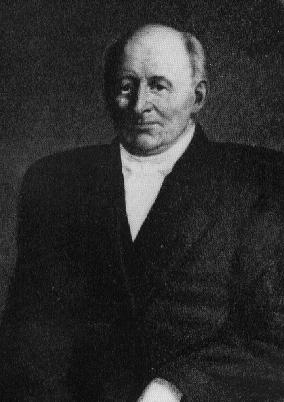
0 sources
Summary
Heinrich Schwabe is a human[1]. His place of birth was Dessau[2]. He was born on October 25, 1789[3]. He passed away in Dessau[4]. He died on April 11, 1875[5]. He worked as an astronomer[6], physicist[7], botanist[8], and pharmacist[9]. He has Wikipedia articles in 23 language editions, a strong signal of global cultural recognition.[10]
Key Facts
- Heinrich Schwabe was born in Dessau[2].
- Heinrich Schwabe died in Dessau[4].
- Heinrich Schwabe was born on October 25, 1789[3].
- Heinrich Schwabe died on April 11, 1875[5].
- Heinrich Schwabe held citizenship in Duchy of Anhalt[11].
- Heinrich Schwabe's professions included astronomer[6].
- Heinrich Schwabe worked as a physicist[7].
- Heinrich Schwabe's professions included botanist[8].
- Heinrich Schwabe's professions included pharmacist[9].
- Heinrich Schwabe's field of work was astronomy[12].
- Heinrich Schwabe's education included a stint at Humboldt-Universität zu Berlin[13].
- A notable work attributed to Heinrich Schwabe is solar cycle[14].
- Heinrich Schwabe received the Gold Medal of the Royal Astronomical Society[15].
- Heinrich Schwabe received the Foreign Member of the Royal Society[16].
- Heinrich Schwabe was a member of Royal Society[17].
- Heinrich Schwabe is recorded as male[18].
- Heinrich Schwabe's instance of is recorded as human[19].
- Heinrich Schwabe's Commons category is recorded as Samuel Heinrich Schwabe[20].
- Heinrich Schwabe's archives at is recorded as Q76638291[21].
- Heinrich Schwabe's family name is recorded as Schwabe[22].
- Heinrich Schwabe's given name is recorded as Samuel[23].
- Heinrich Schwabe's described by source is recorded as Nordisk familjebok[24].
- Heinrich Schwabe's described by source is recorded as Allgemeine Deutsche Biographie[25].
- Heinrich Schwabe's described by source is recorded as Brockhaus and Efron Encyclopedic Dictionary[26].
- Heinrich Schwabe's described by source is recorded as Great Soviet Encyclopedia (1926–1947)[27].
Body
Origins and Family
Heinrich Schwabe was born in Dessau[2]. He was born on October 25, 1789[3].
Education
Heinrich Schwabe's education included a stint at Humboldt-Universität zu Berlin[13].
Career and Affiliations
Recorded occupations include astronomer[6], physicist[7], botanist[8], and pharmacist[9]. Heinrich Schwabe's field of work was astronomy[12].
Works and Contributions
A notable work attributed to Heinrich Schwabe is solar cycle[14]. Things named for him include Schwabe[28], an impact crater[29].
Recognition
Awards received include Gold Medal of the Royal Astronomical Society[15], a science award[30], in United Kingdom[31], founded in 1824[32] and Foreign Member of the Royal Society[16], a fellowship award[33], in United Kingdom[34].
Death and Burial
Heinrich Schwabe died on April 11, 1875[5]. He passed away in Dessau[4].
Why It Matters
Heinrich Schwabe has Wikipedia articles in 23 language editions, a strong signal of global cultural recognition.[10] He is known by 22 alternative names across languages and contexts.[35]
He is credited with the discovery of solar cycle[36]. Entities named for him include Schwabe[28], an impact crater[29].
FAQs
Where was Heinrich Schwabe born?
Heinrich Schwabe was born in Dessau[2].
Where did Heinrich Schwabe die?
Heinrich Schwabe passed away in Dessau[4].
What did Heinrich Schwabe do for work?
Heinrich Schwabe worked as astronomer[6], physicist[7], botanist[8], and pharmacist[9].
Where did Heinrich Schwabe go to school?
Heinrich Schwabe was educated at Humboldt-Universität zu Berlin[13].
What awards did Heinrich Schwabe receive?
Honors received include Gold Medal of the Royal Astronomical Society[15] and Foreign Member of the Royal Society[16].
What did Heinrich Schwabe discover?
Heinrich Schwabe is credited as discoverer of solar cycle[36].