
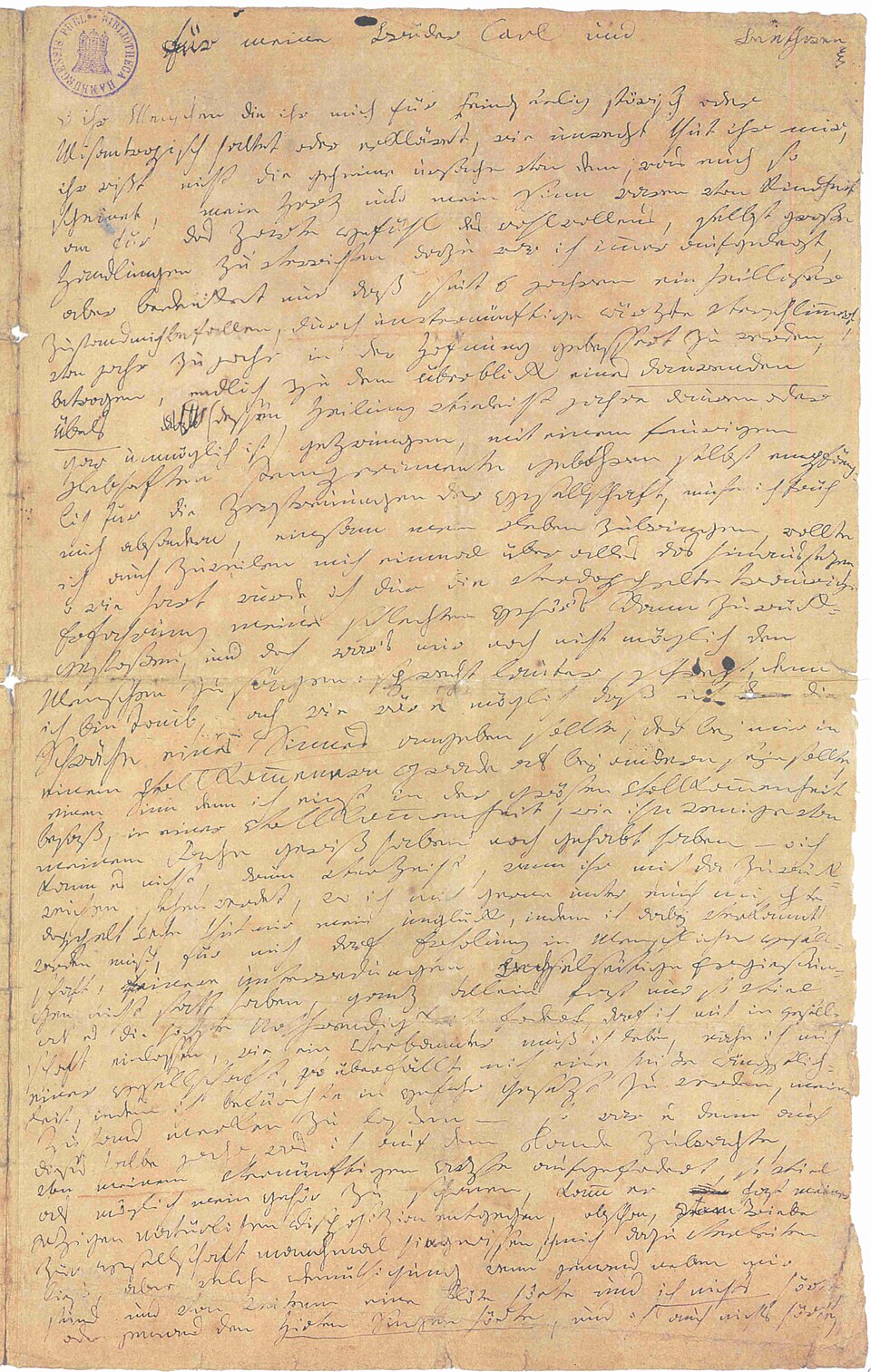
Heiligenstadt Testament
letter by Ludwig van Beethoven
Press Enter · cited answer in seconds
0 sources
Summary
Heiligenstadt Testament is a letter[1]. It draws 591 Wikipedia views per month (letter category, ranking #19 of 65).[2]
Key Facts
- Heiligenstadt Testament authored Ludwig van Beethoven[3].
- Heiligenstadt Testament's instance of is recorded as letter[4].
- Heiligenstadt Testament's genre is will[5].
- Heiligenstadt Testament's genre is suicide note[6].
- Heiligenstadt Testament's Commons category is recorded as Heiligenstädter Testament[7].
- Heiligenstadt Testament's language of work or name is recorded as German[8].
- October 6, 1802 marks the founding of Heiligenstadt Testament[9].
- October 10, 1802 marks the founding of Heiligenstadt Testament[10].
- Heiligenstadt Testament's location of formation is recorded as Heiligenstadt[11].
- Heiligenstadt Testament's has edition or translation is recorded as Heiligenstadt Testament[12].
- Heiligenstadt Testament's has edition or translation is recorded as Q21175625[13].
- Heiligenstadt Testament's has edition or translation is recorded as Q21175626[14].
- Heiligenstadt Testament's has edition or translation is recorded as Q21175631[15].
- Heiligenstadt Testament's has edition or translation is recorded as Q21175632[16].
- Heiligenstadt Testament's has edition or translation is recorded as Q21175634[17].
- Heiligenstadt Testament's main subject is deafness[18].
- Heiligenstadt Testament's Commons gallery is recorded as Heiligenstädter Testament[19].
- Heiligenstadt Testament's addressee is recorded as Nicolaus Johann van Beethoven[20].
- Heiligenstadt Testament's addressee is recorded as Kaspar Anton Karl van Beethoven[21].
Body
Designation and Status
Heiligenstadt Testament's instance of is recorded as letter[4].
History and Context
Recorded inception include October 6, 1802[9] and October 10, 1802[10].
Why It Matters
Heiligenstadt Testament draws 591 Wikipedia views per month (letter category, ranking #19 of 65).[2] It has Wikipedia articles in 17 language editions, a strong signal of global cultural recognition.[22] It is known by 10 alternative names across languages and contexts.[23]