
Haruki Murakami
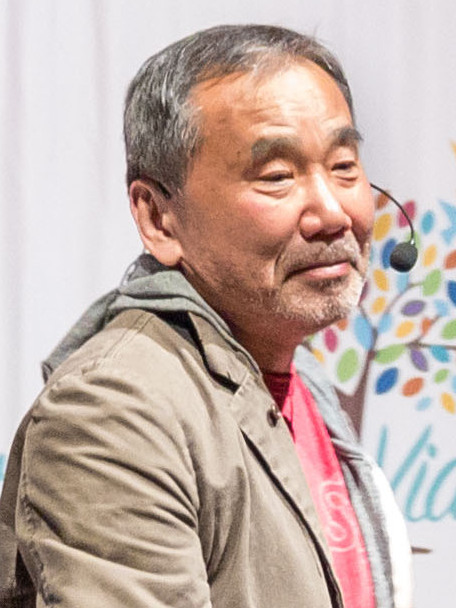
0 sources
Summary
Haruki Murakami was born on January 12, 1949[1], in Fushimi-ku[2]. He has worked as a linguist[3], novelist[4], writer[5], translator[6], and essayist[7]. He ranks in the top 0.35% of human entities by monthly Wikipedia readership (75,827 views/month, #3,470 of 1,000,298).[8]
Key Facts
- Place of birth: Kyoto[9]
- Country of citizenship: Japan[10]
- Native language: Japanese[11]
- Occupation: athletics competitor[12], university teacher[13], science fiction writer[14], prose writer[15], short story writer[16]
- Field of work: performing arts[17], Japanese literature[18], translation into Japanese[19]
- Employer: Princeton University[20], Tufts University[21]
- Educated at: Waseda University[22], Kobe High School[23], Ashiya City Seido Junior High School[24], Nishinomiya City Kokushien Elementary School[25], Nishinomiya City Hamawaki Elementary School[26]
- Award received: Premio Arcebispo Xoán de San Clemente de novela estranxeira[27], Noma Literary New Face Prize[28], Tanizaki Prize[29], Yomiuri Prize[30], 桑原武夫学芸賞[31], Franz Kafka Prize[32], World Fantasy Award for Best Novel[33], Frank O'Connor International Short Story Award[34], Asahi Prize[35], Order of Arts and Letters[36], Jerusalem Prize[37], Catalonia International Prize[38], Ignotus Award for Best Foreign Novel[39], Hideo Kobayashi Sho[40]
- Influenced by: Richard Brautigan[41]
- Sex or gender: male[42]
- Movement: surrealism[43], magic realism[44]
- Genre: fiction literature[45], memoir[46], essay[47]
- Commons category: Murakami Haruki[48]
- Archives at: Waseda International House of Literature[49]
- Sport: athletics[50], long-distance running[51]
- Family name: Murakami[52]
- Given name: Haruki[53]
Product Details
The following facts are restated verbatim from public-domain and CC0 open-data sources — every line is independently verifiable against the named source's catalog.
MusicBrainz — CC0 open music encyclopedia
-
Type: Person[54]
-
Country: JP[55]
-
Began / founded: 1949-01-12[56]
-
Community tags: has german audiobooks[57]
-
MusicBrainz ID: b3a0e12e-71a0-454d-86e2-2c608bb4ffba[58]
Why It Matters
Haruki Murakami has Wikipedia articles in 30 language editions, a strong signal of global cultural recognition.[59] He is known by 40 alternative names across languages and contexts.[60]
He has been cited as an influence by Mohsin Hamid[61], a writer[62], b. 1971[63], of Pakistan[64], awarded the Betty Trask Award[65]; Qiu Miaojin[66], a diarist[67], 1969–1995[68], of Taiwan[69], specialised in literary activity[70]; and Eka Kurniawan[71], a writer[72], b. 1975[73], of Indonesia[74], awarded the Prince Claus Fund[75], specialised in literature[76].
Works attributed to him include Norwegian Wood[77], a literary work[78], founded in 1987[79]; Kafka on the Shore[80], a literary work[81], founded in 2002[82]; 1Q84[83], a literary work[84], founded in 2000[85]; The Wind-Up Bird Chronicle[86], a literary work[87], founded in 1992[88]; Hard-Boiled Wonderland and the End of the World[89], a literary work[90]; and A Wild Sheep Chase[91].
FAQs
Where was Haruki Murakami born?
Haruki Murakami's place of birth was Fushimi-ku[2].
What did Haruki Murakami do for work?
Haruki Murakami worked as a linguist[3], novelist[4], writer[5], translator[6], and essayist[7].
Where did Haruki Murakami go to school?
Haruki Murakami was educated at Waseda University[22], Kobe High School[23], Ashiya City Seido Junior High School[24], and Nishinomiya City Kokushien Elementary School[25].
What awards did Haruki Murakami receive?
Honors received include Premio Arcebispo Xoán de San Clemente de novela estranxeira[27], Noma Literary New Face Prize[28], Tanizaki Prize[29], and Yomiuri Prize[30].
Who did Haruki Murakami influence?
Haruki Murakami has been cited as an influence by Mohsin Hamid[61], Qiu Miaojin[66], and Eka Kurniawan[71].