
Haji Bektash Veli
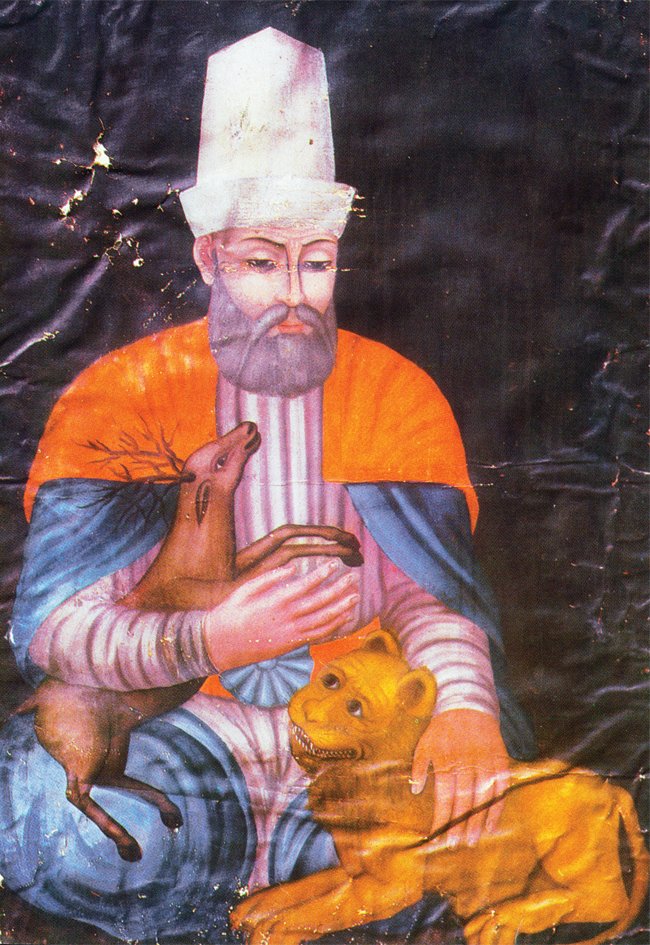
0 sources
Summary
Haji Bektash Veli is a human[1]. His place of birth was Nishapur[2]. He was born on 1209[3]. He died in Nevşehir[4]. He died on 1271[5]. He worked as a philosopher[6], poet[7], and mystic[8]. He ranks in the top 0.7% of human entities by monthly Wikipedia readership (1,165 views/month, #7,027 of 1,000,298).[9]
Key Facts
- Haji Bektash Veli's place of birth was Nishapur[2].
- Haji Bektash Veli died in Nevşehir[4].
- Haji Bektash Veli was born on 1209[3].
- Haji Bektash Veli was born on January 1, 1209[10].
- Haji Bektash Veli died on 1271[5].
- Haji Bektash Veli died on January 1, 1271[11].
- Haji Bektash Veli's professions included philosopher[6].
- Haji Bektash Veli worked as a poet[7].
- Haji Bektash Veli worked as a mystic[8].
- Haji Bektash Veli's religion is recorded as Islam[12].
- Haji Bektash Veli is recorded as male[13].
- Haji Bektash Veli's instance of is recorded as human[14].
- Haji Bektash Veli is associated with the Neoplatonism movement[15].
- Haji Bektash Veli's Commons category is recorded as Hacı Bektaş-ı Veli[16].
- Haji Bektash Veli's canonization status is recorded as thaumaturge[17].
- Haji Bektash Veli's coordinate location is recorded as {'lat': 38.93333333, 'lon': 34.55}[18].
- Haji Bektash Veli's family name is recorded as Bektashi[19].
- Haji Bektash Veli's given name is recorded as Muhammad[20].
- Haji Bektash Veli's languages spoken, written or signed is recorded as Persian[21].
- Haji Bektash Veli's languages spoken, written or signed is recorded as Old Anatolian Turkish[22].
- Haji Bektash Veli's languages spoken, written or signed is recorded as Arabic[23].
- Haji Bektash Veli's name in native language is recorded as {'lang': 'fa', 'text': 'حاجی بکتاش ولی'}[24].
- Haji Bektash Veli's lifestyle is recorded as mysticism[25].
- Haji Bektash Veli's copyright status as a creator is recorded as copyrights on works have expired[26].
Body
Origins and Family
Haji Bektash Veli was born in Nishapur[2]. Recorded date of birth include 1209[3] and January 1, 1209[10].
Career and Affiliations
Recorded occupations include philosopher[6], poet[7], and mystic[8].
Personal Life
Haji Bektash Veli's religion is recorded as Islam[12].
Death and Burial
Recorded date of death include 1271[5] and January 1, 1271[11]. Haji Bektash Veli passed away in Nevşehir[4].
Works and Contributions
Things named for Haji Bektash Veli include he complex[27], an archaeological site[28], in Turkey[29], founded in 1964[30].
Why It Matters
Haji Bektash Veli ranks in the top 0.7% of human entities by monthly Wikipedia readership (1,165 views/month, #7,027 of 1,000,298).[9] He has Wikipedia articles in 17 language editions, a strong signal of global cultural recognition.[31] He is known by 66 alternative names across languages and contexts.[32]
He has been cited as an influence by Yunus Emre[33], a poet[34], 1241–1321[35], of Ottoman Empire[36], specialised in poetry[37].
Works attributed to him include Four Doors[38], a text[39]. Entities named for him include he complex[27], an archaeological site[28], in Turkey[29], founded in 1964[30].
FAQs
Where was Haji Bektash Veli born?
Haji Bektash Veli's place of birth was Nishapur[2].
Where did Haji Bektash Veli die?
Haji Bektash Veli died in Nevşehir[4].
What did Haji Bektash Veli do for work?
Haji Bektash Veli worked as philosopher[6], poet[7], and mystic[8].
Who did Haji Bektash Veli influence?
Haji Bektash Veli has been cited as an influence by Yunus Emre[33].