
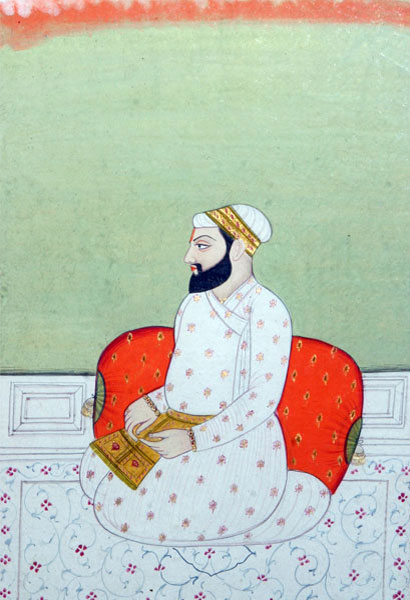
Guru Arjan
guru of Sikhism (1563-1606)
Press Enter · cited answer in seconds
0 sources
Summary
Guru Arjan was born on April 15, 1563[1], in Goindwal Sahib[2]. He died on May 30, 1606[3], in Lahore[4]. He worked as a religious leader[5] and writer[6]. He ranks in the top 0.68% of human entities by monthly Wikipedia readership (2,908 views/month, #6,812 of 1,000,298).[7]
Key Facts
- Father: Guru Ram Das[8]
- Child: Guru Hargobind[9]
- Position held: Sikh guru[10]
- Sex or gender: male[11]
- Given name: Arjan[12]
- Manner of death: capital punishment[13]
- Sibling: Prithi Chand[14]
- Copyright status as a creator: copyrights on works have expired[15]
- P14541: 20m5iT[16]
Why It Matters
Guru Arjan has Wikipedia articles in 19 language editions, a strong signal of global cultural recognition.[17] He is known by 39 alternative names across languages and contexts.[18]
Works attributed to him include Sukhmani Sahib[19], a literary work[20] and Adi Granth[21], a version, edition or translation[22].
FAQs
Where was Guru Arjan born?
Guru Arjan was born in Goindwal Sahib[2].
Where did Guru Arjan die?
Guru Arjan died in Lahore[4].
Who were Guru Arjan's parents?
Guru Arjan's father was Guru Ram Das[8].