
Giuseppe Pitrè
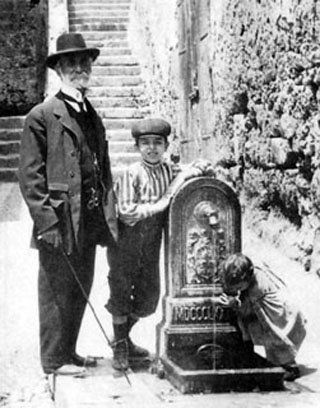
0 sources
Summary
Giuseppe Pitrè was born on December 22, 1841[1], in Palermo[2]. He died on April 10, 1916[3], in Palermo[4]. He worked as an anthropologist[5], politician[6], physician[7], collector of fairy tales[8], and writer[9]. He ranks in the top 0.73% of human entities by monthly Wikipedia readership (629 views/month, #7,275 of 1,000,298).[10]
Key Facts
- Child: Maria Pitrè[11]
- Country of citizenship: Kingdom of Italy[12]
- Occupation: historian[13], folklorist[14], ethnographer[15], ethnologist[16]
- Field of work: literature[17], folkloristics[18], ethnography[19], regional history[20], anthropology[21], history of medicine[22]
- Position held: senator of the Kingdom of Italy[23]
- Employer: University of Palermo[24]
- Notable work: Biblioteca delle tradizioni popolari siciliane[25], Sicilian Folk Medicine[26]
- Award received: Bressa Prize[27]
- Member of: Accademia della Crusca[28], Hellenic Folklore Society[29]
- Sex or gender: male[30]
- Commons category: Giuseppe Pitrè[31]
- Family name: Pitrè[32]
- Given name: Giuseppe[33]
- Work location: Sicily[34]
- Described by source: Great Soviet Encyclopedia (1969–1978)[35], Dizionario Biografico degli Italiani[36], Brockhaus and Efron Encyclopedic Dictionary[37], The Nuttall Encyclopædia[38], Meyers Konversations-Lexikon, 4th edition (1885–1890)[39]
- Languages spoken, written or signed: Italian[40]
- Commons Creator page: Giuseppe Pitrè[41]
Body
Works and Contributions
Things named for Giuseppe Pitrè include Sicilian Ethnographic Museum Giuseppe Pitrè[42], an ethnographic museum[43], in Italy[44], founded in 1909[45].
Why It Matters
Giuseppe Pitrè has Wikipedia articles in 9 language editions, a strong signal of global cultural recognition.[46] He is known by 10 alternative names across languages and contexts.[47]
Entities named for him include Sicilian Ethnographic Museum Giuseppe Pitrè[42], an ethnographic museum[43], in Italy[44], founded in 1909[45].
FAQs
Where was Giuseppe Pitrè born?
Giuseppe Pitrè's place of birth was Palermo[2].
Where did Giuseppe Pitrè die?
Giuseppe Pitrè died in Palermo[4].
What did Giuseppe Pitrè do for work?
Giuseppe Pitrè worked as an anthropologist[5], politician[6], physician[7], collector of fairy tales[8], and writer[9].
What awards did Giuseppe Pitrè receive?
Honors received include Bressa Prize[27].