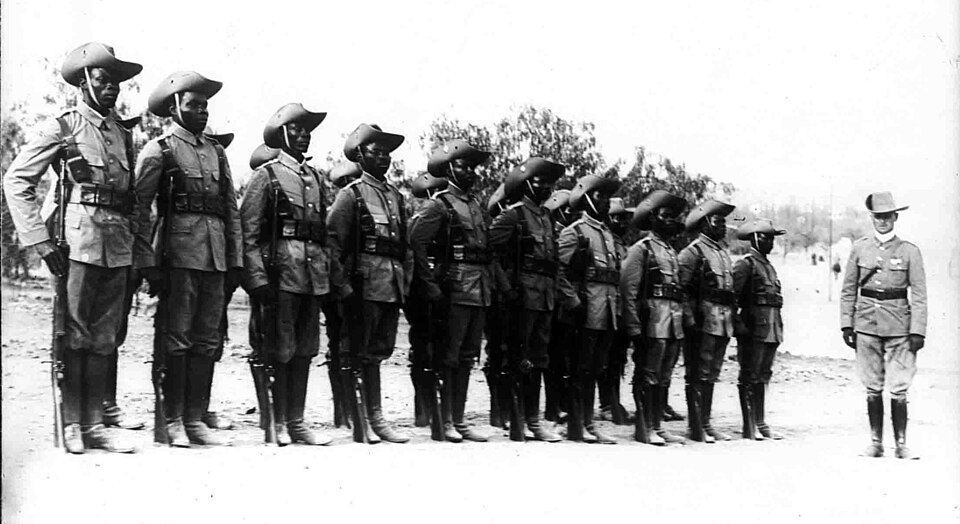
German colonial empire
0 sources
German colonial empire
Summary
German colonial empire is a colonial empire[1]. It draws 4,817 Wikipedia views per month (colonial_empire category, ranking #2 of 9).[2]
Key Facts
- German colonial empire is in the country of German Empire[3].
- German colonial empire's instance of is recorded as colonial empire[4].
- German colonial empire's instance of is recorded as historical country[5].
- German colonial empire's capital is recorded as Berlin[6].
- German colonial empire is owned by German Empire[7].
- German colonial empire is a type of historical region[8].
- German colonial empire is part of German Empire[9].
- German colonial empire is part of German Reich[10].
- German colonial empire's Commons category is recorded as Colonialism of Germany[11].
- January 1, 1884 marks the founding of German colonial empire[12].
- German colonial empire was dissolved in January 1, 1920[13].
- German colonial empire's coordinate location is recorded as {'lat': 52.516666666666666, 'lon': 13.383333333333333}[14].
- German colonial empire's topic's main category is recorded as Category:German colonial empire[15].
- German colonial empire's native label is recorded as {'lang': 'de', 'text': 'Deutsches Kolonialreich'}[16].
- German colonial empire's category of associated people is recorded as Category:People from the German colonial empire[17].
Body
Founding
January 1, 1884 marks the founding of German colonial empire[12].
Identity
Part of include German Empire[9], a historical period[18], founded in 1871[19] and German Reich[10], a nation state[20], in German Reich[21], founded in 1871[22].
Ownership
German colonial empire is owned by German Empire[7].
Dissolution
German colonial empire was dissolved in January 1, 1920[13].
Why It Matters
German colonial empire draws 4,817 Wikipedia views per month (colonial_empire category, ranking #2 of 9).[2] It has Wikipedia articles in 26 language editions, a strong signal of global cultural recognition.[23] It is known by 7 alternative names across languages and contexts.[24]