
Gaston Maspero
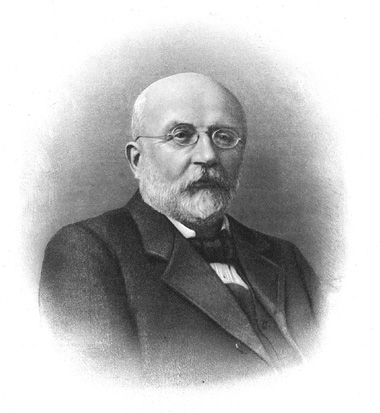
0 sources
Summary
Gaston Maspero was born on June 23, 1846[1], in Paris[2]. He died on June 30, 1916[3], in Palais de l'Institut de France[4]. He worked as an egyptologist[5], archaeologist[6], university teacher[7], folklorist[8], and writer[9]. He ranks in the top 0.72% of human entities by monthly Wikipedia readership (1,310 views/month, #7,209 of 1,000,298).[10]
Key Facts
- Place of birth: former 1st arrondissement of Paris[11]
- Place of death: Paris[12]
- Date of birth: June 24, 1846[13], 1846[14]
- Date of death: 1918[15]
- Place of burial: Montparnasse Cemetery[16]
- Child: Georges Maspero[17], Henri Maspero[18], Jean Maspero[19]
- Country of citizenship: France[20], Kingdom of Italy[21]
- Occupation: art historian[22], orientalist[23]
- Position held: Perpetual Secretary of the Académie des Inscriptions et Belles-Lettres[24], chairperson[25]
- Employer: Collège de France[26], École pratique des hautes études[27], Institut Français d'Archéologie Orientale[28], Supreme Council of Antiquities[29], Boulaq Museum[30]
- Educated at: École Normale Supérieure[31], Lycée Louis-le-Grand[32]
- Student: Ernesto Schiaparelli[33], Walter Ewing Crum[34]
- Award received: Commander of the Legion of Honour[35], Knight Commander of the Order of St Michael and St George[36]
- Member of: Académie des Inscriptions et Belles-Lettres[37], American Academy of Arts and Sciences[38], Royal Prussian Academy of Sciences[39], The Queen's College[40], Academy of Sciences of Turin[41], Royal Netherlands Academy of Arts and Sciences[42], Accademia Nazionale dei Lincei[43]
- Sex or gender: male[44]
- Doctoral student: Raymond Weill[45]
- Commons category: Gaston Maspero[46]
- Family name: Maspero[47]
- Given name: Gaston[48], Camille[49], Charles[50]
- Relative: Eveline Porée-Maspero[51]
Why It Matters
Gaston Maspero has Wikipedia articles in 25 language editions, a strong signal of global cultural recognition.[52] He is known by 40 alternative names across languages and contexts.[53]
He is credited with the discovery of Pyramid of Amenemhet I[54], a smooth-sided pyramid[55], in Egypt[56], founded in -1990[57].
His notable doctoral advisees include Raymond Weill[58], an archaeologist[59], 1874–1950[60], of France[61], awarded the Officer of the Legion of Honour[62], specialised in archaeology[63].
FAQs
Where was Gaston Maspero born?
Gaston Maspero was born in Paris[2].
Where did Gaston Maspero die?
Gaston Maspero passed away in Palais de l'Institut de France[4].
What did Gaston Maspero do for work?
Gaston Maspero worked as an egyptologist[5], archaeologist[6], university teacher[7], folklorist[8], and writer[9].
Where did Gaston Maspero go to school?
Gaston Maspero was educated at École Normale Supérieure[31] and Lycée Louis-le-Grand[32].
What awards did Gaston Maspero receive?
Honors received include Commander of the Legion of Honour[35] and Knight Commander of the Order of St Michael and St George[36].
What did Gaston Maspero discover?
Gaston Maspero is credited as discoverer of Pyramid of Amenemhet I[54].