
Friedrich Wilhelm von Seydlitz
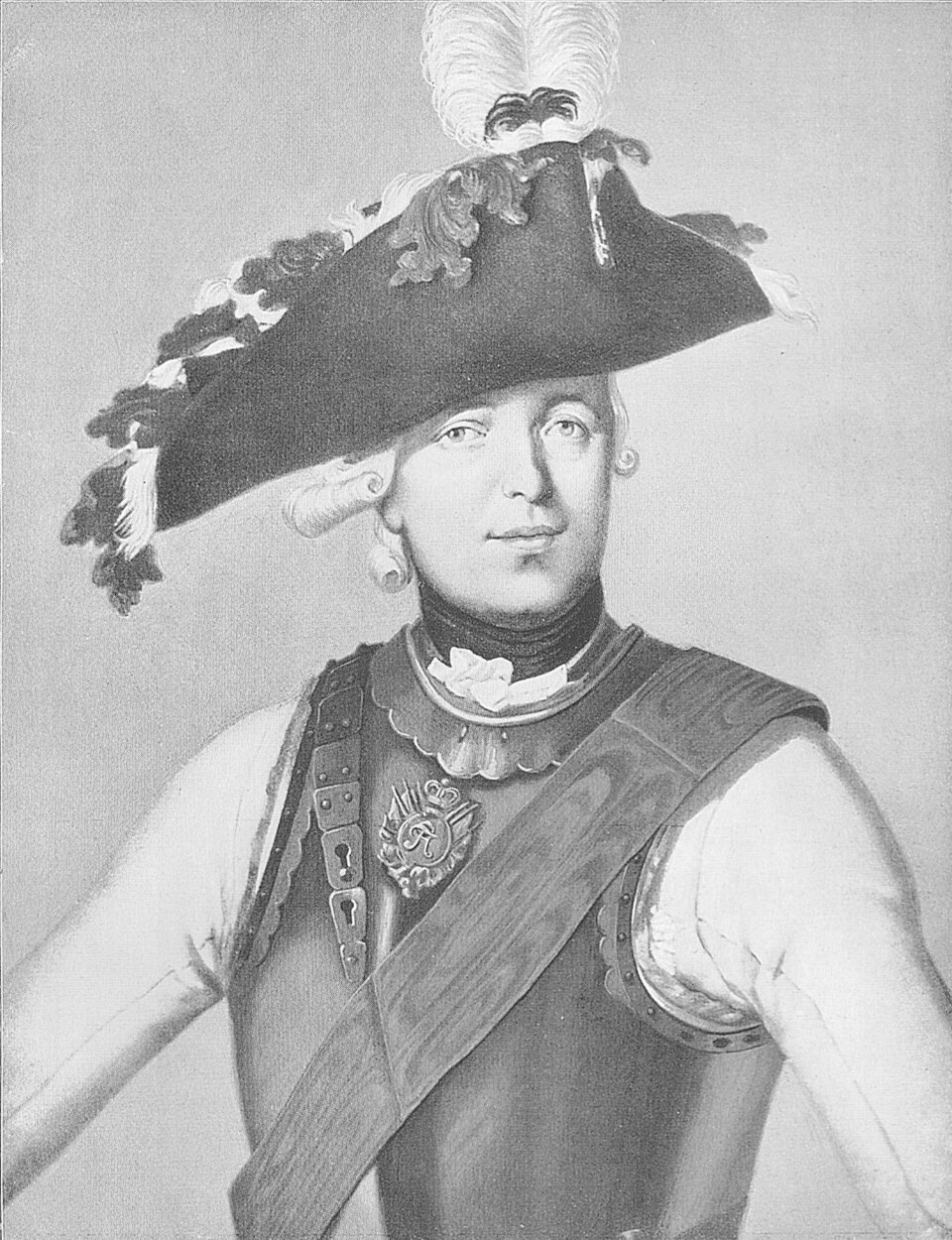
0 sources
Summary
Friedrich Wilhelm von Seydlitz was born on February 3, 1721[1], in Kalkar[2]. He died on August 27, 1773[3], in Oława[4]. He worked as a military personnel[5] and military commander[6]. He ranks in the top 0.72% of human entities by monthly Wikipedia readership (1,313 views/month, #7,226 of 1,000,298).[7]
Key Facts
- Date of death: November 8, 1773[8]
- Place of burial: Opole Voivodeship[9]
- Country of citizenship: Holy Roman Empire[10]
- Field of work: military affairs[11]
- Award received: Order of the Black Eagle[12], Pour le Mérite[13]
- Sex or gender: male[14]
- Noble title: baron[15]
- Military branch: cavalry[16]
- Commons category: Friedrich Wilhelm von Seydlitz[17]
- Military, police or special rank: General of the Cavalry[18], major general[19], lieutenant general[20]
- Archives at: Secret State Archives Prussian Cultural Heritage Foundation[21]
- Cause of death: syphilis[22]
- Participated in conflict: First Silesian War[23], Battle of Hohenfriedberg[24], Battle of Soor[25], Battle of Kolín[26], Battle of Rossbach[27], Siege of Olomouc[28], Battle of Zorndorf[29], Battle of Hochkirch[30], Battle of Kunersdorf[31], Raid on Berlin[32], Battle of Freiberg[33]
- Given name: Friedrich[34], Wilhelm[35]
- Topic's main category: Category:Friedrich Wilhelm von Seydlitz[36]
- Commons gallery: Friedrich Wilhelm von Seydlitz[37]
- Allegiance: Kingdom of Prussia[38]
- Manner of death: natural causes[39]
- Described by source: Sytin Military Encyclopedia[40], Brockhaus and Efron Encyclopedic Dictionary[41], Small Brockhaus and Efron Encyclopedic Dictionary[42], Otto's encyclopedia[43], Allgemeine Deutsche Biographie[44], Encyclopædia Britannica 11th edition[45]
- Languages spoken, written or signed: German[46]
- Name in native language: Friedrich Wilhelm von Seydlitz[47]
- Start of work period: 1740[48]
Body
Works and Contributions
Things named for Friedrich Wilhelm von Seydlitz include SMS Seydlitz[49], a battlecruiser[50], in United Kingdom[51].
Why It Matters
Friedrich Wilhelm von Seydlitz has Wikipedia articles in 20 language editions, a strong signal of global cultural recognition.[52] He is known by 29 alternative names across languages and contexts.[53]
Entities named for him include SMS Seydlitz[49], a battlecruiser[50], in United Kingdom[51].
FAQs
Where was Friedrich Wilhelm von Seydlitz born?
Friedrich Wilhelm von Seydlitz was born in Kalkar[2].
Where did Friedrich Wilhelm von Seydlitz die?
Friedrich Wilhelm von Seydlitz passed away in Oława[4].
What did Friedrich Wilhelm von Seydlitz do for work?
Friedrich Wilhelm von Seydlitz worked as a military personnel[5] and military commander[6].
What awards did Friedrich Wilhelm von Seydlitz receive?
Honors received include Order of the Black Eagle[12] and Pour le Mérite[13].