
Friederike Brun
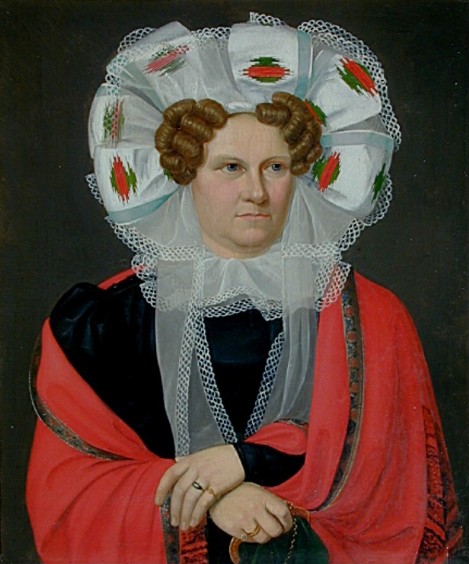
0 sources
Summary
Friederike Brun was born on June 3, 1765[1], in Gräfentonna[2]. She died on March 25, 1835[3], in Copenhagen[4]. She worked as a salonnière[5], writer[6], poet[7], and patron of the arts[8]. She ranks in the top 0.73% of human entities by monthly Wikipedia readership (129 views/month, #7,298 of 1,000,298).[9]
Key Facts
- Date of birth: 1765[10]
- Date of death: 1835[11]
- Father: Balthasar Münter[12]
- Spouse: Constantin Brun[13]
- Child: Ida Brun[14], C.F.B. Brun[15]
- Country of citizenship: Kingdom of Denmark[16]
- Sex or gender: female[17]
- Commons category: Friederike Brun[18]
- Archives at: Royal Danish Library[19]
- Residence: Copenhagen[20]
- Family name: Münter[21]
- Given name: Friederike[22]
- Topic's main category: Category:Friederike Brun[23]
- Described by source: Lexikon deutschsprachiger Epik und Dramatik von Autorinnen 1730–1900[24], Brockhaus and Efron Encyclopedic Dictionary[25], Allgemeine Deutsche Biographie[26], BEIC Digital Library[27], Library of the World's Best Literature[28], Women Writers of Germany, Austria, and Switzerland[29], The American Cyclopædia[30], The History of Nordic Women's Literature[31], Biographie universelle ancienne et moderne[32]
- Languages spoken, written or signed: German[33], Danish[34]
- Birth name: Sophie Christiane Frederikke Münter[35]
- Sibling: Friedrich Münter[36]
- On focus list of Wikimedia project: Wikibase LibMovIt[37]
Why It Matters
Friederike Brun has Wikipedia articles in 10 language editions, a strong signal of global cultural recognition.[38] She is known by 19 alternative names across languages and contexts.[39]
FAQs
Where was Friederike Brun born?
Friederike Brun's place of birth was Gräfentonna[2].
Where did Friederike Brun die?
Friederike Brun died in Copenhagen[4].
Who were Friederike Brun's parents?
Friederike Brun's father was Balthasar Münter[12].
Who was Friederike Brun married to?
Friederike Brun's spouses include Constantin Brun[13].
What did Friederike Brun do for work?
Friederike Brun worked as a salonnière[5], writer[6], poet[7], and patron of the arts[8].