
Franz Lachner
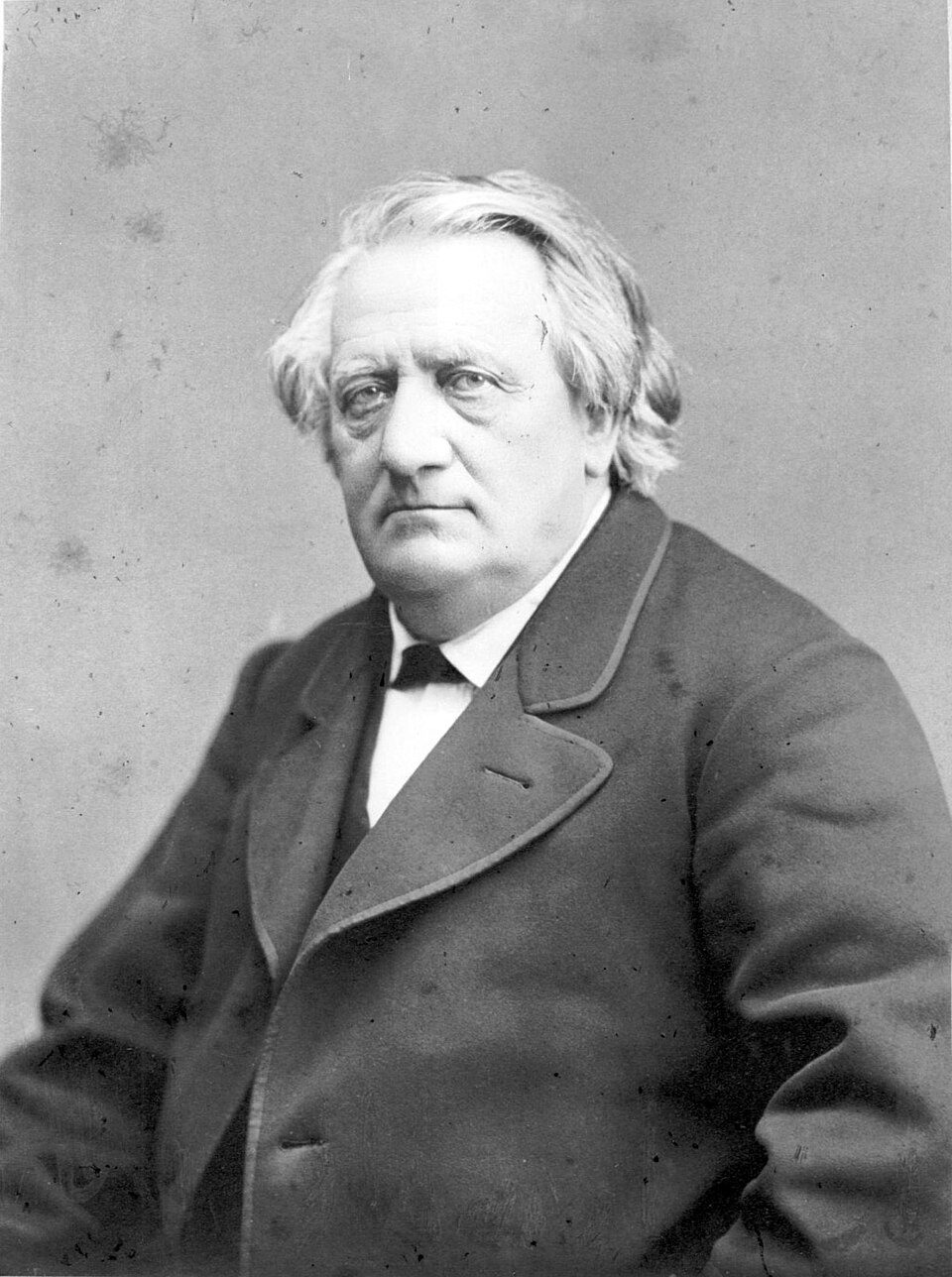
0 sources
Franz Lachner
Summary
Franz Lachner is a human[1]. He was born in Rain[2]. He was born on April 2, 1803[3]. He passed away in Munich[4]. He died on January 20, 1890[5]. He worked as a conductor[6], composer[7], and librettist[8]. He ranks in the top 0.73% of human entities by monthly Wikipedia readership (161 views/month, #7,280 of 1,000,298).[9]
Key Facts
- Born in Rain[2], Franz Lachner…
- Franz Lachner passed away in Munich[4].
- Franz Lachner was born on April 2, 1803[3].
- Franz Lachner was born on April 2, 1804[10].
- Franz Lachner died on January 20, 1890[5].
- Burial took place at Alter Südfriedhof[11].
- Franz Lachner held citizenship in German Reich[12].
- Franz Lachner's professions included conductor[6].
- Franz Lachner's professions included composer[7].
- Franz Lachner worked as a librettist[8].
- Franz Lachner held the position of chapelmaster[13].
- Franz Lachner was employed by Bavarian State Opera[14].
- A notable student of Franz Lachner was Sophie Dietz[15].
- A notable student of Franz Lachner was Engelbert Humperdinck[16].
- A notable student of Franz Lachner was Julius Hey[17].
- A notable student of Franz Lachner was Heinrich Vogl[18].
- Franz Lachner received the honorary citizen of Munich[19].
- Franz Lachner received the Bavarian Maximilian Order for Science and Art[20].
- Franz Lachner was a member of AGV München[21].
- Franz Lachner is recorded as male[22].
- Franz Lachner's instance of is recorded as human[23].
- Franz Lachner's genre is opera[24].
- Franz Lachner's genre is symphony[25].
- Franz Lachner's Commons category is recorded as Franz Lachner[26].
- Franz Lachner's archives at is recorded as Bavarian State Library[27].
Product Details
The following facts are restated verbatim from public-domain and CC0 open-data sources — every line is independently verifiable against the named source's catalog.
MusicBrainz — CC0 open music encyclopedia
-
Type: Person[28]
-
Country: DE[29]
-
Began / founded: 1803-04-02[30]
-
Ended / dissolved: 1890-01-20[31]
-
Community tags: composer, german composer[32]
-
MusicBrainz ID: 2f66bb7a-3ce4-4c4d-a660-660411eff8f6[33]
Body
Origins and Family
Born in Rain[2], Franz Lachner… Recorded date of birth include April 2, 1803[3] and April 2, 1804[10].
Education
Studied under Simon Sechter[34], a composer[35], 1788–1867[36], of Austrian Empire[37] and Maximilian Stadler[38], a composer[39], 1748–1833[40], of Austrian Empire[41].
Career and Affiliations
Recorded occupations include conductor[6], composer[7], and librettist[8]. Franz Lachner was employed by Bavarian State Opera[14]. He held the position of chapelmaster[13]. Notable students include Sophie Dietz[15], an opera singer[42], 1820–1887[43], of Kingdom of Bavaria[44]; Engelbert Humperdinck[16], a composer[45], 1854–1921[46], of Germany[47], awarded the Mendelssohn Award[48], specialised in composer[49]; Julius Hey[17], a music educator[50], 1832–1909[51], of Germany[52]; and Heinrich Vogl[18], an opera singer[53], 1845–1900[54], of Kingdom of Bavaria[55].
Recognition
Awards received include honorary citizen of Munich[19], an award[56], in Germany[57] and Bavarian Maximilian Order for Science and Art[20], an order[58], in Germany[59], founded in 1980[60].
Death and Burial
Franz Lachner died on January 20, 1890[5]. He passed away in Munich[4]. He is buried at Alter Südfriedhof[11].
Why It Matters
Franz Lachner ranks in the top 0.73% of human entities by monthly Wikipedia readership (161 views/month, #7,280 of 1,000,298).[9] He has Wikipedia articles in 17 language editions, a strong signal of global cultural recognition.[61] He is known by 23 alternative names across languages and contexts.[62]
FAQs
Where was Franz Lachner born?
Franz Lachner was born in Rain[2].
Where did Franz Lachner die?
Franz Lachner passed away in Munich[4].
What did Franz Lachner do for work?
Franz Lachner worked as conductor[6], composer[7], and librettist[8].
What awards did Franz Lachner receive?
Honors received include honorary citizen of Munich[19] and Bavarian Maximilian Order for Science and Art[20].