
Francis Poulenc
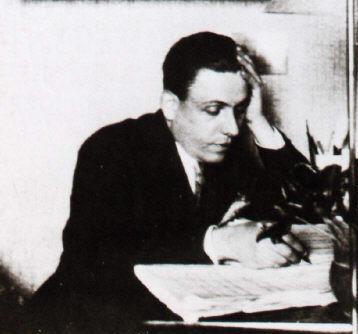
0 sources
Francis Poulenc
Summary
Francis Poulenc is a human[1]. Born in Paris[2], he… he was born on January 7, 1899[3]. He died in Paris[4]. He died on January 30, 1963[5]. He worked as a composer[6], pianist[7], and music critic[8]. He has Wikipedia articles in 28 language editions, a strong signal of global cultural recognition.[9]
Key Facts
- Born in Paris[2], Francis Poulenc…
- Francis Poulenc passed away in Paris[4].
- Francis Poulenc was born on January 7, 1899[3].
- Francis Poulenc died on January 30, 1963[5].
- Burial took place at Père Lachaise Cemetery[10].
- Francis Poulenc held citizenship in France[11].
- Francis Poulenc worked as a composer[6].
- Francis Poulenc's professions included pianist[7].
- Francis Poulenc worked as a music critic[8].
- Francis Poulenc was educated at Lycée Condorcet[12].
- A notable work attributed to Francis Poulenc is Dialogues of the Carmelites[13].
- A notable work attributed to Francis Poulenc is La voix humaine[14].
- A notable work attributed to Francis Poulenc is Les biches[15].
- A notable work attributed to Francis Poulenc is Concert champêtre[16].
- A notable work attributed to Francis Poulenc is Organ Concerto[17].
- A notable work attributed to Francis Poulenc is Flute Sonata[18].
- Francis Poulenc received the Knight of the Legion of Honour[19].
- Francis Poulenc received the Officer of the Legion of Honour[20].
- Francis Poulenc was a member of Groupe des Six[21].
- Francis Poulenc's religion is recorded as Catholicism[22].
- Francis Poulenc is recorded as male[23].
- Francis Poulenc's instance of is recorded as human[24].
- Francis Poulenc's sexual orientation is recorded as homosexuality[25].
- Francis Poulenc is associated with the modernism movement[26].
- Francis Poulenc is associated with the classical music movement[27].
Body
Origins and Family
Francis Poulenc's place of birth was Paris[2]. He was born on January 7, 1899[3].
Education
Francis Poulenc's education included a stint at Lycée Condorcet[12]. Studied under Charles Koechlin[28], a composer[29], 1867–1950[30], of France[31], awarded the Honorary Member of the International Society for Contemporary Music[32] and Ricard Viñes[33], a pianist[34], 1875–1943[35], of Spain[36], awarded the Grand Cross of the Legion of Honour[37].
Career and Affiliations
Recorded occupations include composer[6], pianist[7], and music critic[8].
Works and Contributions
Notable works include Dialogues of the Carmelites[13], a dramatico-musical work[38]; La voix humaine[14], a dramatico-musical work[39], founded in 1958[40]; Les biches[15], a ballet[41], directed by Bronislava Nijinska[42]; Concert champêtre[16], a musical work/composition[43]; Organ Concerto[17], a musical work/composition[44]; and Flute Sonata[18], a musical work/composition[45], founded in 1956[46].
Recognition
Awards received include Knight of the Legion of Honour[19], a grade of an order[47], in France[48] and Officer of the Legion of Honour[20], a grade of an order[49], in France[50].
Personal Life
Francis Poulenc's religion is recorded as Catholicism[22].
Death and Burial
Francis Poulenc died on January 30, 1963[5]. He passed away in Paris[4]. The cause of death was myocardial infarction[51]. He is buried at Père Lachaise Cemetery[10].
Why It Matters
Francis Poulenc has Wikipedia articles in 28 language editions, a strong signal of global cultural recognition.[9] He is known by 37 alternative names across languages and contexts.[52]
FAQs
Where was Francis Poulenc born?
Born in Paris[2], Francis Poulenc…
Where did Francis Poulenc die?
Francis Poulenc died in Paris[4].
What did Francis Poulenc do for work?
Francis Poulenc worked as composer[6], pianist[7], and music critic[8].
Where did Francis Poulenc go to school?
Francis Poulenc was educated at Lycée Condorcet[12].
What awards did Francis Poulenc receive?
Honors received include Knight of the Legion of Honour[19] and Officer of the Legion of Honour[20].