
Filipp Fortunatov
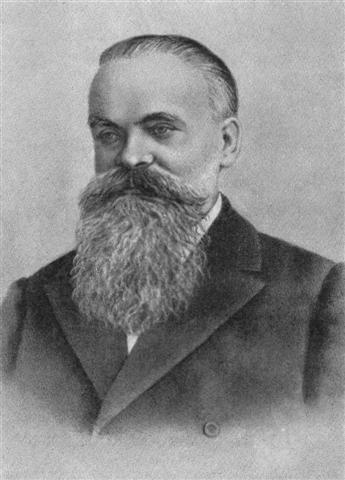
0 sources
Filipp Fortunatov
Summary
Filipp Fortunatov is a human[1]. Born in Vologda[2], he… he was born on January 2, 1848[3]. He passed away in Kosalma[4]. He died on September 20, 1914[5]. He worked as a philologist[6] and university teacher[7]. He ranks in the top 0.73% of human entities by monthly Wikipedia readership (13 views/month, #7,296 of 1,000,298).[8]
Key Facts
- Born in Vologda[2], Filipp Fortunatov…
- Filipp Fortunatov passed away in Kosalma[4].
- Filipp Fortunatov was born on January 2, 1848[3].
- Filipp Fortunatov was born on January 14, 1848[9].
- Filipp Fortunatov died on September 20, 1914[5].
- Filipp Fortunatov died on October 3, 1914[10].
- Filipp Fortunatov held citizenship in Russian Empire[11].
- Filipp Fortunatov worked as a philologist[6].
- Filipp Fortunatov's professions included university teacher[7].
- Filipp Fortunatov's field of work was linguistics[12].
- Filipp Fortunatov held the position of professor emeritus[13].
- Among Filipp Fortunatov's employers was Imperial Moscow University[14].
- Among Filipp Fortunatov's employers was Lomonosov Moscow State University[15].
- Filipp Fortunatov was employed by Q4138504[16].
- Filipp Fortunatov's education included a stint at Imperial Moscow University[17].
- Filipp Fortunatov's education included a stint at Faculty of History and Philology of Moscow University[18].
- Filipp Fortunatov's doctoral advisor was Fyodor Buslaev[19].
- Filipp Fortunatov's doctoral advisor was Georg Curtius[20].
- Filipp Fortunatov's doctoral advisor was Michel Bréal[21].
- Filipp Fortunatov's doctoral advisor was August Leskien[22].
- A notable student of Filipp Fortunatov was Mikhail Pokrovsky[23].
- A notable student of Filipp Fortunatov was Grigoriy Ul'yanov[24].
- A notable student of Filipp Fortunatov was Aleksey Shakhmatov[25].
- A notable student of Filipp Fortunatov was Jan Wiktor Porzeziński[26].
- A notable student of Filipp Fortunatov was Aleksandar Belić[27].
Body
Origins and Family
Filipp Fortunatov's place of birth was Vologda[2]. Recorded date of birth include January 2, 1848[3] and January 14, 1848[9].
Education
Educated at Imperial Moscow University[17], an imperial universities of the Russian Empire[28], in Russian Empire[29], founded in 1755[30] and Faculty of History and Philology of Moscow University[18], a faculty[31], in Russian Empire[32]. Doctoral advisors include Fyodor Buslaev[19], a linguist[33], 1818–1897[34], of Russian Empire[35], awarded the Order of St. Vladimir, 3rd class[36], specialised in philology[37]; Georg Curtius[20], a linguist[38], 1820–1885[39], of Lübeck[40], awarded the Pour le Mérite for Sciences and Arts order[41]; Michel Bréal[21], a linguist[42], 1832–1915[43], of France[44], awarded the Commander of the Legion of Honour[45], specialised in linguistics[46]; and August Leskien[22], a linguist[47], 1840–1916[48], of German Empire[49], awarded the honorary doctorate of the University of Oslo[50], specialised in philology[51]. Filipp Fortunatov studied under Pavel Yakovlevich Petrov[52].
Career and Affiliations
Recorded occupations include philologist[6] and university teacher[7]. Filipp Fortunatov's field of work was linguistics[12]. Employers include Imperial Moscow University[14], an imperial universities of the Russian Empire[53], in Russian Empire[54], founded in 1755[55]; Lomonosov Moscow State University[15], a public university[56], in Russia[57], founded in 1755[58], headquartered in Moscow[59]; and Q4138504[16], a school[60], in Russian Empire[61], founded in 1858[62]. He held the position of professor emeritus[13]. Notable students include Mikhail Pokrovsky[23], Grigoriy Ul'yanov[24], Aleksey Shakhmatov[25], Jan Wiktor Porzeziński[26], Aleksandar Belić[27], and Olaf Broch[63]. Doctoral students include Dmitry Ushakov[64], a lexicographer[65], 1873–1942[66], of Russian Empire[67], awarded the Order of the Badge of Honour[68], specialised in linguistics[69]; Aleksey Shakhmatov[70], a linguist[71], 1864–1920[72], of Russian Empire[73], awarded the Order of St. Vladimir, 3rd class[74], specialised in philology[75]; Aleksandar Belić[76], a philologist[77], 1876–1960[78], of Principality of Serbia[79], specialised in linguistics[80]; Mikhail Pokrovsky[81], a classical philologist[82], 1869–1942[83], of Russian Empire[84], specialised in linguistics[85]; Nikolay Durnovo[86], a linguist[87], 1876–1937[88], of Russian Empire[89], awarded the Academician of the Belarusian SSR Academy of Sciences[90], specialised in linguistics[91]; and Nikolai Jakovlev[92], a sociolinguist[93], 1892–1974[94], of Soviet Union[95], awarded the Order of the Red Banner of Labour[96], specialised in linguistics[97].
Recognition
Filipp Fortunatov received the honorary doctorate[98].
Death and Burial
Recorded date of death include September 20, 1914[5] and October 3, 1914[10]. Filipp Fortunatov died in Kosalma[4].
Why It Matters
Filipp Fortunatov ranks in the top 0.73% of human entities by monthly Wikipedia readership (13 views/month, #7,296 of 1,000,298).[8] He has Wikipedia articles in 7 language editions, a strong signal of global cultural recognition.[99] He is known by 24 alternative names across languages and contexts.[100]
His notable doctoral advisees include Aleksey Shakhmatov[101], a linguist[102], 1864–1920[103], of Russian Empire[104], awarded the Order of St. Vladimir, 3rd class[105], specialised in philology[106]; Aleksandar Belić[107], a philologist[108], 1876–1960[109], of Principality of Serbia[110], specialised in linguistics[111]; Dmitry Ushakov[112], a lexicographer[113], 1873–1942[114], of Russian Empire[115], awarded the Order of the Badge of Honour[116], specialised in linguistics[117]; Nikolay Durnovo[118], a linguist[119], 1876–1937[120], of Russian Empire[121], awarded the Academician of the Belarusian SSR Academy of Sciences[122], specialised in linguistics[123]; Nikolai Jakovlev[124], a sociolinguist[125], 1892–1974[126], of Soviet Union[127], awarded the Order of the Red Banner of Labour[128], specialised in linguistics[129]; and Aleksey Sobolevsky[130], a linguist[131], 1857–1929[132], of Russian Empire[133], specialised in linguistics[134].
FAQs
Where was Filipp Fortunatov born?
Filipp Fortunatov was born in Vologda[2].
Where did Filipp Fortunatov die?
Filipp Fortunatov died in Kosalma[4].
What did Filipp Fortunatov do for work?
Filipp Fortunatov worked as philologist[6] and university teacher[7].
Where did Filipp Fortunatov go to school?
Filipp Fortunatov was educated at Imperial Moscow University[17] and Faculty of History and Philology of Moscow University[18].
What awards did Filipp Fortunatov receive?
Honors received include honorary doctorate[98].