
Federigo Enriques
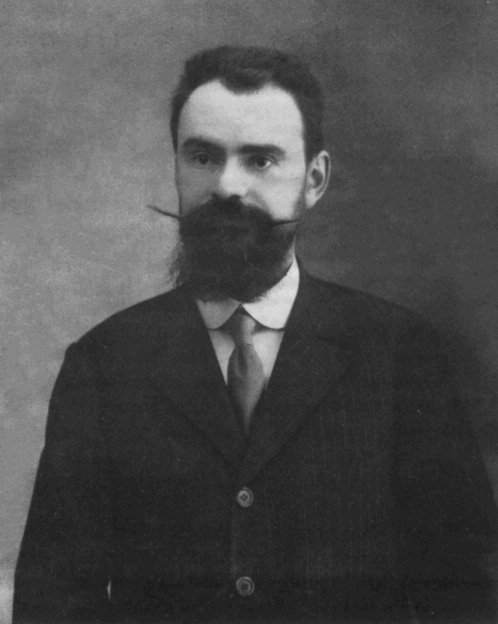
0 sources
Summary
Federigo Enriques was born on January 5, 1871[1], in Livorno[2]. He died on June 14, 1946[3], in Rome[4]. He worked as a mathematician[5], philosopher of science[6], historian of science[7], university teacher[8], and historian[9]. He ranks in the top 0.73% of human entities by monthly Wikipedia readership (373 views/month, #7,295 of 1,000,298).[10]
Key Facts
- Date of birth: 1871[11]
- Date of death: 1946[12]
- Country of citizenship: Kingdom of Italy[13]
- Ethnic group: Jewish people[14]
- Field of work: algebraic geometry[15], history of science[16]
- Position held: chairperson[17]
- Employer: Sapienza University of Rome[18], University of Bologna[19], University of Turin[20]
- Educated at: University of Pisa[21], Scuola Normale Superiore[22]
- Doctoral advisor: Enrico Betti[23], Guido Castelnuovo[24]
- Student: Roberto Bonola[25]
- Notable work: Enriques–Kodaira classification[26], Enriques surface[27], Enriques–Babbage theorem[28]
- Award received: Mathematical Prize of the Italian Academy of Sciences[29], Bordin Prize[30]
- Member of: German Academy of Sciences Leopoldina[31], International Academy of the History of Science[32], Società Filosofica Italiana[33], Académie des Sciences Morales et Politiques[34], Academy of Sciences of Turin[35], Accademia Nazionale dei Lincei[36]
- Sex or gender: male[37]
- Doctoral student: Paul Libois[38], Bernard d'Orgeval[39], Pol Burniat[40], Oscar Chisini[41], Alfredo Franchetta[42]
- Commons category: Federigo Enriques[43]
- Family name: Enriques[44]
- Given name: Federigo[45], Umberto[46], Giulio[47], Abramo[48]
- Relative: Guido Castelnuovo[49], Emma Castelnuovo[50], Enzo Enriques Agnoletti[51], Anna Maria Enriques Agnoletti[52]
Body
Works and Contributions
Things named for Federigo Enriques include Enriques–Kodaira classification[53], a classification[54].
Why It Matters
Federigo Enriques has Wikipedia articles in 15 language editions, a strong signal of global cultural recognition.[55] He is known by 16 alternative names across languages and contexts.[56]
Entities named for him include Enriques–Kodaira classification[53], a classification[54].
FAQs
Where was Federigo Enriques born?
Federigo Enriques's place of birth was Livorno[2].
Where did Federigo Enriques die?
Federigo Enriques passed away in Rome[4].
What did Federigo Enriques do for work?
Federigo Enriques worked as a mathematician[5], philosopher of science[6], historian of science[7], university teacher[8], and historian[9].
Where did Federigo Enriques go to school?
Federigo Enriques was educated at University of Pisa[21] and Scuola Normale Superiore[22].
What awards did Federigo Enriques receive?
Honors received include Mathematical Prize of the Italian Academy of Sciences[29] and Bordin Prize[30].