
Farnese Hours
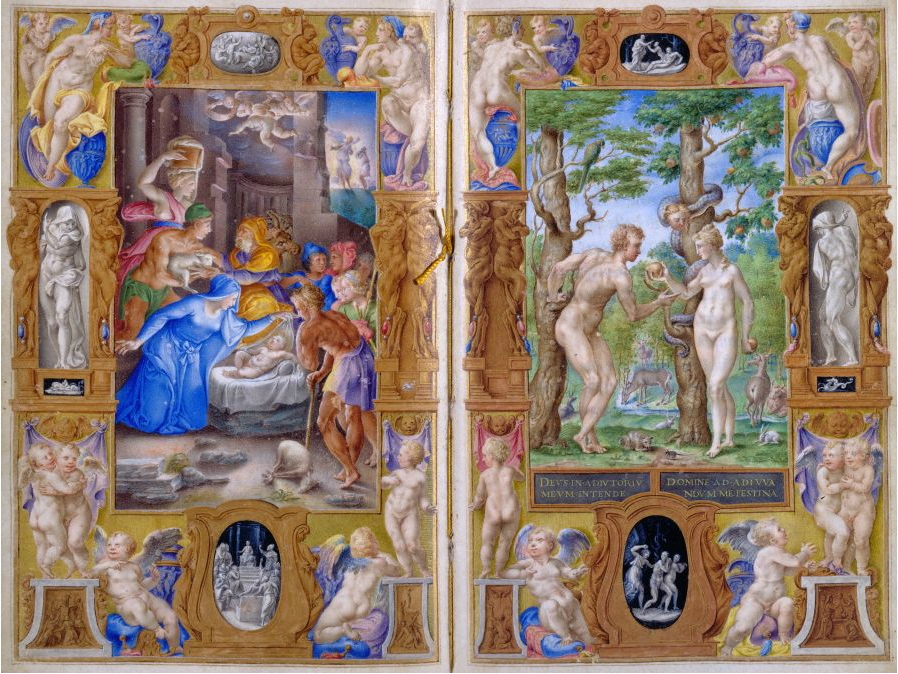
illuminated manuscript by Giulio Clovio from 1546
Press Enter · cited answer in seconds
0 sources
Summary
Farnese Hours is a book of hours[1]. It draws 212 Wikipedia views per month (book_of_hours category, ranking #4 of 14).[2]
Key Facts
- Farnese Hours is the creator of Giulio Clovio[3].
- Farnese Hours is in the country of United States[4].
- Farnese Hours's instance of is recorded as book of hours[5].
- Farnese Hours's instance of is recorded as illuminated manuscript[6].
- Farnese Hours's illustrator is recorded as Giulio Clovio[7].
- Farnese Hours's genre is book of hours[8].
- Alessandro Farnese is named after Farnese Hours[9].
- Farnese Hours is made of vellum[10].
- Farnese Hours's collection is recorded as The Morgan Library & Museum[11].
- Farnese Hours's inventory number is recorded as MS M.69[12].
- The location of Farnese Hours was The Morgan Library & Museum[13].
- Farnese Hours's Commons category is recorded as Farnese Hours[14].
- Farnese Hours's language of work or name is recorded as Latin[15].
- 1546 marks the founding of Farnese Hours[16].
- Farnese Hours's described at URL is recorded as https://www.themorgan.org/manuscript/77250?id=111[17].
- Farnese Hours's location of creation is recorded as Rome[18].
- Farnese Hours's title is recorded as {'lang': 'en', 'text': 'Farnese Hours'}[19].
- Farnese Hours's height is recorded as {'unit': 'millimetre', 'amount': '+173'}[20].
- Farnese Hours's width is recorded as {'unit': 'millimetre', 'amount': '+103'}[21].
- Farnese Hours's calligrapher is recorded as Francesco Monterchi[22].
- Farnese Hours's script style is recorded as humanistic cursive[23].
Body
Authorship and Creation
Farnese Hours is the creator of Giulio Clovio[3].
Publication
Farnese Hours's language of work or name is recorded as Latin[15]. Its genre is book of hours[8].
Material and Period
Farnese Hours is made of vellum[10]. It took place at The Morgan Library & Museum[13].
Why It Matters
Farnese Hours draws 212 Wikipedia views per month (book_of_hours category, ranking #4 of 14).[2] It has Wikipedia articles in 7 language editions, a strong signal of global cultural recognition.[24] It is known by 12 alternative names across languages and contexts.[25]