
Farkas Bolyai
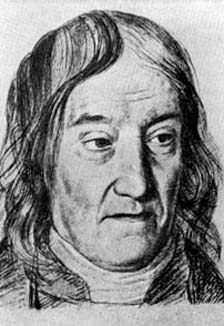
0 sources
Summary
Farkas Bolyai was born on February 9, 1775[1], in Buia[2]. He died on November 20, 1856[3], in Târgu Mureș[4]. He worked as a mathematician[5], poet[6], inventor[7], and astronomer[8]. He ranks in the top 0.73% of human entities by monthly Wikipedia readership (334 views/month, #7,280 of 1,000,298).[9]
Key Facts
- Date of death: November 21, 1856[10]
- Place of burial: Reformed Protestant cemetery[11]
- Child: János Bolyai[12]
- Country of citizenship: Austrian Empire[13]
- Native language: Hungarian[14]
- Field of work: mathematics[15]
- Employer: Simon Kemény[16], Bolyai Farkas High School in Târgu Mureș[17]
- Educated at: University of Göttingen[18], Bethlen College, Aiud[19], Reformed College in Cluj-Napoca[20]
- Doctoral advisor: Abraham Gotthelf Kästner[21]
- Notable work: Wallace–Bolyai–Gerwien theorem[22]
- Member of: Hungarian Academy of Sciences[23]
- Sex or gender: male[24]
- Doctoral student: János Bolyai[25]
- Commons category: Farkas Bolyai[26]
- Residence: Habsburg monarchy[27]
- Family name: Bolyai[28]
- Given name: Farkas[29]
- Partner in business or sport: Carl Friedrich Gauss[30]
- Described by source: Svensk uppslagsbok[31], Nordisk familjebok[32], Brockhaus and Efron Encyclopedic Dictionary[33], Biographisches Lexikon des Kaiserthums Oesterreich[34], A Repository of Modern Knowledge[35], Hungarian writers. Biography collection[36], Small Brockhaus and Efron Encyclopedic Dictionary[37], Meyers Konversations-Lexikon, 4th edition (1885–1890)[38]
- Languages spoken, written or signed: Hungarian[39], Latin[40], German[41]
- Name in native language: Farkas Bolyai[42]
- Name: Wolfgang Bolyai[43]
Body
Works and Contributions
Things named for Farkas Bolyai include Wallace–Bolyai–Gerwien theorem[44], a theorem[45].
Why It Matters
Farkas Bolyai has Wikipedia articles in 18 language editions, a strong signal of global cultural recognition.[46] He is known by 29 alternative names across languages and contexts.[47]
Entities named for him include Wallace–Bolyai–Gerwien theorem[44], a theorem[45].
His notable doctoral advisees include János Bolyai[48], a mathematician[49], 1802–1860[50], of Austrian Empire[51], specialised in geometry[52].
FAQs
Where was Farkas Bolyai born?
Farkas Bolyai was born in Buia[2].
Where did Farkas Bolyai die?
Farkas Bolyai passed away in Târgu Mureș[4].
What did Farkas Bolyai do for work?
Farkas Bolyai worked as a mathematician[5], poet[6], inventor[7], and astronomer[8].
Where did Farkas Bolyai go to school?
Farkas Bolyai was educated at University of Göttingen[18], Bethlen College, Aiud[19], and Reformed College in Cluj-Napoca[20].