
Expedition 2
expedition to the International Space Station
Press Enter · cited answer in seconds
0 sources
Expedition 2
Summary
Expedition 2 is an expedition to the International Space Station[1]. It draws 65 Wikipedia views per month (expedition_to_the_international_space_station category, ranking #22 of 74).[2]
Key Facts
- Expedition 2's instance of is recorded as expedition to the International Space Station[3].
- Expedition 2 followed Expedition 1[4].
- Expedition 2 was followed by Expedition 3[5].
- Expedition 2's Commons category is recorded as ISS Expedition 2[6].
- Expedition 2 began on March 10, 2001[7].
- Expedition 2 ended on August 20, 2001[8].
- Expedition 2's significant event is recorded as extra-vehicular activity[9].
- Expedition 2's official website is recorded as http://www.nasa.gov/mission_pages/station/expeditions/expedition02[10].
- Expedition 2's official website is recorded as https://www.nasa.gov/mission/expedition-2/[11].
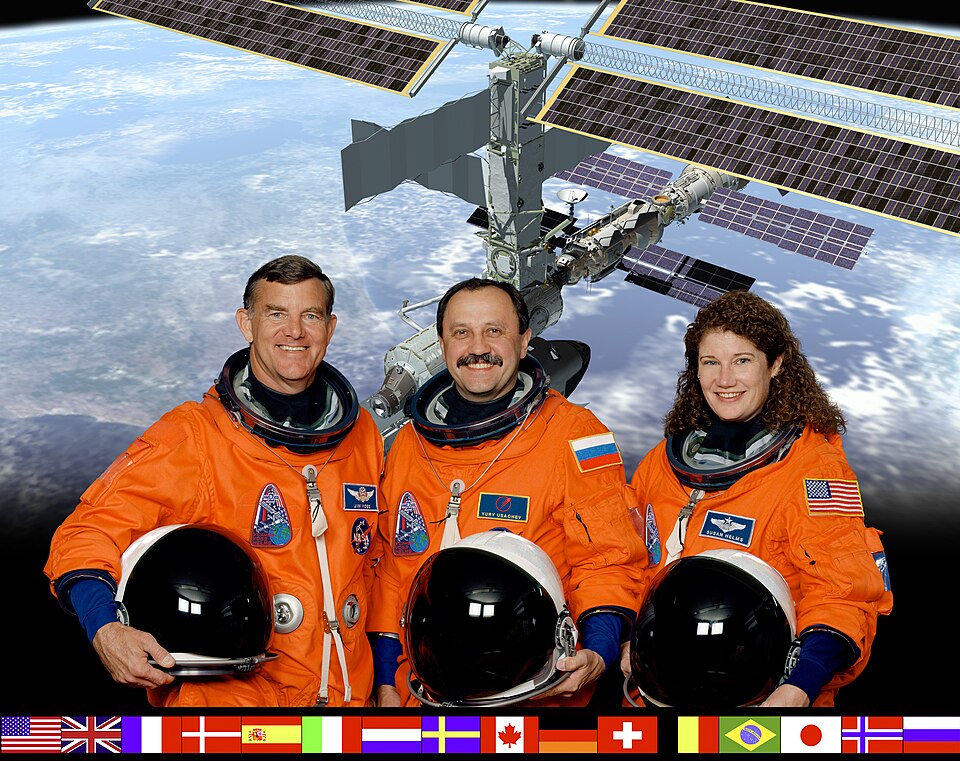
- Expedition 2's crew members is recorded as Yury Usachov[12].
- Expedition 2's crew members is recorded as Susan J. Helms[13].
- Expedition 2's crew members is recorded as James S. Voss[14].
- Expedition 2's facet of is recorded as International Space Station[15].
- Expedition 2's orbits completed is recorded as {'amount': '+2635'}[16].
- Expedition 2's vessel is recorded as STS-102[17].
- Expedition 2's vessel is recorded as STS-105[18].
- Expedition 2's vessel is recorded as Discovery[19].
- Expedition 2's duration is recorded as {'amount': '+14458380'}[20].
- Expedition 2's duration is recorded as {'amount': '+14452849'}[21].
Body
When and Where
Expedition 2 began on March 10, 2001[7]. It ended on August 20, 2001[8].
Context
Expedition 2's instance of is recorded as expedition to the International Space Station[3]. It followed Expedition 1[4]. It was followed by Expedition 3[5].
Why It Matters
Expedition 2 draws 65 Wikipedia views per month (expedition_to_the_international_space_station category, ranking #22 of 74).[2] It has Wikipedia articles in 20 language editions, a strong signal of global cultural recognition.[22] It is known by 20 alternative names across languages and contexts.[23]