
Eiga Monogatari
literary work
Press Enter · cited answer in seconds
0 sources
Summary
Eiga Monogatari is a literary work[1]. It ranks in the top 4% of literary_work entities by monthly Wikipedia readership (585 views/month).[2]
Key Facts
- Eiga Monogatari authored various authors[3].
- Eiga Monogatari authored Akazome Emon[4].
- Eiga Monogatari's instance of is recorded as literary work[5].
- Eiga Monogatari's genre is rekishi monogatari[6].
- Eiga Monogatari's Commons category is recorded as Eiga Monogatari[7].
- Eiga Monogatari's language of work or name is recorded as Early Middle Japanese[8].
- Eiga Monogatari's country of origin is recorded as Japan[9].
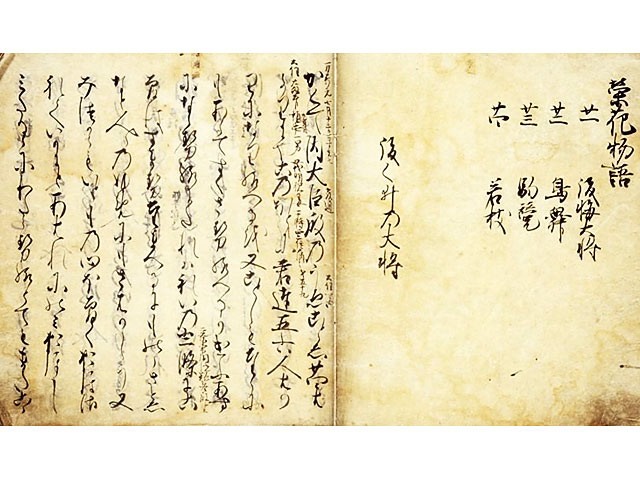
- Eiga Monogatari's has edition or translation is recorded as Umezawa-bon Eiga Monogatari[10].
- Eiga Monogatari's title is recorded as {'lang': 'ja', 'text': '栄花物語'}[11].
- Eiga Monogatari's derivative work is recorded as Imperial Visitation for the Ceremonial Horserace of 1024[12].
- Eiga Monogatari's copyright status is recorded as public domain[13].
- Eiga Monogatari's start of covered period is recorded as 900[14].
- Eiga Monogatari's end of covered period is recorded as 1092[15].
Body
Authorship and Creation
Authored works include various authors[3], a term[16] and Akazome Emon[4], a waka poet[17], 0956–1100[18], of Japan[19], specialised in poetry[20].
Publication
Eiga Monogatari's language of work or name is recorded as Early Middle Japanese[8]. Its genre is rekishi monogatari[6].
Why It Matters
Eiga Monogatari ranks in the top 4% of literary_work entities by monthly Wikipedia readership (585 views/month).[2] It has Wikipedia articles in 12 language editions, a strong signal of global cultural recognition.[21] It is known by 21 alternative names across languages and contexts.[22]