
Ehrenfried Walther von Tschirnhaus
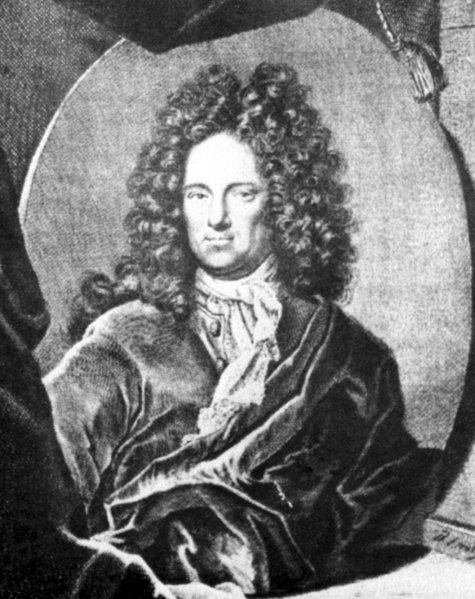
0 sources
Ehrenfried Walther von Tschirnhaus
Summary
Ehrenfried Walther von Tschirnhaus is a human[1]. Born in Sławnikowice, Lower Silesia[2], he… he was born on April 10, 1651[3]. He passed away in Dresden[4]. He died on October 11, 1708[5]. He worked as a mathematician[6], physicist[7], philosopher[8], and medical instrument maker[9]. He has Wikipedia articles in 21 language editions, a strong signal of global cultural recognition.[10]
Key Facts
- Ehrenfried Walther von Tschirnhaus's place of birth was Sławnikowice, Lower Silesia[2].
- Ehrenfried Walther von Tschirnhaus died in Dresden[4].
- Ehrenfried Walther von Tschirnhaus was born on April 10, 1651[3].
- Ehrenfried Walther von Tschirnhaus died on October 11, 1708[5].
- Ehrenfried Walther von Tschirnhaus held citizenship in Electorate of Saxony[11].
- Ehrenfried Walther von Tschirnhaus worked as a mathematician[6].
- Ehrenfried Walther von Tschirnhaus's professions included physicist[7].
- Ehrenfried Walther von Tschirnhaus's professions included philosopher[8].
- Ehrenfried Walther von Tschirnhaus worked as a medical instrument maker[9].
- Ehrenfried Walther von Tschirnhaus's education included a stint at Leiden University[12].
- Ehrenfried Walther von Tschirnhaus's education included a stint at Augustum-Annen-Gymnasium[13].
- A notable work attributed to Ehrenfried Walther von Tschirnhaus is Tschirnhaus transformation[14].
- A notable work attributed to Ehrenfried Walther von Tschirnhaus is Tschirnhaus' Quadratrix[15].
- A notable work attributed to Ehrenfried Walther von Tschirnhaus is Tschirnhausen cubic[16].
- A notable work attributed to Ehrenfried Walther von Tschirnhaus is n-ellipse[17].
- A notable work attributed to Ehrenfried Walther von Tschirnhaus is Medicina mentis[18].
- Ehrenfried Walther von Tschirnhaus was a member of French Academy of Sciences[19].
- Ehrenfried Walther von Tschirnhaus is recorded as male[20].
- Ehrenfried Walther von Tschirnhaus's instance of is recorded as human[21].
- Ehrenfried Walther von Tschirnhaus supervised Christian Wolff as a doctoral student[22].
- Ehrenfried Walther von Tschirnhaus's Commons category is recorded as Ehrenfried Walther von Tschirnhaus[23].
- Ehrenfried Walther von Tschirnhaus was part of the conflict Franco-Dutch War[24].
- Ehrenfried Walther von Tschirnhaus's given name is recorded as Ehrenfried[25].
- Ehrenfried Walther von Tschirnhaus's topic's main category is recorded as Category:Ehrenfried Walther von Tschirnhaus[26].
- Ehrenfried Walther von Tschirnhaus's Commons gallery is recorded as Ehrenfried Walther von Tschirnhaus[27].
Body
Origins and Family
Ehrenfried Walther von Tschirnhaus's place of birth was Sławnikowice, Lower Silesia[2]. He was born on April 10, 1651[3].
Education
Educated at Leiden University[12], a university[28], in Netherlands[29], founded in 1575[30], headquartered in Leiden[31] and Augustum-Annen-Gymnasium[13], a school[32], in Germany[33], founded in 1565[34]. Studied under Arnold Geulincx[35], a philosopher[36], 1624–1669[37], of Southern Netherlands[38]; Franciscus Sylvius[39], an art collector[40], 1614–1672[41], of Dutch Republic[42], specialised in medicine[43]; and Pieter van Schooten[44], a mathematician[45], 1634–1679[46], specialised in mathematics[47].
Career and Affiliations
Recorded occupations include mathematician[6], physicist[7], philosopher[8], and medical instrument maker[9]. Ehrenfried Walther von Tschirnhaus supervised Christian Wolff as a doctoral student[22].
Works and Contributions
Notable works include Tschirnhaus transformation[14]; Tschirnhaus' Quadratrix[15], a mathematical concept[48]; Tschirnhausen cubic[16], a mathematical concept[49]; n-ellipse[17], a mathematical concept[50]; and Medicina mentis[18], a literary work[51]. Things named for Ehrenfried Walther von Tschirnhaus include Tschirnhausen cubic[52], a mathematical concept[53]; Tschirnhaus transformation[54]; and n-ellipse[55], a mathematical concept[56].
Death and Burial
Ehrenfried Walther von Tschirnhaus died on October 11, 1708[5]. He died in Dresden[4].
Why It Matters
Ehrenfried Walther von Tschirnhaus has Wikipedia articles in 21 language editions, a strong signal of global cultural recognition.[10] He is known by 29 alternative names across languages and contexts.[57]
He has been cited as an influence by Christian Wolff[58], a jurist[59], 1679–1754[60], of Kingdom of Prussia[61], awarded the Fellow of the Royal Society[62], specialised in mathematics[63].
He is credited with the discovery of Meissen porcelain[64], a product[65], in Germany[66]. Entities named for him include Tschirnhausen cubic[52], a mathematical concept[53]; Tschirnhaus transformation[54]; and n-ellipse[55], a mathematical concept[56].
His notable doctoral advisees include Christian Wolff[67], a jurist[68], 1679–1754[69], of Kingdom of Prussia[70], awarded the Fellow of the Royal Society[71], specialised in mathematics[72].
FAQs
Where was Ehrenfried Walther von Tschirnhaus born?
Born in Sławnikowice, Lower Silesia[2], Ehrenfried Walther von Tschirnhaus…
Where did Ehrenfried Walther von Tschirnhaus die?
Ehrenfried Walther von Tschirnhaus died in Dresden[4].
What did Ehrenfried Walther von Tschirnhaus do for work?
Ehrenfried Walther von Tschirnhaus worked as mathematician[6], physicist[7], philosopher[8], and medical instrument maker[9].
Where did Ehrenfried Walther von Tschirnhaus go to school?
Ehrenfried Walther von Tschirnhaus was educated at Leiden University[12] and Augustum-Annen-Gymnasium[13].
Who did Ehrenfried Walther von Tschirnhaus influence?
Ehrenfried Walther von Tschirnhaus has been cited as an influence by Christian Wolff[58].
What did Ehrenfried Walther von Tschirnhaus discover?
Ehrenfried Walther von Tschirnhaus is credited as discoverer of Meissen porcelain[64].