
dragon
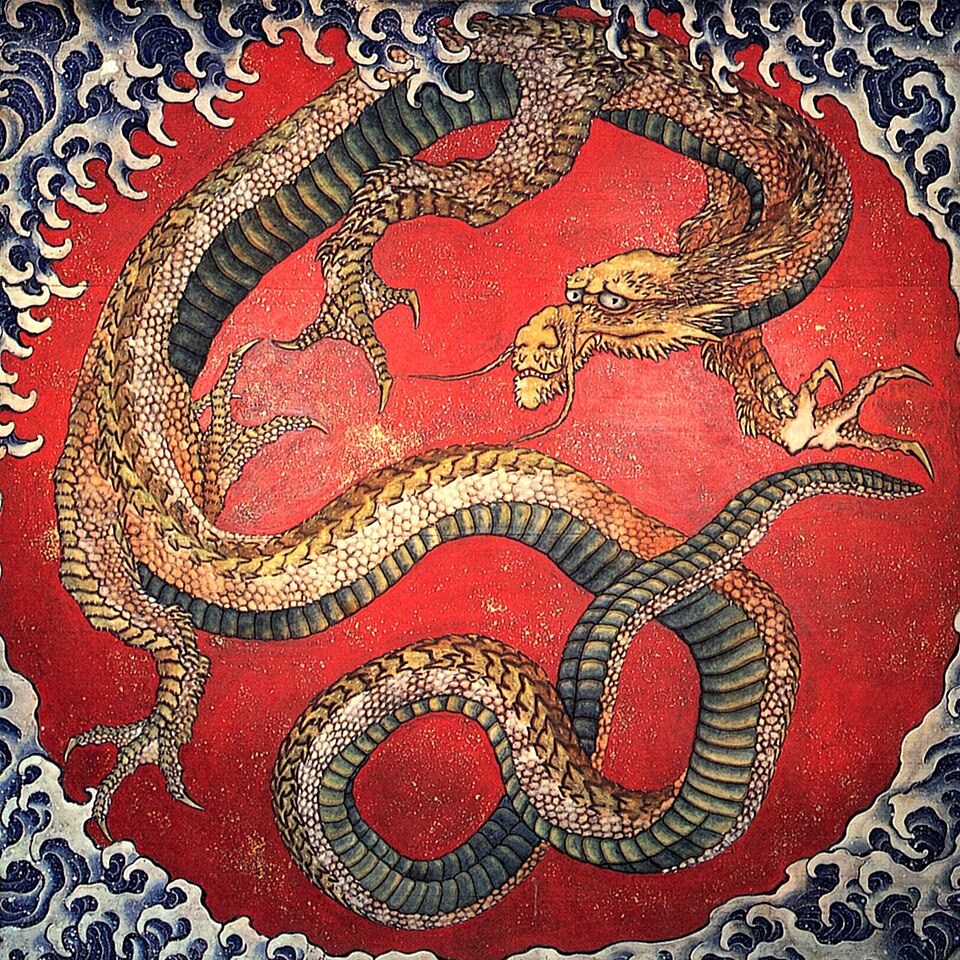
0 sources
Summary
dragon is a mythical animal[1]. dragon ranks in the top 5% of mythical animal entities by monthly Wikipedia readership (25,226 views/month).[2]
Key Facts
- Subclass of: mythical creature[3], mythical animal[4]
- Commons category: Dragons[5]
- Unicode character: 🐉[6], 🐲[7]
- Topic's main category: Category:Dragons[8]
- Commons gallery: Dragon[9]
- Topic's main Wikimedia portal: Портал:Драконы[10]
- Described by source: Bible Encyclopedia of Archimandrite Nicephorus[11], Jewish Encyclopedia of Brockhaus and Efron[12], Small Brockhaus and Efron Encyclopedic Dictionary[13], Explanatory Dictionary of the Living Great Russian Language[14], Brockhaus and Efron Encyclopedic Dictionary[15], Encyclopædia Britannica 11th edition[16], Infernal Dictionary, 6th ed.[17], The Nuttall Encyclopædia[18], Metropolitan Museum of Art Tagging Vocabulary[19], Zedler, Großes vollständiges Universallexicon aller Wissenschaften und Künste[20], The New Student's Reference Work[21], Pauly–Wissowa[22]
- Partially coincident with: fire-breathing monster[23]
- Topic has template: Template:Dragons[24]
- Has characteristic: fire-breathing monster[25], fire breathing[26]
- Different from: fictional dragon[27], Dragon[28], Loong[29], Q126538177[30], kite[31], Q117233696[32]
- Indigenous to: Europe[33], Asia[34]
- Has list: list of dragons in mythology and folklore[35]
- Has part(s) of the class: heart of dragon[36]
- On focus list of Wikimedia project: Wikipedia:Vital articles/Level/4[37]
Body
Cultural Significance
Things named for dragon include Dungeons & Dragons[38], a tabletop role-playing game[39], written by Gary Gygax[40]; Chunichi Dragons[41], a baseball team[42], in Japan[43], founded in 1936[44], headquartered in Aichi Prefecture[45]; Four Asian Tigers[46], a geopolitical group[47]; dragoon[48]; greater weever[49], a taxon[50]; here be dragons[51], a Latin phrase[52]; Bel and the Dragon[53], a chapter of the Bible[54]; and dragon curve[55].
Why It Matters
dragon has Wikipedia articles in 30 language editions, a strong signal of global cultural recognition.[56] dragon is known by 42 alternative names across languages and contexts.[57]
Entities named for dragon include Dungeons & Dragons[38], a tabletop role-playing game[39], written by Gary Gygax[40]; Chunichi Dragons[41], a baseball team[42], in Japan[43], founded in 1936[44], headquartered in Aichi Prefecture[45]; Four Asian Tigers[46], a geopolitical group[47]; dragoon[48]; greater weever[49], a taxon[50]; and here be dragons[51], a Latin phrase[52].