
Dmitry Manuilsky
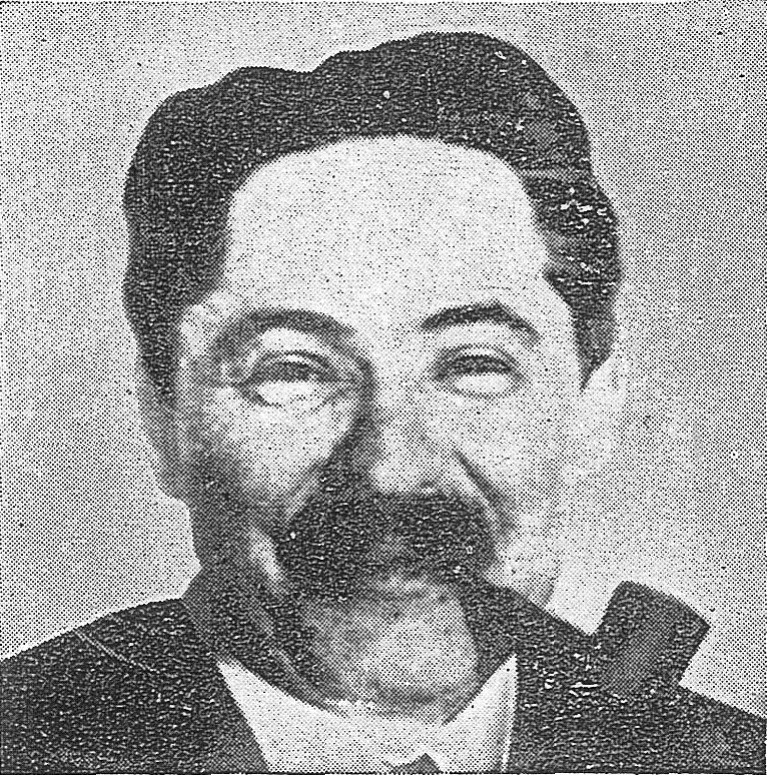
0 sources
Summary
Dmitry Manuilsky was born on September 21, 1883[1], in Sviatets[2]. He died on February 20, 1959[3], in Kyiv[4]. He worked as a diplomat[5], statesperson[6], politician[7], and revolutionary[8]. He ranks in the top 0.72% of human entities by monthly Wikipedia readership (720 views/month, #7,237 of 1,000,298).[9]
Key Facts
- Date of birth: October 3, 1883[10], 1883[11]
- Date of death: February 22, 1959[12], 1959[13]
- Place of burial: Baikove Cemetery[14]
- Spouse: Manujilska Mykolajivna[15]
- Country of citizenship: Soviet Union[16]
- Field of work: politics[17]
- Position held: Foreign Minister of the Ukrainian Soviet Socialist Republic[18], deputy of the Supreme Soviet of the Soviet Union[19]
- Employer: United Nations[20]
- Educated at: Saint Petersburg State University[21], Państwowe Gimnazjum im. Marii Konopnickiej w Ostrogu[22]
- Award received: Order of Lenin[23], Order of the Red Star[24]
- Member of: National Academy of Sciences of Ukraine[25], Central Committee of the Communist Party of the Soviet Union[26], Central Executive Committee of the Soviet Union[27], All-Union Society of Old Bolsheviks[28]
- Sex or gender: male[29]
- Member of political party: Communist Party of the Soviet Union[30], Russian Social Democratic Labour Party[31]
- Commons category: Dmitry Manuilsky[32]
- Given name: Dmytro[33]
- Work location: Soviet Union[34]
- Described by source: Great Soviet Encyclopedia (1969–1978)[35], Great Soviet Encyclopedia (1926–1947)[36], Armenian Soviet Encyclopedia, vol. 7[37], Faces of Moscow[38]
- Participant in: 6th Congress of the Russian Social Democratic Labour Party[39], 10th Congress of the Russian Communist Party[40], 11th Congress of the Russian Communist Party[41], 12th Congress of the Russian Communist Party[42], 13th Congress of the Russian Communist Party[43], 14th Congress of the All-Union Communist Party[44], 15th Congress of the All-Union Communist Party[45], 16th Congress of the All-Union Communist Party[46], 17th Congress of the All-Union Communist Party[47], 18th Congress of the All-Union Communist Party[48], 19th Congress of the Communist Party of the Soviet Union[49], 18th Conference of the All-Union Communist Party (Bolsheviks)[50]
Body
Works and Contributions
Things named for Dmitry Manuilsky include Rivne State University of the Humanities[51], a university[52], in Ukraine[53], founded in 1940[54].
Why It Matters
Dmitry Manuilsky has Wikipedia articles in 15 language editions, a strong signal of global cultural recognition.[55] He is known by 62 alternative names across languages and contexts.[56]
Entities named for him include Rivne State University of the Humanities[51], a university[52], in Ukraine[53], founded in 1940[54].
FAQs
Where was Dmitry Manuilsky born?
Dmitry Manuilsky was born in Sviatets[2].
Where did Dmitry Manuilsky die?
Dmitry Manuilsky passed away in Kyiv[4].
Who was Dmitry Manuilsky married to?
Dmitry Manuilsky's spouses include Manujilska Mykolajivna[15].
What did Dmitry Manuilsky do for work?
Dmitry Manuilsky worked as a diplomat[5], statesperson[6], politician[7], and revolutionary[8].
Where did Dmitry Manuilsky go to school?
Dmitry Manuilsky was educated at Saint Petersburg State University[21] and Państwowe Gimnazjum im. Marii Konopnickiej w Ostrogu[22].
What awards did Dmitry Manuilsky receive?
Honors received include Order of Lenin[23] and Order of the Red Star[24].