
Diego de Almagro
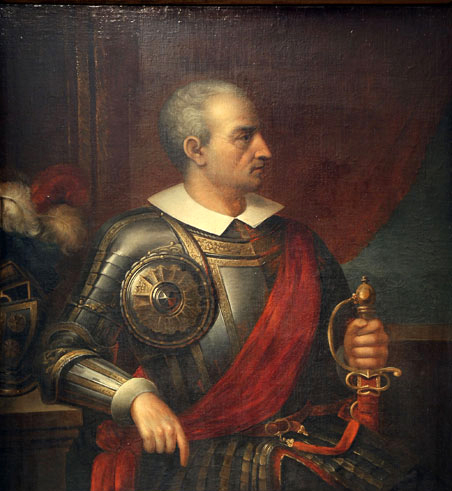
0 sources
Diego de Almagro was born on January 1, 1475, in Almagro [1][2][3][4][5][6][7] and held Spanish citizenship . He was an explorer and conquistador , known for his role in the Spanish conquest of the Americas. He had one child, Diego de Almagro II .
Diego de Almagro died on July 8, 1538, in Cusco [7]. He was buried in Cusco . His life and actions were tied to the Spanish colonial efforts in South America, particularly in regions that are now part of Peru. His legacy is connected to the conflicts among conquistadors during the early colonial period.
Key Facts
- Place of burial: Cusco[8]
- Child: Diego de Almagro II[9]
- Country of citizenship: Spain[10]
- Sex or gender: male[11]
- Commons category: Diego de Almagro[12]
- Military, police or special rank: general[13]
- Cause of death: chokehold[14]
- Family name: De Almagro[15]
- Given name: Diego[16]
- Manner of death: capital punishment[17]
- Described by source: Great Soviet Encyclopedia (1926–1947)[18], Otto's encyclopedia[19], The Nuttall Encyclopædia[20], Brockhaus and Efron Encyclopedic Dictionary[21], Small Brockhaus and Efron Encyclopedic Dictionary[22], Meyers Konversations-Lexikon, 4th edition (1885–1890)[23], Encyclopædia Britannica 11th edition[24], The New Student's Reference Work[25]
- Languages spoken, written or signed: Spanish[26]
- Name in native language: Diego de Almagro[27]
- Different from: Diego de Almagro[28]
- P14536: 404198[29]
Why It Matters
Diego de Almagro has Wikipedia articles in 25 language editions, a strong signal of global cultural recognition.[30] He is known by 35 alternative names across languages and contexts.[31]
He is credited with the discovery of Isla Gorgona[32], an island[33], in Colombia[34].
FAQs
Where was Diego de Almagro born?
Diego de Almagro was born in Almagro[2].
Where did Diego de Almagro die?
Diego de Almagro died in Cusco[4].
What did Diego de Almagro do for work?
Diego de Almagro worked as an explorer[5] and conquistador[6].
What did Diego de Almagro discover?
Diego de Almagro is credited as discoverer of Isla Gorgona[32].