
Despina
moon of Neptune
Press Enter · cited answer in seconds
0 sources
Summary
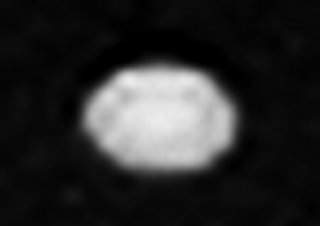
Despina is a moon of Neptune[1]. Despina draws 710 Wikipedia views per month (moon of neptune category, ranking #10 of 15).[2]
Key Facts
- Discoverer or inventor: Stephen P. Synnott[3], Voyager 2[4]
- Named after: Despoina[5]
- Commons category: Despina[6]
- Parent astronomical body: Neptune[7]
- Provisional designation: S/1989 N 3[8]
- Time of discovery or invention: July 28, 1989[9]
- Commons gallery: Despina[10]
- Orbital eccentricity: 0.0002[11]
- Apparent magnitude: 1.1[12]
- Different from: Despina[13]
- Orbital inclination: 0.216 degree[14]
- Mass: 2.1 zettagram[15]
- Radius: 75 km[16]
- Orbital period: 0.33465551 day[17]
- Semi-major axis of an orbit: 52,526 km[18]
- Volume as quantity: 1,800,000 cubic kilometre[19]
- Albedo: 0.09[20]
- Surface gravity: 0.026 metres per second squared[21]
Why It Matters
Despina has Wikipedia articles in 27 language editions, a strong signal of global cultural recognition.[22] Despina is known by 21 alternative names across languages and contexts.[23]