
Cutting the Stone
painting by Hieronymus Bosch
Press Enter · cited answer in seconds
0 sources
Cutting the Stone
Summary
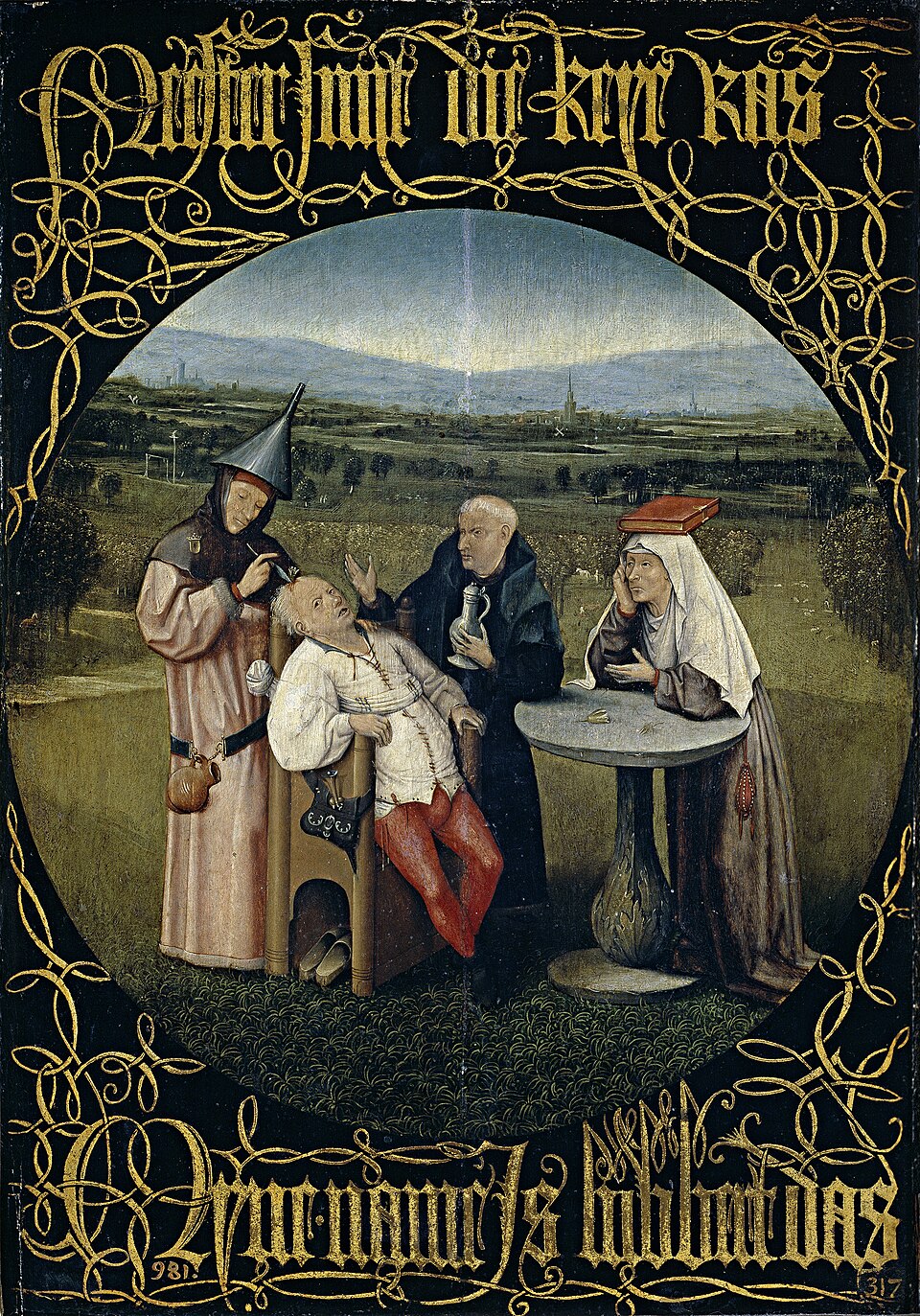
Cutting the Stone is a painting[1]. It ranks in the top 5% of painting entities by monthly Wikipedia readership (440 views/month).[2]
Key Facts
- Cutting the Stone is the creator of Hieronymus Bosch[3].
- Cutting the Stone's instance of is recorded as painting[4].
- Cutting the Stone is associated with the Early Netherlandish painting movement[5].
- Cutting the Stone's genre is allegory[6].
- Cutting the Stone's depicts is recorded as trepanning[7].
- Cutting the Stone's depicts is recorded as surgeon[8].
- Cutting the Stone's depicts is recorded as insanity[9].
- Cutting the Stone's depicts is recorded as man[10].
- Cutting the Stone's depicts is recorded as woman[11].
- Cutting the Stone's depicts is recorded as standing[12].
- Cutting the Stone's depicts is recorded as sitting[13].
- Cutting the Stone's depicts is recorded as funnel[14].
- Cutting the Stone's depicts is recorded as seat[15].
- Cutting the Stone's depicts is recorded as table[16].
- Cutting the Stone's depicts is recorded as white hair[17].
- Cutting the Stone's depicts is recorded as flower[18].
- Cutting the Stone's depicts is recorded as book[19].
- Cutting the Stone's depicts is recorded as monk[20].
- Cutting the Stone's depicts is recorded as tonsure[21].
- Cutting the Stone's depicts is recorded as rural area[22].
- Cutting the Stone's depicts is recorded as grass[23].
- Cutting the Stone's depicts is recorded as meadow[24].
- Cutting the Stone's depicts is recorded as broad-leaved tree[25].
- Cutting the Stone's depicts is recorded as forest[26].
- Cutting the Stone's depicts is recorded as city or town[27].
Body
Authorship and Creation
Cutting the Stone is the creator of Hieronymus Bosch[3].
Publication
Cutting the Stone's genre is allegory[6].
Subject and Themes
Cutting the Stone is associated with the Early Netherlandish painting movement[5].
Material and Period
Recorded made from material include oil paint[28] and panel[29]. The location of Cutting the Stone was Museo del Prado[30].
Why It Matters
Cutting the Stone ranks in the top 5% of painting entities by monthly Wikipedia readership (440 views/month).[2] It has Wikipedia articles in 12 language editions, a strong signal of global cultural recognition.[31] It is known by 15 alternative names across languages and contexts.[32]