
Cato the Elder
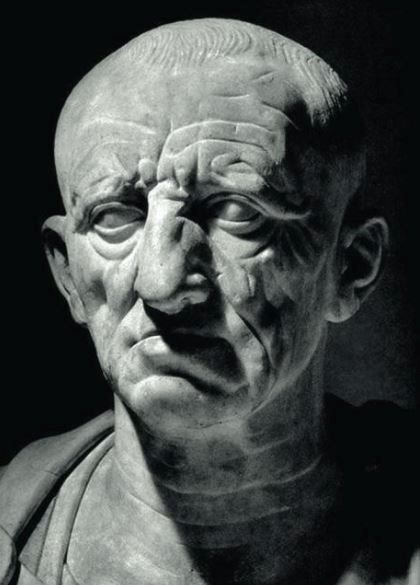
0 sources
Cato the Elder
Summary
Cato the Elder is a human[1]. He was born in Tusculum[2]. He was born on 234 BC[3]. He died in Rome[4]. He died on January 1, 149 BC[5]. He worked as a writer[6], historian[7], economist[8], poet[9], and politician[10]. He ranks in the top 0.64% of human entities by monthly Wikipedia readership (21,910 views/month, #6,424 of 1,000,298).[11]
Key Facts
- Cato the Elder was born in Tusculum[2].
- Cato the Elder passed away in Rome[4].
- Cato the Elder was born on 234 BC[3].
- Cato the Elder was born on 235 BC[12].
- Cato the Elder was born on 234 BC[13].
- Cato the Elder was born on 232 BC[14].
- Cato the Elder died on January 1, 149 BC[5].
- Cato the Elder died on 147 BC[15].
- Cato the Elder was married to Licinia[16].
- Cato the Elder was married to Salonia[17].
- A child of Cato the Elder was Marcus Porcius Cato Licinianus[18].
- A child of Cato the Elder was Marcus Porcius Cato Salonianus[19].
- Cato the Elder held citizenship in Ancient Rome[20].
- Cato the Elder's professions included writer[6].
- Cato the Elder worked as a historian[7].
- Cato the Elder worked as an economist[8].
- Cato the Elder's professions included poet[9].
- Cato the Elder's professions included politician[10].
- Cato the Elder's professions included philosopher[21].
- Cato the Elder held the position of Roman censor[22].
- Cato the Elder held the position of praetor[23].
- Cato the Elder held the position of quaestor[24].
- Cato the Elder held the position of ancient Roman senator[25].
- Cato the Elder held the position of Roman consul[26].
- A notable work attributed to Cato the Elder is De Agri Cultura[27].
Body
Origins and Family
Born in Tusculum[2], Cato the Elder… Recorded date of birth include 234 BC[3], 235 BC[12], and 232 BC[14].
Career and Affiliations
Recorded occupations include writer[6], historian[7], economist[8], poet[9], politician[10], and philosopher[21]. Positions held include Roman censor[22], an elective office[28], in Ancient Rome[29], founded in -0443[30]; praetor[23], an elective office[31], in Ancient Rome[32], founded in -0366[33]; quaestor[24], a position[34], in Ancient Rome[35]; ancient Roman senator[25], a position[36], in Ancient Rome[37]; and Roman consul[26], an elective office[38], in Ancient Rome[39], founded in -0509[40].
Works and Contributions
Notable works include De Agri Cultura[27], a written work[41] and Origines[42], a literary work[43]. Things named for Cato the Elder include Dorsa Cato[44], a dorsum[45].
Personal Life
Spouses include Licinia[16], -0300–-0200[46] and Salonia[17], -0200–-0200[47], of Ancient Rome[48]. Children include Marcus Porcius Cato Licinianus[18], a politician[49], -0192–-0152[50], of Ancient Rome[51] and Marcus Porcius Cato Salonianus[19], a magistrate[52], -0154–-0113[53], of Ancient Rome[54]. Cato the Elder's religion is recorded as ancient Roman religion[55].
Death and Burial
Recorded date of death include January 1, 149 BC[5] and 147 BC[15]. Cato the Elder died in Rome[4].
Why It Matters
Cato the Elder ranks in the top 0.64% of human entities by monthly Wikipedia readership (21,910 views/month, #6,424 of 1,000,298).[11] He has Wikipedia articles in 27 language editions, a strong signal of global cultural recognition.[56] He is known by 107 alternative names across languages and contexts.[57]
He has been cited as an influence by Henry David Thoreau[58], a poet[59], 1817–1862[60], of United States[61], awarded the Hall of Fame for Great Americans[62], specialised in writing[63].
Works attributed to him include De Agri Cultura[64], a written work[65]; Bellum se ipsum alet[66], a winged words[67]; and Origines[68], a literary work[69]. Entities named for him include Dorsa Cato[44], a dorsum[45].
FAQs
Where was Cato the Elder born?
Cato the Elder's place of birth was Tusculum[2].
Where did Cato the Elder die?
Cato the Elder passed away in Rome[4].
Who was Cato the Elder married to?
Cato the Elder's spouses include Licinia[16] and Salonia[17].
What did Cato the Elder do for work?
Cato the Elder worked as writer[6], historian[7], economist[8], poet[9], and politician[10].
Who did Cato the Elder influence?
Cato the Elder has been cited as an influence by Henry David Thoreau[58].