
Carl von Rokitansky
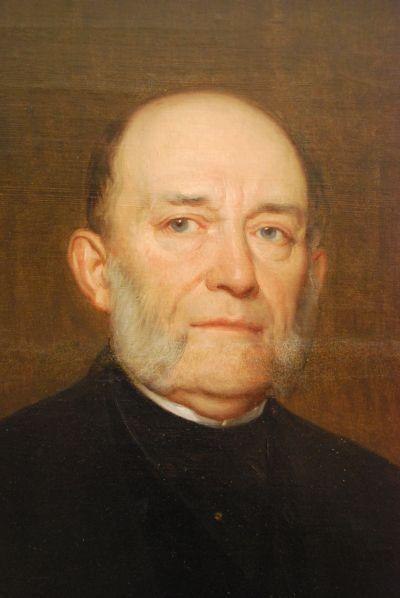
0 sources
Summary
Carl von Rokitansky was born on February 19, 1804[1], in Hradec Králové[2]. He died on July 23, 1878[3], in Vienna[4]. He worked as a physician[5], philosopher[6], politician[7], professor[8], and pathologist[9]. He ranks in the top 0.72% of human entities by monthly Wikipedia readership (824 views/month, #7,207 of 1,000,298).[10]
Key Facts
- Date of birth: February 11, 1804[11]
- Place of burial: Hernalser Friedhof[12]
- Child: Hans von Rokitansky[13], Viktor Rokitansky[14], Karl Frh. von Rokitansky[15], Prokop von Rokitansky[16]
- Country of citizenship: Cisleithania[17], Austrian Empire[18]
- Occupation: anatomist[19]
- Position held: dean[20], Member of the House of Lords (Austria)[21]
- Employer: University of Vienna[22]
- Educated at: University of Vienna[23]
- Student: Eduard Albert[24]
- Award received: honorary citizen of Vienna[25], honorary doctor of the University of Jena[26], honorary doctor of the Charles University of Prague[27], honorary doctor of the Jagiellonian University of Krakow[28], Knight's Cross of the Order of Franz Joseph[29], Order of the Redeemer[30], Decoration for Art and Science (Austria-Hungary)[31], Order of Saint Stanislaus[32], Knight Grand Cross of the Order of Guadalupe[33], Knight Commander of the Order of Leopold (Austria)[34], grand officer of the Order of the Crown of Italy[35]
- Member of: German Academy of Sciences Leopoldina[36], Royal Swedish Academy of Sciences[37], Austrian Academy of Sciences[38], Hungarian Academy of Sciences[39], American Academy of Arts and Sciences[40], Royal Academy of Medicine of Belgium[41]
- Sex or gender: male[42]
- Noble title: baron[43]
- Doctoral student: Eduard Albert[44]
- Commons category: Carl von Rokitansky[45]
- Cause of death: angina pectoris[46]
- Family name: Rokytanský[47]
- Given name: Carl[48]
- Work location: Hradec Králové[49], Vienna[50]
- Manner of death: natural causes[51]
- Described by source: Great Soviet Encyclopedia (1969–1978)[52], Armenian Soviet Encyclopedia[53], Allgemeine Deutsche Biographie[54], Biographisches Lexikon des Kaiserthums Oesterreich[55], Brockhaus and Efron Encyclopedic Dictionary[56], The Nuttall Encyclopædia[57]
Body
Works and Contributions
Things named for Carl von Rokitansky include Müllerian agenesis[58], a disorder of sex development[59].
Why It Matters
Carl von Rokitansky has Wikipedia articles in 17 language editions, a strong signal of global cultural recognition.[60] He is known by 50 alternative names across languages and contexts.[61]
He has been cited as an influence by Ferdinand Ritter von Hebra[62], a physician[63], 1816–1880[64], of Austria[65] and Hans Chiari[66], a pathologist[67], 1851–1916[68].
Entities named for him include Müllerian agenesis[58], a disorder of sex development[59].
His notable doctoral advisees include Eduard Albert[69], a writer[70], 1841–1900[71], of Austrian Empire[72], awarded the Knight of the Order of Leopold (Austria)[73], specialised in antisepsis[74].
FAQs
Where was Carl von Rokitansky born?
Carl von Rokitansky's place of birth was Hradec Králové[2].
Where did Carl von Rokitansky die?
Carl von Rokitansky passed away in Vienna[4].
What did Carl von Rokitansky do for work?
Carl von Rokitansky worked as a physician[5], philosopher[6], politician[7], professor[8], and pathologist[9].
Where did Carl von Rokitansky go to school?
Carl von Rokitansky was educated at University of Vienna[23].
What awards did Carl von Rokitansky receive?
Honors received include honorary citizen of Vienna[25], honorary doctor of the University of Jena[26], honorary doctor of the Charles University of Prague[27], and honorary doctor of the Jagiellonian University of Krakow[28].
Who did Carl von Rokitansky influence?
Carl von Rokitansky has been cited as an influence by Ferdinand Ritter von Hebra[62] and Hans Chiari[66].