
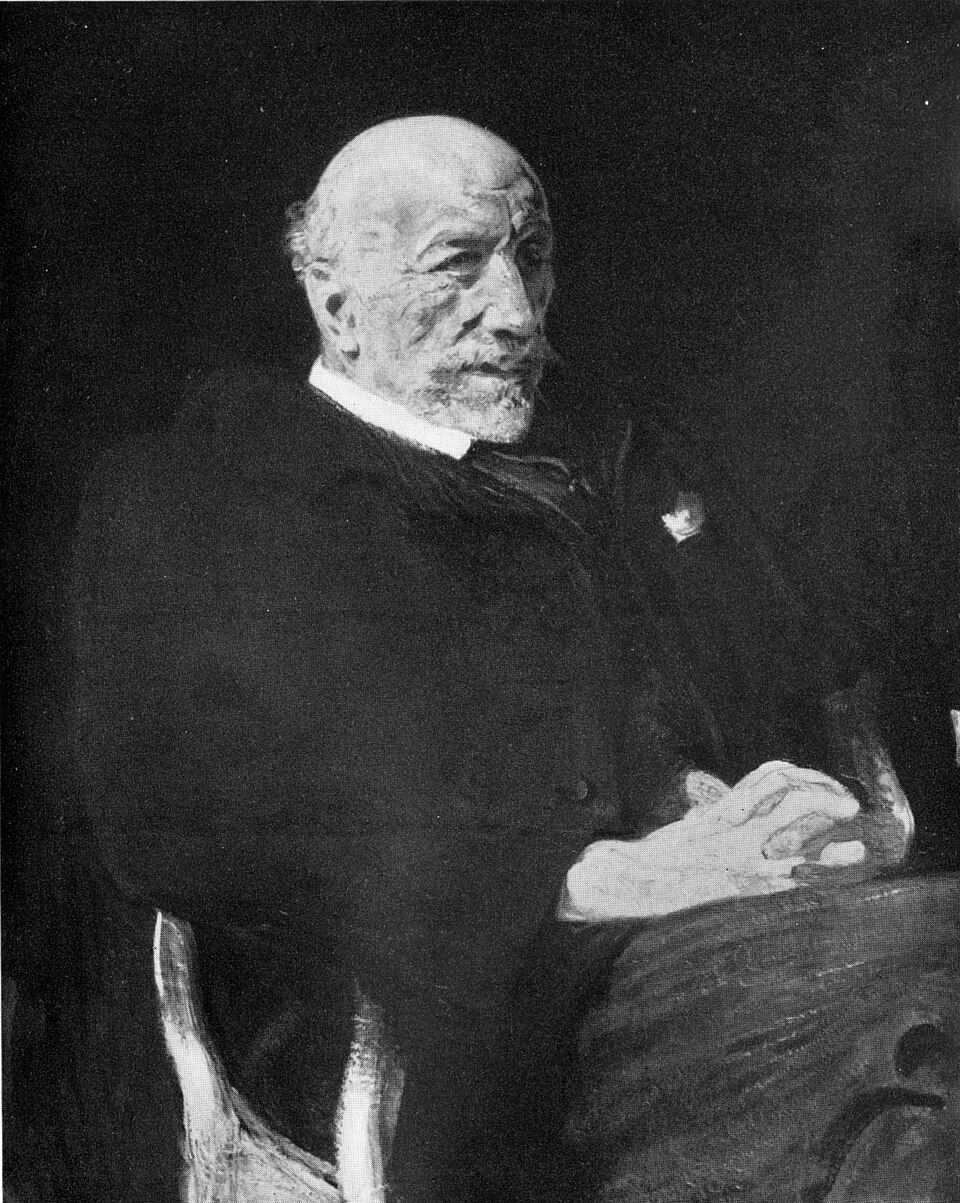
Carl Justi
0 sources
Summary
Carl Justi was born on August 2, 1832[1], in Marburg[2]. He died on December 9, 1912[3], in Bonn[4]. He worked as an art historian[5] and university teacher[6]. He ranks in the top 0.73% of human entities by monthly Wikipedia readership (77 views/month, #7,299 of 1,000,298).[7]
Key Facts
- Date of death: December 10, 1912[8]
- Place of burial: Main Cemetery of Marburg[9]
- Father: Wilhelm Justi[10]
- Mother: Friederike Karoline Elisabeth Justi[11]
- Country of citizenship: Kingdom of Prussia[12]
- Employer: University of Bonn[13], University of Marburg[14]
- Educated at: Humboldt-Universität zu Berlin[15]
- Notable work: Q102403540[16]
- Award received: Pour le Mérite for Sciences and Arts order[17], Bavarian Maximilian Order for Science and Art[18], honorary citizen of Bonn[19]
- Member of: Royal Prussian Academy of Sciences[20]
- Sex or gender: male[21]
- Commons category: Carl Justi[22]
- Archives at: Berlin State Library[23]
- Family name: Justi[24]
- Given name: Carl[25]
- Work location: Bonn[26], Marburg[27]
- Relative: Ludwig Justi[28]
- Described by source: Nordisk familjebok[29], Brockhaus and Efron Encyclopedic Dictionary[30]
- Languages spoken, written or signed: German[31]
- Affiliation: Institute of Art History, Philipps-Universität Marburg[32]
- Name in native language: Carl Justi[33]
- Start of work period: January 1, 1866[34]
- End of work period: January 1, 1912[35]
- Sibling: Ferdinand Justi[36]
- Writing language: German[37]
Why It Matters
Carl Justi has Wikipedia articles in 7 language editions, a strong signal of global cultural recognition.[38] He is known by 9 alternative names across languages and contexts.[39]
FAQs
Where was Carl Justi born?
Carl Justi's place of birth was Marburg[2].
Where did Carl Justi die?
Carl Justi died in Bonn[4].
Who were Carl Justi's parents?
Carl Justi's father was Wilhelm Justi[10]. Carl Justi's mother was Friederike Karoline Elisabeth Justi[11].
What did Carl Justi do for work?
Carl Justi worked as an art historian[5] and university teacher[6].
Where did Carl Justi go to school?
Carl Justi was educated at Humboldt-Universität zu Berlin[15].
What awards did Carl Justi receive?
Honors received include Pour le Mérite for Sciences and Arts order[17], Bavarian Maximilian Order for Science and Art[18], and honorary citizen of Bonn[19].