
Bill Tytla
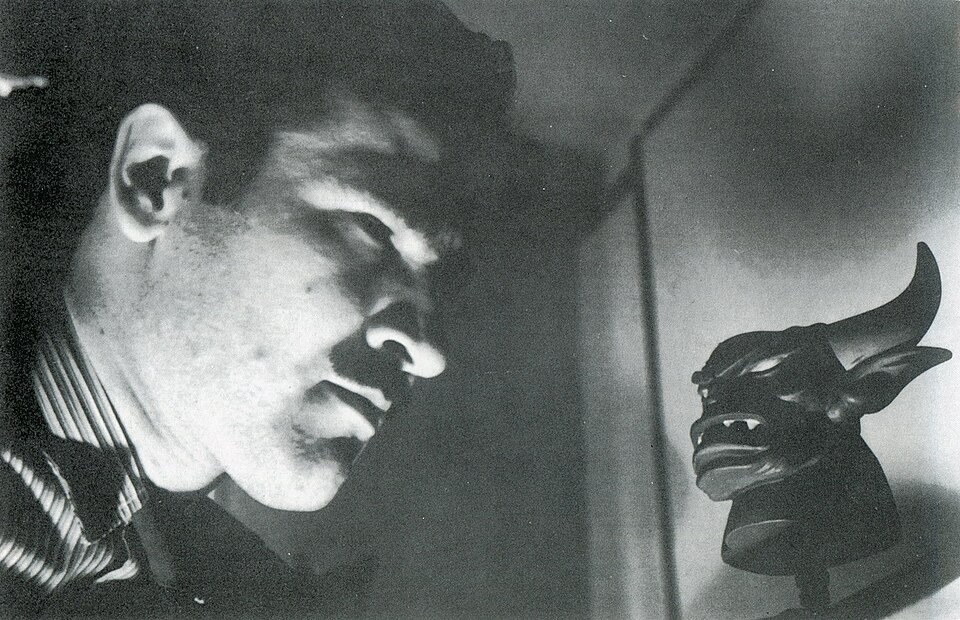
0 sources
Bill Tytla
Summary
Bill Tytla is a human[1]. His place of birth was Yonkers[2]. He was born on +1904-10-25T00:00:00Z[3]. He died in East Lyme[4]. He died on +1968-12-30T00:00:00Z[5]. He worked as a character animator[6], animator[7], film director[8], and television director[9]. He ranks in the top 0.72% of human entities by monthly Wikipedia readership (64 views/month, #7,251 of 1,000,298).[10]
Key Facts
- Born in Yonkers[2], Bill Tytla…
- Bill Tytla passed away in East Lyme[4].
- Bill Tytla was born on +1904-10-25T00:00:00Z[3].
- Bill Tytla died on +1968-12-30T00:00:00Z[5].
- Bill Tytla died on +1968-12-31T00:00:00Z[11].
- Bill Tytla held citizenship in United States[12].
- Bill Tytla's professions included character animator[6].
- Bill Tytla's professions included animator[7].
- Bill Tytla worked as a film director[8].
- Bill Tytla's professions included television director[9].
- Among Bill Tytla's employers was Q1047410[13].
- Among Bill Tytla's employers was Paramount Pictures[14].
- Bill Tytla was employed by Barré Studio[15].
- Bill Tytla was employed by Fables Studio[16].
- Bill Tytla was employed by Terrytoons[17].
- Among Bill Tytla's employers was Terrytoons[18].
- Bill Tytla was educated at Art Students League of New York[19].
- Bill Tytla received the Disney Legends[20].
- Bill Tytla received the Winsor McCay Award[21].
- Bill Tytla's religion is recorded as atheism[22].
- Bill Tytla was influenced by Pieter Brueghel the Elder[23].
- Bill Tytla's image is recorded as Bill Tytla.jpg[24].
- Bill Tytla is recorded as male[25].
- Bill Tytla's instance of is recorded as human[26].
- Bill Tytla's ISNI is recorded as 000000011071753X[27].
Body
Origins and Family
Bill Tytla was born in Yonkers[2]. He was born on +1904-10-25T00:00:00Z[3].
Education
Bill Tytla was educated at Art Students League of New York[19]. He studied under Boardman Robinson[28].
Career and Affiliations
Recorded occupations include character animator[6], animator[7], film director[8], and television director[9]. Employers include Q1047410[13], an animation studio[29], in United States[30], founded in 1923[31], headquartered in Burbank[32]; Paramount Pictures[14], a film production company[33], in United States[34], founded in 1912[35], headquartered in Los Angeles[36]; Barré Studio[15], an animation studio[37], in United States[38], founded in 1914[39]; Fables Studio[16]; and Terrytoons[17], an animation studio[40], in United States[41], founded in 1929[42], headquartered in 271 North Avenue[43].
Recognition
Awards received include Disney Legends[20], an award[44], in United States[45], founded in 1987[46] and Winsor McCay Award[21], an animation award[47], in United States[48].
Personal Life
Bill Tytla's religion is recorded as atheism[22].
Death and Burial
Recorded date of death include +1968-12-30T00:00:00Z[5] and +1968-12-31T00:00:00Z[11]. Bill Tytla died in East Lyme[4].
Why It Matters
Bill Tytla ranks in the top 0.72% of human entities by monthly Wikipedia readership (64 views/month, #7,251 of 1,000,298).[10] He has Wikipedia articles in 10 language editions, a strong signal of global cultural recognition.[49] He is known by 32 alternative names across languages and contexts.[50]
He has been cited as an influence by Frank Thomas[51], a screenwriter[52], 1912–2004[53], of United States[54], awarded the Disney Legends[55], specialised in animated film[56] and Ollie Johnston[57], a film director[58], 1912–2008[59], of United States[60], awarded the National Medal of Arts[61], specialised in animation[62].
FAQs
Where was Bill Tytla born?
Bill Tytla's place of birth was Yonkers[2].
Where did Bill Tytla die?
Bill Tytla died in East Lyme[4].
What did Bill Tytla do for work?
Bill Tytla worked as character animator[6], animator[7], film director[8], and television director[9].
Where did Bill Tytla go to school?
Bill Tytla was educated at Art Students League of New York[19].
What awards did Bill Tytla receive?
Honors received include Disney Legends[20] and Winsor McCay Award[21].
Who did Bill Tytla influence?
Bill Tytla has been cited as an influence by Frank Thomas[51] and Ollie Johnston[57].