
Battle of Lake Khasan
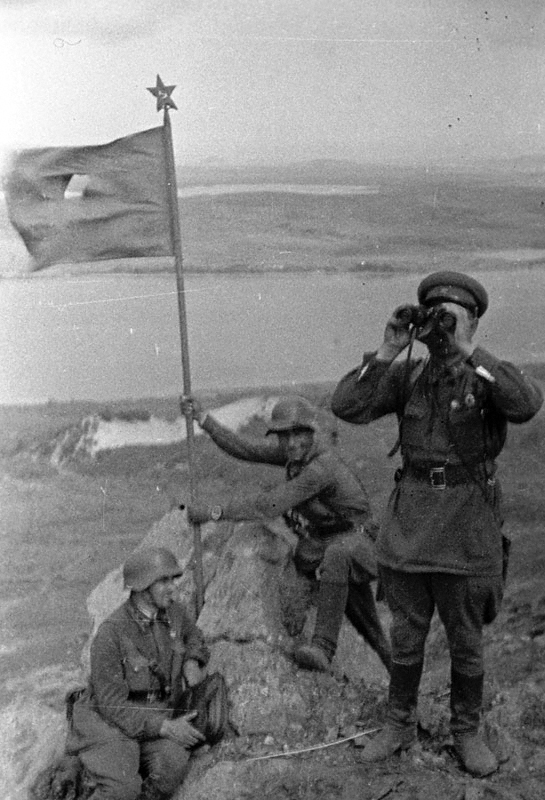
0 sources
Battle of Lake Khasan
Summary
Battle of Lake Khasan is a battle[1]. It ranks in the top 5% of battle entities by monthly Wikipedia readership (209 views/month).[2]
Key Facts
- Battle of Lake Khasan is in the country of Soviet Union[3].
- Battle of Lake Khasan is in the country of Manchukuo[4].
- Battle of Lake Khasan's instance of is recorded as battle[5].
- Battle of Lake Khasan took place at Lake Khasan[6].
- The location of Battle of Lake Khasan was Zaozyornaya[7].
- Battle of Lake Khasan is part of Soviet–Japanese border conflicts[8].
- Battle of Lake Khasan's Commons category is recorded as Battle of Lake Khasan[9].
- Battle of Lake Khasan began on July 29, 1938[10].
- Battle of Lake Khasan ended on August 11, 1938[11].
- Battle of Lake Khasan occurred on 1938[12].
- Battle of Lake Khasan's coordinate location is recorded as {'lat': 42.43590556, 'lon': 130.61100556}[13].
- Battle of Lake Khasan's topic's main category is recorded as Category:Battle of Lake Khasan[14].
- Battle of Lake Khasan resulted in {'amount': '+792'} deaths[15].
- Battle of Lake Khasan resulted in {'amount': '+526'} deaths[16].
- Battle of Lake Khasan's number of casualties is recorded as {'amount': '+4008'}[17].
- Battle of Lake Khasan's number of casualties is recorded as {'amount': '+1439'}[18].
Body
When and Where
Battle of Lake Khasan occurred on 1938[12]. It began on July 29, 1938[10]. It ended on August 11, 1938[11]. Recorded location include Lake Khasan[6] and Zaozyornaya[7]. Country listings include Soviet Union[3], a federal republic[19], in Soviet Union[20], founded in 1922[21] and Manchukuo[4], a puppet state[22], founded in 1932[23].
Context
Battle of Lake Khasan is part of Soviet–Japanese border conflicts[8]. Its instance of is recorded as battle[5].
Outcome and Impact
Recorded number of deaths include {'amount': '+792'}[15] and {'amount': '+526'}[16].
Why It Matters
Battle of Lake Khasan ranks in the top 5% of battle entities by monthly Wikipedia readership (209 views/month).[2] It has Wikipedia articles in 23 language editions, a strong signal of global cultural recognition.[24] It is known by 24 alternative names across languages and contexts.[25]